gamera 3

 |
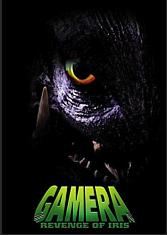
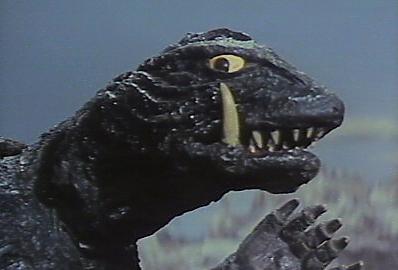
Showing that it is indeed possible to take giant monster films seriously, from Daiei studios in Japan comes Gamera 3, the final film in a recent trilogy released between 1995 through 1999 about a goodhearted giant fire breathing turtle with the ability to literally fly like a UFO. After having served as a "friend to all children" throughout the 60s and 70s in an often lambasted series of films aimed primarily at the kiddy market, Director Shusuke Kaneko, Special Effects Director Shinji Higuchi, and Writer Kazunori Ito re-imagined the oversized saber-toothed turtle from the ground up for modern audiences, deliberately aiming for a more adult presentation with a far more serious storyline and an excellent accompanying score by Composer Ko Otani.
 |
After creating the critically acclaimed Gamera: Guardian of the Universe (AKA Gamera: Giant Monster Midair Showdown) in 1995 and quickly following it up with Gamera 2: Attack of Legion (AKA Gamera: Advent of Legion, G2: Gamera vs. Legion) in 1996, the team quickly regrouped and, for the next two years, worked on what would ultimately become the showcase centerpiece of this unique giant monster trilogy, 1999's Gamera 3: Revenge of Iris (AKA Gamera: Awakening of Iris, GIII: Incomplete Struggle).
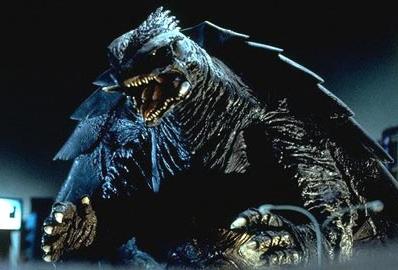 |
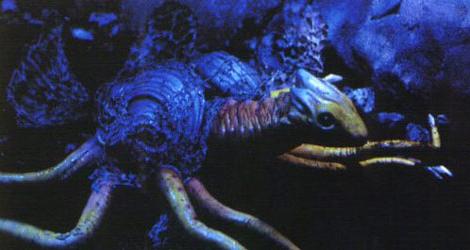
Described by many as being more of a live action anime than a basic giant-monster-on-the-loose film (and understandably so - see bottom of page), the main story of Gamera 3 revolves around a young schoolgirl named Ayana who's parents were unintentionally killed by Gamera during his citywide battle with the reptilian birdlike monster Gyaos back in 95's Gamera: Guardian of the Universe film. Upon wandering into a cave, Ayana discovers an infant monster and, feeling strangely drawn to it, adopts the tentacled creature and decides to name it "Iris" (after her pet cat, which also died along with her parents). Holding Gamera responsible for the death of her family, she raises Iris with the idea of possibly using it to seek revenge against the turtle-shelled giant. But Iris is smarter than Ayana thinks, and before she knows it, it is Iris who is using her for its own personal gain, leading to a subway shattering showdown featuring quite possibly the best special effects to ever appear in a giant monster film of any kind (and all of it supposedly done on a budget hovering around a mere $5 million U.S. dollars).
 |
Usually, with giant monster films from Japan, the human story normally tends to take a backseat to the monster action, with the human characters often present for no other reason but to provide the film with reaction shots and a superfluous running commentary. Fortunately, that's not the case here at all. Both the monster story AND the human story are so heavily intertwined that neither story can progress without the other to back it up and provide motivation. It's so surprisingly well done that you don't even realize it until well after the credits have rolled. Of special note, however, is that a few characters from the previous two Gamera films in the trilogy pop up in this installment as well, with very little (if any) backstory presented to let unfamiliar viewers know exactly who they are and what their involvement in the overall storyline is. For maximum enjoyment, it is recommended that you check out the previous two films in the trilogy as well.
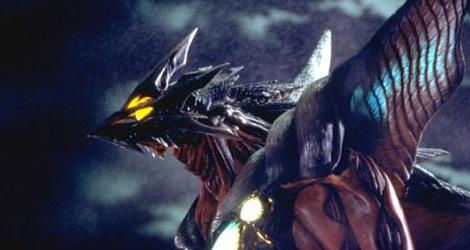 |
Like the previous two films in the trilogy, Gamera 3 is available in the U.S. and Canada on DVD through ADV Films as Gamera: Revenge of Iris (try DVD Price Search for the best price) with a surprising abundance of special features (look out for that badly placed layer switch, though), and in Japan on DVD (Region Code 2) through Daiei Video / Toshiba as both a standalone release, and as part of a trilogy DVD box set (marketed as Gamera: The Box 1995-1999). As of this writing, its availability abroad is still up in the air.
About the Filmmakers:
Director Shusuke Kaneko was one of the three directors who worked on the 1994 production of Necronomicon, a film comprised of three short H.P. Lovecraft stories; Kaneko directed the film's third segment titled The Cold, based off Lovecraft's Cool Air, with a screenplay by Gamera Trilogy Writer Kazunori Ito; both had previously worked on the 80's anime television series Urusei Yatsura.
The lead character Shinji Ikari in the 1995 Gainax anime Neon Genesis Evangelion is named after SPFX Director Shinji Higuchi, who worked on the animated series as both a writer and director; he is also friends with Chief Evangelion Director Hideaki Anno, who directed Gamera 1999, a short VHS documentary covering the making of Gamera 3; both had also previously worked on the hit anime series Nadia: The Secret of Blue Water.
Writer Kazunori Ito also wrote the script for the 1995 Ghost in the Shell anime film, as well as the script for the first Mobile Police Patlabor anime film, both of which were directed by Mamoru Oshii; like Kaneko and Oshii, Ito had also previously worked on Urusei Yatsura.
Composer Ko Otani has worked on a countless number of soundtracks for both live action and animation, but is probably best known for his animated productions such as Gundam Wing, Outlaw Star, Soul Taker, Zoids, Wild Arms, You're Under Arrest, and the second Tenchi Muyo anime film, Daughter of Darkness. Director Kaneko is a fan of Otani's work and uses him as his main composer whenever possible.
re: @
 |
 |
 |