 |
| For the Quantum Leap Newsgroup, click here! |
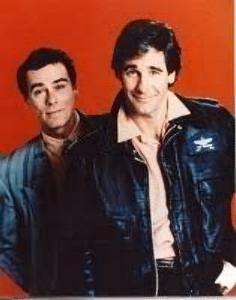 |
| I didn't always watch "Quantum Leap," strange as it seems. My mother always had another show on another network that she watched at that time. But one night, I had something else to do, so I decided to watch NBC while I was doing it. There was this strange science fiction program with this really cute but partially-amnesiac scientist-time traveler (Scott Bakula) and a wise-cracking holographic sidekick (Dean Stockwell) who tried to give him direction with the help of a super computer named Ziggy. I don't remember what I was doing that night, or if I even finished it. I was totally absorbed in the program. The scientist, Sam, had "leaped" into a coroner. It was too late to save the troubled young woman who had been found dead. But it wasn't too late to find out why she had really died. Although Sam (and we) questioned why he had not been allowed to save her, that might have been the most realistic aspect of the show. Even if not all the loose ends can be tied neatly together. Maybe Sam didn't think finding out why she was accidentally killed by someone who loved her was good enough. His sense of justice was still violated. But her fiance did learn that she had truly loved him, and her death was not a suicide. (Note: A later comic book series did a sequel to this episode, allowing the killer to build a meaningful life after serving time for manslaughter.) I was fascinated by the friendship between Sam and Al, the two main characters, and by the feelings Sam developed for the confused young woman he'd known only after her death, like the detective in the classic movie "Laura." Ever since that night, "Good Night, Dear Heart" has been one of my favorite episodes. I could go on for hours about Sam Beckett, but I think I should mention (instead) what I like about Admiral Al Calavicci. Al is smart, funny, frustrating, and loyal. He provides humor in what could be rather dark situations, at times. His lascivious outlook on life provides excellent counter-point to Sam's innate sense of right and wrong. Although there are times Sam doesn't want to hear another word about Al's extracurricular escapades, they provide amusing dialogue between the two partners. The previously mentioned "M.I.A." episode was the one that gave us insight into Al's heart. I was not, however, terribly fond of the character Donna Elesee (or Alessi, or one of the various spellings...) until I read Knights of the Morningstar. The character had been played on television by two different actresses, one of whom was Terri Hatcher, but I was of the opinion that no mere mortal woman could ever be good enough for Dr. Sam Beckett. That was before this book, one of several novels based on the series. In it, I saw Donna as a person, not as merely Sam's idolized memory or the one that got away. When I got into Donna's heart and soul, as I had Sam's, she became a real person. Better than the superhuman I had thought would have to be Sam's mate. Because Sam was only human, in spite of everything. |
 |
| More Quantum Leap pages follow: |