Goodbye baby, I'm going
to Timbouctou...
Part 1 - Mali
Foreword
To be honest, I never had much
interest in visiting the Sahara, let alone spend three weeks there (not to mention a lot
of money)... before I happened to go, that is.
In fact, I was surprised by the number of guided tours that will bring you almost to every
part of the Sahara. Of course, they all go there for a good reason: the landscape, the
colours, the Tuaregs, the starry nights... A journey through the largest of deserts can
indeed give you something very special.
But all this comes -at least this is what happened to me- after
the first visit. So why go there, of all places?
I went there for Timbouctou, for Taoudenni, for the salt caravans.
Timbouctou is more a metaphor than a real place, at least for most
Europeans. Proof of this is the number of times I had to repeat to my friends and
relatives where I was going -by the way, the look in their faces was, alone, worth the
price of the journey!
But going to Timbouctou is not simply chasing a name. It means entering another world and,
even though -much to my dismay!- it appears that they now have direct flights from Paris,
it does still mean making a long journey: far from home, from our habits and from our ways
of thinking.
If Timbouctou is the metaphor of a remote, mysterious place,
Taoudenni is actually much closer: just give a look in your atlas if you don't believe
it...
From Taoudenni caravans have been slowly carrying salt plaques all the way to
Timbouctou for centuries; a 700 km walk across the desert: that's what I went for, and was
it up to my expectations.
Now I am totally fascinated by the desert. So vast, so weird. It
is a metaphysical experience, and it is hard to describe. It was tough experience, a bit
scary I must say, but absolutely fantastic.
Now I long to return to Sahara.
A long journey
Once again, I will beg your pardon for making a short list of the
places I visited. At least, it is really short.
The obvious starting point of the tour was Bamako, the capital.
From there we followed the road to Gao, stopping for well-deserved visits of Djenne and
Mopti.
Gao was the starting point for the long tour of the desert.
With two 4x4 our small group of ten -including the local guides and drivers- went north to
Tessalit -the first real contact with the Sahara. Tessalit was also our base for a
four-day tour of the Adrar des Iforhas, and then for the long jump to Taoudenni
and Timbouctou.
At Timbouctou we left the vehicles and boarded a small boat, a pinasse,
that carried us back to Mopti after three days of sleepy going along the river Niger. This
was another unexpectedly fascinating part of the journey.
From Mopti, back to Bamako, back home.
From Bamako to Djenne
For my first visit to Africa, I had wished a day flight: I wanted
to see the great desert as we flew over it, and the city of Bamako as we approached and
landed (besides, I am much more frightened by night landings).
Of course, flight schedules rarely follow one's desire, and we arrived at Bamako at night.
Still, it was a strange feeling: the air there felt strangely
warm, The night so dark. Maybe it was just my impression, or simply the change of climate.
But it was not only what I felt: it was the buildings, the people, well... it was
Africa.
They say there is not much to see in Bamako, and it is probably
true.
I did not have a lot of time to look around as we drove through the city and the markets
looking for the equipment we needed for the long journey; but the city does give the
impression of a large camp, without anything of special interest.
Oh, yes -how could I forget! There is Le point G, a
famous panoramic spot (at least according Lonely Planet)... In spite of my admiration for
the quality of those guides, I did not go there. Actually, I believe that the
markets are incredibly lively, and a real pleasure to walk through -once you get used to
the place.
I fully appreciated all this on the last day, when the journey was all but over, and with
a relaxed mind I went for the 'last look' at the city.
But at the beginning of the journey I was only eager to move. So
off we went, to San, Segou, Djenne.
When I arrived in Djenne I felt that I was really entering Africa.
It is not easy to explain this feeling: it comes most probably from a combination of the
impressions that the city gives to the traveler -especially if he is coming to these
places for the first time.
It is the city location, nested as it is in a small
island in the middle of the Niger river.
You have to cross the river on a crowded ferry (to say the least), full of people of all
sorts.
It is an intense experience of the atmosphere of this city, and of life along the Niger
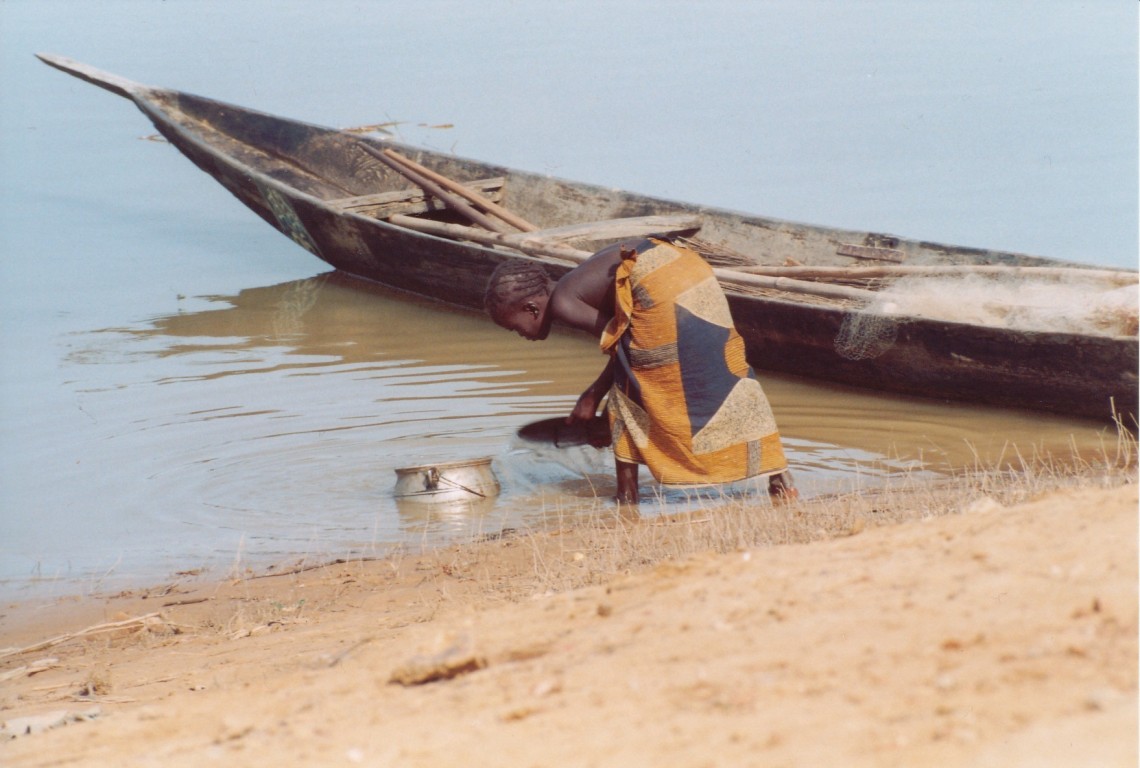
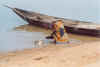
shores.Incidentally, I had promised myself not to gloat
about my photos, but I like this one so much. And then... I had also promised to myself
not to take pictures of people without asking first... |
 |
|
Jeune Fille |
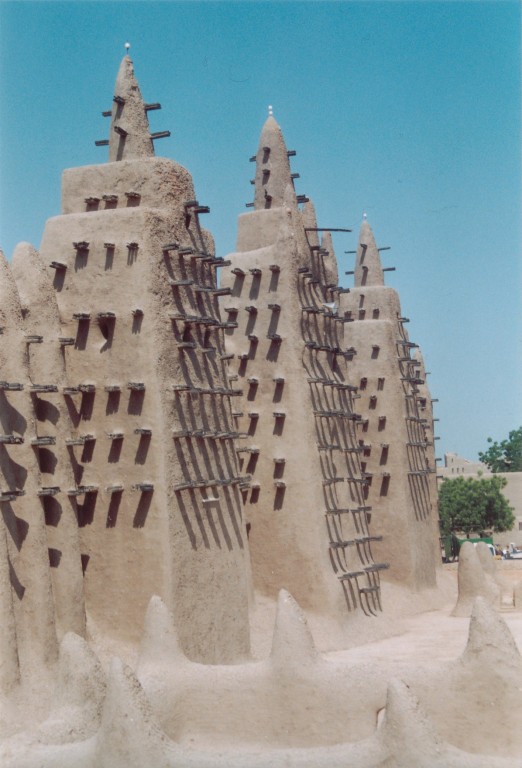
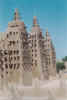
It is the mosquee, the largest (they say) such
building on the planet. Incidentally, you won't be allowed in unless you are a muslim and
-I would expect- able to prove so.
You can, however, give it a look from the roof of an adjacent house -for a price, of
course, that will depend on your guide's negotiation skills.
This voyage was for me a travel through wonder. I can understand that: it is the feeling
one has when he finds himself in front of something huge. This mosquee was this, and more:
it was the monument of a culture so completely different from mine that when I say it I
realized I will never be able to understand it. |
|
|
Djenne - The Mosquee |
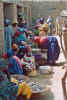
And it is the Monday: if you arrive to Djenne on a
Monday, when the Grand March� is busy, you will be struck by everything at the
same time: the mud houses, the colours of the people, the smell of smoked fish, the sun.
You will loose yourself in the market, and will probably spend all day there; everything
invites you to take a picture. People didn't seem to appreciate too much though, so I let
that go -besides, I had already broken my own rules at the river.... This is one of the
few images I allowed myself to take back. |
 |
|
Djenne - Le Petit March� |
I spent one night in Djenne. I remember eating cuscus at
the table with our guide and the drivers, drinking tea with them and watching dances until
late at night at the rhythm of drums. That was pure magic.
The landscape in this part of Mali is brousse,
which becomes more and more arid as you follow the road to Gao.
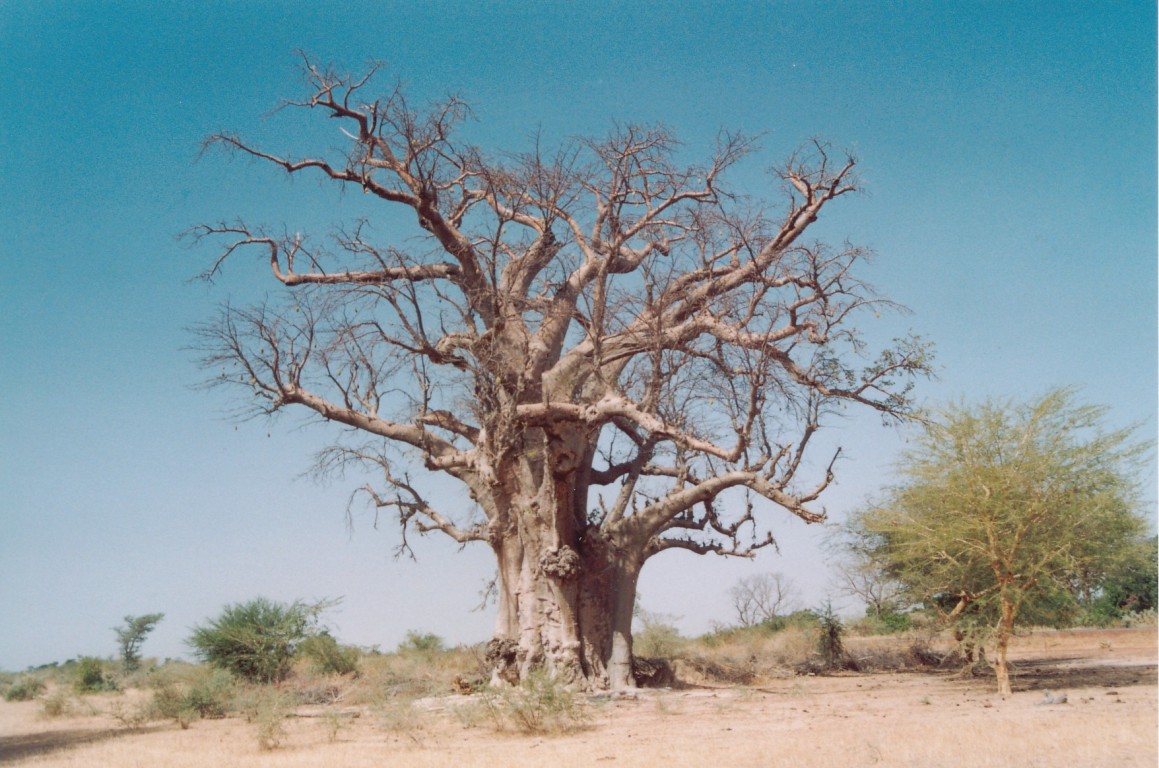
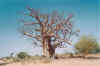
Of course, ther are Baobabs. I think they are born already old and twisted... |
 |
|
Baobab |
To Tessalit
The road from Gao to Tessalit was my first 'true' Sahara
experience.
The first thing I wanted to do, in spite of the excitement that
finally driving along a desert track gave me, was to complain.
Yes, I know I could not expect a sea of sand right at the outskirts of Gao, but can you be
awakened at night, during your first camp ever in the desert, by the lights and the noise
of trucks?
But the feeling was right. And the desert was there; it just came
to us slowly, day by day...
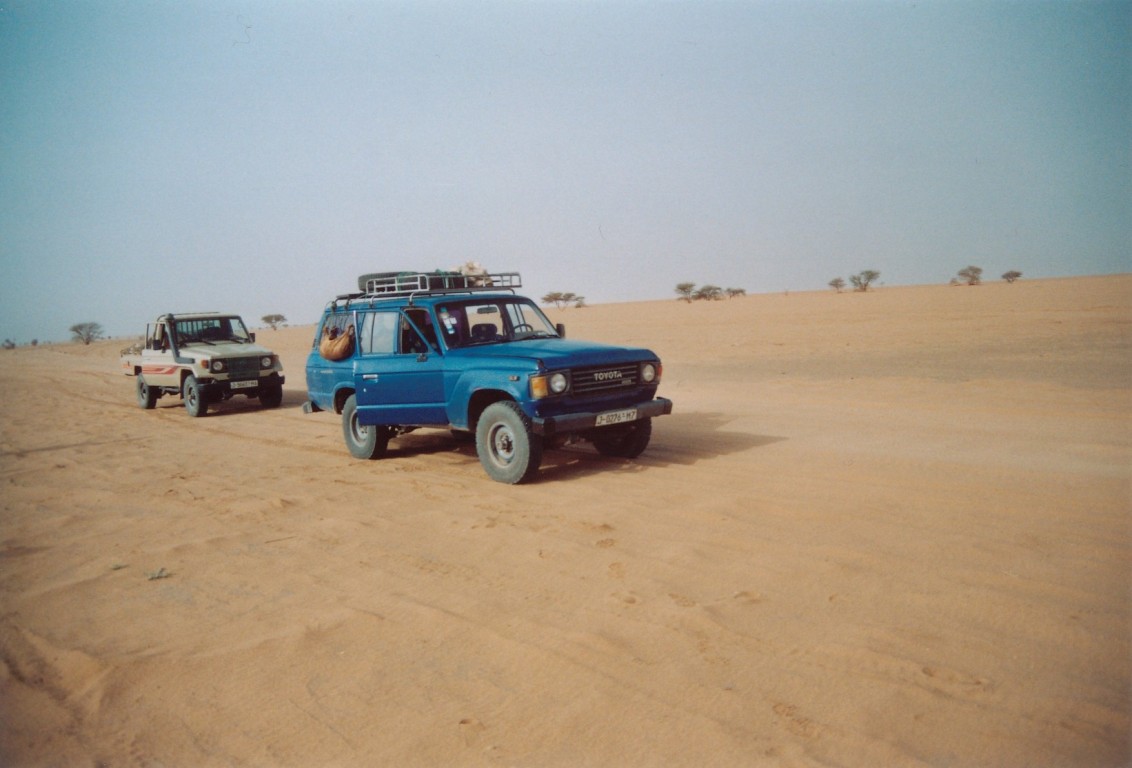
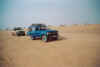
Just a little concession to
documentalism: these are the 4x4. Toyota, of course -apparently the most reliable vehicles
if you want to do this kind of things.
Note: this is not advertisement. In fact, this vehicle is probably too reliable
to be really convenient for the company: if what I saw is true, the blue one had more
than 830,000 km... When would you buy the second one? |
 |
| To Tessalit! |
So it was that we arrived to Tessalit, in that region of the
Sahara that is called Adrar des Iforhas (whatever that means).
Tessalit is already quite close to the middle of nowhere, at least to my
standards. It is a nice small town of about 400 residents -most of the population of the
region being nomadic. They have water and some electricity -all things that four days in
the desert teach you that should not to be taken for granted.
There is also at least one public telephone, although I heartily suggest to resiste the
temptation to use it to give the "last call home" before entering the desert: it
is probably one of the most expensive things in the entire country...
| Page maintained by Lorenzo Serafini |
Last update: 01/05/2004 |