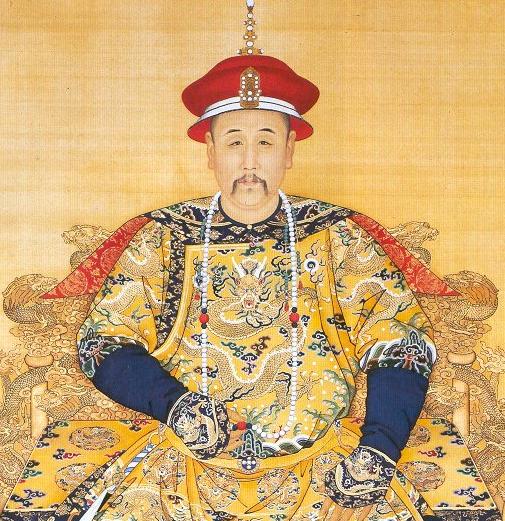
Undoubtedly one weak point in the otherwise glorious reign of Emperor KangXi was the issue of the succession. Although KangXi fathered a total of thirtysix sons and twenty daughters, only one was born by his empress, and that son proved to be a total disgrace, unprincipled and extremely immoral. Perhaps because of his anguish over this, KangXi did not name his heir until he was on his deathbed, at which time he supposedly selected his fourth son, the Emperor Yongzheng. His mother was the daughter of an imperial guard and worked as a palace maid. After Yongzheng became emperor, she was elevated to the rank of Empress Xiao Gong.
Due to the uncertain circumstances of his succession, it is perhaps not surprising that when Yongzheng came to the throne in 1723 his first acts were to execute all of his close relatives who could possibly challenge his authority. Furthermore, he re-wrote the official histories from the reign of KangXi to remove all doubts about his right to be emperor. However, being in his mid-forties, Yongzheng was old enough and mature enough to be very practical about the importance of his authority being unquestioned as well as what kind of policies were needed to stabilize and strengthen the Chinese Empire.
As a result, Yongzheng was a remarkably adept and successful emperor. His reign very much concentrated on unity, of unifying power in the hands of the emperor as well as working to establish common core values to unite the Chinese people under the Qing Dynasty. His work in government focused on making the emperor more involved and putting the mandarins on a shorter leash. Under Emperor Yongzheng all major policies required imperial consent before being put into effect. He also encouraged reform among the mandarinate by rewarding those who were honest.
The accomplishments of Emperor Yongzheng also included the abolition of what amounted to slavery, that is the law which made the status of a servant hereditary. He also simplified the old Ming tax code as well as pushing for better education. As part of his efforts toward consolidation Yongzheng strictly enforced the Confucian moral code as well as stressing the moral obligation to obey the Qing "Son of Heaven". Despite his earlier ruthlessness, Yongzheng was also a religious man. A Zen Buddhist, he converted the palace he was born in into a Lama Temple and helped ensure that he did not repeat the mistake of his father. To ensure a peaceful succession, he sealed the name of his heir (which was to be the legendary Emperor Qianlong) behind the ancestral tablet which was not to be touched until his death.
In the area of foreign relations, Yongzheng continued the on-going struggle with the Mongols on the northern border and intervened in a Tibetan civil war, leaving a Qing official and a garrison there to ensure stability. On the whole, he was autocratic but also well liked for making taxation more fair, defending the glories of the Qing Empire and doing his duty as a Confucian Emperor by upholding the standards of moral orthodoxy. His reign was not a terribly long one however, and he died in 1735 at the age of 58. His son and heir Qianlong would go on to take the Chinese Empire to her height of power and expansion. |