 |
 |
| An Old Solution for the New China |
 |
 |
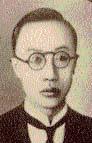 |
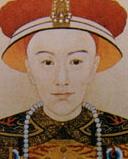
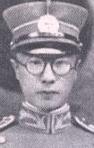
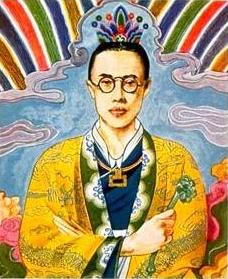
| GuangXu Pu-Yi Pu-Chieh |
| To even suggest that the State of Manchukuo was anything less than infinitely horrific is to invite the unrestrained condemnation of the People's Republic and all "patriotic" Chinese. However, about the worst any Red Chinese could think of calling me; reactionary, religious zealot, imperialist or counter-revolutionary, are all titles which I would willingly accept, and even wear with pride. I have often considered that the Japanese puppet state of Manchukuo could have been an ideal country, were they simply able to get rid of the Japanese. Manchukuo represents the last chance of China's much maligned emperor, 'Henry Pu-Yi' to put into effect his design for a traditional/modern Asian monarchist state. The China of today is one which Confucius would probably feel very familiar with. Just as in the time of the Great Teacher, traditional morals have been cast aside and warlords strut through the sacred palaces once held in such high regard. And, just as in the time of Confucius, China needs a return to morality, virtue and traditional government if they are to recover from this Communist nightmare that has reduced the world largest population to an oppressed slavish collection of "blue ants". |
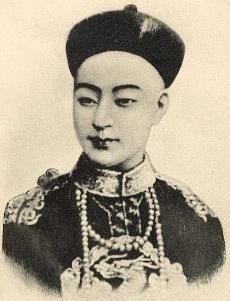 |
| First, China should return to the example set by Emperor GuangXu and men like Kang YouWei in the "100 Days of Reform". Here was the "Lord of 10,000 Years", using the traditional system to institute reform across all sections of society and, for the first time in Chinese history, give a measure of political authority to the common people. Remember that, the first effort to establish constitutional-style government did not come from the Communists or the "Nationalists" but from the Emperor. This is important to consider because, in many ways, the Chinese mentality has never left the imperial system. The Communist Party can simply be viewed as a new, perverse, dynasty in the old tradition. They are obeyed because they were successful, and in the eyes of many, won the "Mandate of Heaven". China still has the imperial culture rooted in them, and it is only the imperial system that can change things in a way that would still be uniquely Chinese, acceptable and traditional. |
| Secondly, and dealing more particularly with the idea represented by Manchukuo instead of China, we have the example of Japan. The Japanese have been the most successful country in modern Asia, and they cannot be ignored. Even Kang YouWei and Liang Qichao were inspired in the "100 Days" by the example set by Meiji Japan, modernizing while keeping traditional institutions intact. Japan, for all of their brutality in World War II, was the model colonial |
 |
| power. They did what the Europeans did, but did it better. They developed their colonies like no other country in the world. Today, it is still the countries that are former colonies of Japan, such as Taiwan and South Korea, which remain the most prosperous. This was the plan for Manchuria as well. During the reign of Emperor Kang Teh of Manchukuo, industrialization and development were undertaken in record time. Sadly, this was balanced by dictatorial Japanese control over the government and military atrocities against civilians in China and Manchuria. We cannot forget this, but we can weep for eternity or we can learn and move on. Imagine the sort of country which could have been built after the removal of Japanese control over the Manchu government. Pu-Yi had always been in favor of popular reform, he saw himself as the idealistic successor of Emperor GuangXu, and these ideas, combined with Japanese development of the infrastructure could have made Manchuria a model of prosperity & progress. |
| Personally, I think HM Pu-Yi always viewed Manchukuo as simply a stepping stone to the ultimate restoration of Imperial China. It certainly would have been a powerful political image for the Chinese people, first fighting in a bloody civil war, then living under a Communist tyranny in a state of constant poverty, to be able to look across the border at the free and wealthy inhabitants of Manchuria, living under the benevolent reign of the man who had once been, and by right should still be, their own emperor. Blocking China from Korea, it probably would have also ensured a southern victory in the Korean conflict and thus one less ally for the Communist cause in the Far East. This one case could have shifted the Asian trend toward Communism to one toward tradition and limited monarchy. The monarchists of China, if by some miracle some still exist, should never give up hope. Naturally, the biggest obstacle is to force Red China to recognize the rights of the citizens, but from there, think of the possibilities. Could Manchuria "secede" from China and give the idea of Manchukuo another chance (this time without Japanese control)? It is highly unlikely, but, consider this: The Republic of China (Taiwan) still claim to be the government of Sun YatSen and the Revolution of 1911, and it was that very government which signed the treaty by which Emperor XuanTong abdicated, and which recognized the property and titles of the dynasty in perpetuity. Therefore, if the Republic of China ever gains superiority, the monarchists of the Qing Dynasty at least, have a legal base from which to work from. |