| Facts & Statistics on the State of Manchukuo |
 |
 |
 |
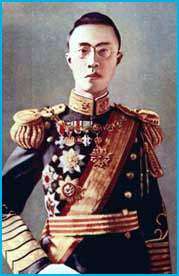
| Name: the State of Manchukuo, later the Great Manchu Empire Capital: Changch'un -renamed Hsinking (New Capital) Head of State: Aisin-Gioro Pu-Yi enthroned on March 1, 1934 as Emperor K'ang Te (Tranquility and Virtue) Area: 380,000 square miles Divisions: Four provinces; Liaoning, Kirin, Heilungkiang & Jehol Population: 30 million; 5 million Manchus, 20+ million Chinese, 800,000 Koreans, 230,000 Japanese, 150,000 White Russians plus Mongols and smaller minorities. Resources: rich in a number of ways, greatest mineral deposits were |
| coal and iron. Crops were soybeans, millet, corn, wheat, barley and oats. Japan also encouraged opium production to raise money for their war effort and heavily funded the industrialization of Manchukuo to become the industrial heart of the Japanese "Great East Asia Co-Prosperity Sphere". Government: Founded as a "state" with a "Chief Executive" as head of state, Manchukuo became a monarchy, which was a fundamental demand of the Qing loyalists who supported the new state. Some, left when a new country was created rather than the Qing Empire restored completely. The problem was that Japan was careful not place anyone in a position that could possibly challenge their power. The Manchukuoan monarch was totally powerless and the people had no voice. Japanese officers "guided" the Emperor and Japanese vice-ministers made all decisions for the nominal Manchu ministers whose actual position was mostly ceremonial. |