

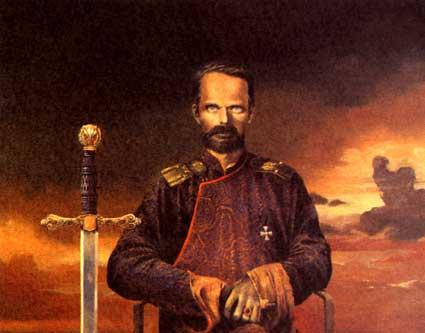
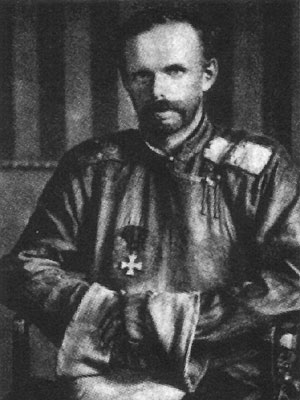
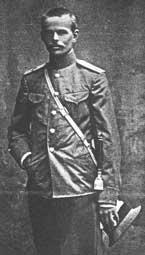
(right) Ungern-Sternberg in the civil war
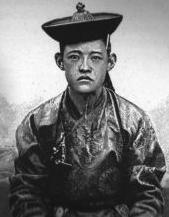
(above) the Bogd Khan of Mongolia


|
|
|
|
|
|
|
|
|
|
|
|
|
|
|
|
|
|
|
|
|
|
|
|
|
|
|
|
|
|
|
|
|
|
|
|
|
|||||||||||||||||||||||||||||||||
| The Mad Monarchist of Mongolia | ||||||||||||||||||||||||||||||||||
| Roman Freiherr von Ungern-Sternberg | ||||||||||||||||||||||||||||||||||
|
||||||||||||||||||||||||||||||||||
| ����������� The story of Roman Freiherr von Ungern-Sternberg is further proof that colorful characters abound on the frontiers of civilization, be they in the west or the east and that truth is stranger than fiction. His life story reads like "Apocalypse Now" set in northeast rather than Southeast Asia. Like the fictitious Colonel Kurtz, Ungern had been a decorated warrior, legendary for his skill and courage who became overwhelmed with death and destruction until he suffered some sort of mental breakdown; going rogue, going native and going insane by most accounts. His commander in the Imperial Russian Army and compatriot in the monarchist White Russian faction, General Pyotr Wrangel, described him as, "the type that is invaluable in wartime and impossible in times of peace". Some noble hopes rode on his shoulders but a great deal of cruelty, death and destruction followed in his wake. A combination of Russian general, Mongol warlord, Asian mystic and pan-monarchist; the story of Freiherr von Ungern-Sternberg is certainly one of the most bizarre to come out of World War I. | ||||||||||||||||||||||||||||||||||
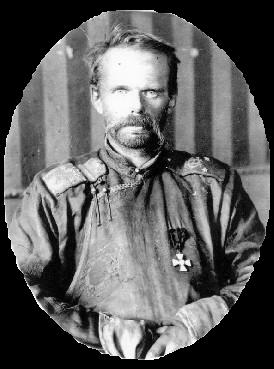
| ����������� Roman was born on December 29, 1885 in Graz, Austria, the first son of Theodor Freiherr von Ungern-Sternberg and Freiin Sophie von Wimpffen who divorced before he was six years old. His family was of the Baltic German group and at an early age he was raised by his stepfather in Estonia, taking the name Roman Fedorovich Ungern-Sternberg. By the end of his life he would be known variously as the Mad or the Bloody Baron. He set his sights on a military career and graduated from the Pavlovsk Military Academy in St Petersburg. One of his early assignments was to Siberia where he gained an early fascination with the Russian Far East, the Mongols and other native peoples and their culture. | ||||||||||||||||||||||||||||||||||
| ����������� The young baron got his chance to prove his military ability when Russia entered World War I amidst a frenzy of nationalist pan-Slavism. He served in the Nerchinsk Cossacks under the command of General Wrangel and fought alongside future White Russian leader Grigori Semenov. Fighting on the Galician front and in the Carpathians against the Germans and Austro-Hungarians he soon earned a reputation as a fearsome soldier. He was extremely skilled but became most known for his fanatical temperament and do-or-die tactics. Semenov, his superior, said the Baron was one of his most effective but also most ruthless officers. General Wrangel was impressed with his abilities but was afraid to promote him, worried about giving greater responsibilities to a man who was often so ferocious as to seem unhinged. His actions did merit him the award of the prestigious Cross of St George. Ungern-Sternberg was also a zealous nationalist and fanatically loyal to the Tsar, something which caused him to stand out all the more following the outbreak of the Russian Revolution in 1917. The temporary and more moderate government that took power in the immediate aftermath of the fall of Tsar Nicholas II sent Semenov to the Far East to secure the eastern frontier of Russia for their government. | ||||||||||||||||||||||||||||||||||
| ����������� This was the beginning of an extremely chaotic period in Russian history and power was rapidly being lost to the Bolsheviks. Two groups formed as the situation degenerated into civil war; the communists (or reds) and the anti-communists (or whites) who included a variety of monarchists, anti-communist nationalists and moderate socialists. Everyone seemed to have an iron in the fire, even the allies who were not all so upset at the loss of the Tsar but who became very much alarmed at the prospect of the Bolsheviks making peace with Germany and Austria. Soon the allies also dispatched troops to Russia, even to the Far East, to ensure that supplies and war materials they had sent to Tsarist Russia did not end up in Bolshevik hands. This led to the colorful campaign of the American Expeditionary Force Siberia under General William S. Graves and the harrowing odyssey of the Czech Legion. | ||||||||||||||||||||||||||||||||||
| ����������� General Semenov and his forces eventually mastered the Trans-Siberia region; aided in no small part by the effective and ruthless actions of the man many were calling the Mad Baron. However, even with Semenov in command this was no velvet glove occupation. He supported his forces by living off the land, confiscating what he wished, when he wished and effectively terrorizing the local populace. Unfortunately, he was not alone in this and such actions were rather standard procedure for Russian forces in both the red and the white camps. Lack of unity was also a particularly serious problem among the white forces and Semenov and his command illustrate this. Semenov soon broke from the White Russian government of Admiral Kolchak and went rogue. Negotiations were soon taking place between Semenov and the Japanese, who had landed far more troops than they were legally allowed to, for the creation of new country to be led by Semenov and propped up by the Japanese. This was no wild fantasy, but a real possibility and one that US General Graves had warned about. | ||||||||||||||||||||||||||||||||||
| ����������� This also effectively broke Semenov and his men from the coalition of White Russian forces under Kolchak (Ungern would eventually break with Semenov as well). Semenov and Ungern-Sternberg raided supply trains that belonged to both the Bolsheviks and the anti-Bolsheviks. The impact this had on Kolchak and the White forces was considerable as the area of operations for Semenov and his men sat directly astride of his supply lines to the Far East. They lived off the exploitation of the countryside and whatever they could capture from their enemies, whoever they might be and recruited a motley collection of soldiers. Throughout this early period they also received money and guns from the Japanese. Ungern-Sternberg soon began growing apart from Semenov and in 1918 issued his own manifesto which stated his intention to overthrow the Bolsheviks and restore Grand Duke Mikhail Romanov to the Russian throne. The final break came in 1920 when the Mad Baron broke from Semenov and went out on his own to the land he had earlier become infatuated with; the Mongol frontier. | ||||||||||||||||||||||||||||||||||
| ����������� The leader of this column certainly cut an odd figure. Those who knew the Baron described him as fair, skinny, rather frail looking with a distinctly unmilitary bearing. Yet he had boundless energy and endurance that surprised many. He was shy, witty, brutal and a natural killer. War, death and destruction were his business and he did them very well. As a major general in the Russian army one of his pastimes was to kick open the doors of a tavern, down enough vodka to make him see double and then evaluate himself by shooting at the other patrons and seeing how many he could hit --his score was a consistent 50%. He could drink far more than one would guess for someone his size and his reputation preceded him across Siberia to the point that taverns would quickly empty as soon as he came crashing in. He was also extremely taken by his new surroundings and loved the bleak, Mongol steppes. | ||||||||||||||||||||||||||||||||||
| ����������� Ungern-Sternberg went native, as the saying goes, and poured over the history of the Mongols, their tactics and their former glory. He was impressed by their awesome accomplishments and even took up a bastardized version of their religion. The religious beliefs of the Mad Baron could be described as a mix and match assortment of Christianity, Buddhism and his own personal brand of mysticism. He wore a huge number of religious charms, medals and amulets on a yellow cord underneath his uniform. He accepted eastern viewpoints on fate, karma and even somewhat on reincarnation though this certainly did not make him peaceful or passive. In fact, when he finally lost track of the number of lives he had taken; he had an epiphany. Once describing the experience as similar to the enlightenment of Buddha, the Mad Baron said he suddenly realized that he was benefiting his victims by taking their lives. If they were weak and able to be defeated it meant they had bad karma and he was only acting as the instrument of a higher power and that by killing these innocents he was assuring them of reincarnation to a higher order or some better position in the afterlife. The full depths of his spiritual side could probably only be understood by the Baron himself. He also married during this period, though he never settled down for a family life. On July 30, 1919 he married Zsi Helene Pavlovna, a 19-year-old girl from Peking but the two would not spend a great deal of time together. | ||||||||||||||||||||||||||||||||||
| ����������� Even before the Baron embarked on this new chapter in his life he had a fearsome reputation among his Russian comrades that none could match with some even then suggesting that he suffered some sort of mental or nervous breakdown. Some judged that all of the death and destruction he had witnessed during the World War and the Russian Civil War, along with the power he held and the lives he himself had taken finally caused him to snap. Tales are told of his troops assaulting citizens, hanging those they considered guilty of some offense, beheading others, disemboweling some and a whole list of other tortures. Those who felt his wrath left onlookers stunned and claiming it was impossible to tell by looking that the body of the victim before them could have once been human. His own physician described him as bloodthirsty and mentally unhinged. However, it is important to keep in mind when considering the worst and most lurid tales of the Mad Baron; the majority of these come from Soviet sources who were the sworn enemies of the fanatically monarchist Baron and it is highly likely that they embellished them or encouraged witnesses to stretch the truth as much as possible to make a villain and an imperialist bogey man out of Ungern-Sternberg. | ||||||||||||||||||||||||||||||||||
|
||||||||||||||||||||||||||||||||||
|
||||||||||||||||||||||||||||||||||
|
||||||||||||||||||||||||||||||||||
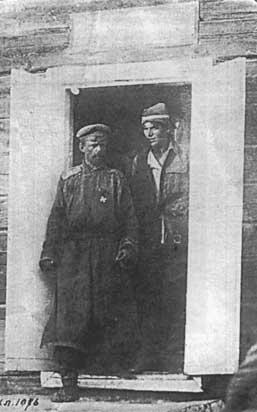
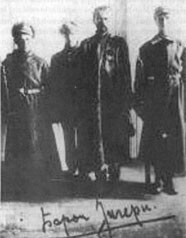
| (left) Ungern-Sternberg in his early army days (right) Ungern-Sternberg in the civil war (above) the Bogd Khan of Mongolia |
||||||||||||||||||||||||||||||||||
| ����������� That being said, it was most likely not necessary to stretch the truth very far in his case. But even for those who marveled at the actions of the bad boy of the Russian Civil War, the most bizarre period in the life of Ungern-Sternberg was only just beginning. Having been pushed out of Russia by the massive Soviet forces, the Baron hatched another plan. He would go to the heartland of the Mongols, gather the forces loyal to the Khan and the deposed Emperor of China and forge a massive, revived Asian empire under the Manchu dynasty that would take in Mongolia, Manchuria and Tibet which was spiritually linked to the Mongols. He was joined by three hundred devoted adherents whom he baptized in his own way with vodka and hashish and named them (rather absurdly) the Order of Military Buddhists. Riding high, in more ways than one, the Baron and his private army rode into Mongolia in 1920 with the Red Army nipping at their heels. | ||||||||||||||||||||||||||||||||||
| ����������� This move, however, was not simply an invasion on his part. The Baron had been invited in by the displaced Bogd Khan of Mongolia who had ruled as Emperor and Living Buddha of the country in a Lama Buddhist theocracy since the Chinese Revolution. By this time, however, the Chinese republicans had returned and the Khan was anxious for help from any quarter to restore his country. This was fairly common practice at the time as the deposed Emperor of China was also in constant contact with various White Russian warlords in the hope of enlisting them in the service of the restoration of the Manchu dynasty. Ungern-Sternberg was more than willing to comply. A committed monarchist, he viewed all republicanism with disgust and felt that only monarchy possessed the secular and spiritual purity to save civilization from chaos. It was a noble sentiment, though it sounds rather odd coming from someone who was himself quite a chaotic individual. He immersed himself in his surroundings, donning native robes, learning at least passable Mongolian and immersing himself in Buddhist mysticism. This was to be the heartland of the Eurasian empire he would build. | ||||||||||||||||||||||||||||||||||
| ����������� The Baron succeeded in restoring the Khan though at this time the Manchu Emperor had to be wary of his actions for fear of upsetting the republic and endangering the Articles of Favorable Treatment. The Khan at least though was liberated and put back on his throne, though the forces of Ungern-Sternberg won few friends among the local populace. One of his most memorable escapades was the sacking of Urga in February of 1921. It was a bitterly cold Mongol winter and the Baron was camped outside the city waiting for a moment to attack that would be astrologically auspicious. His soldiers supposedly entertained themselves by discussing the right or wrong of necrophilia. To further intimidate the Chinese occupying the city, Ungern-Sternberg lit fires in the surrounding hills to give the appearance of a large host about to descend on them. Cold, bitter and increasingly enraged the Baron finally decided that the moment ordained by Heaven had come and he loosed his half frozen soldiers on the city. They brushed aside the Chinese with little difficulty, stormed through and let loose an orgy of carnage, killing, raping, looting and otherwise pillaging the city for three days. How much of this is factual and how much is communist exaggeration is hard to determine. | ||||||||||||||||||||||||||||||||||
| ����������� On March 13, 1921Mongolia was officially proclaimed independent of Chinese control once again. The Bogd Khan remained on the throne but the Mad Baron was the man in charge of things. The first step in his grand plan to forge a massive Mongol-Manchu Empire had been accomplished and the Baron began to believe that he was a reincarnation of Genghis Khan but certainly the appearance of his forces could not have inspired much confidence. His collection of ragged but vicious mercenaries again sustained themselves by pillaging the populace, though the Mad Baron did win some spiritual notoriety for restoring the Bogd Khan. In the Mongols spiritual colony of Tibet the XIIIth Dalai Lama proclaimed him to be the reincarnation of the god Mahakala. In any event, Buddhist incantations aside, it was Japanese money that sustained his forces during this time though the details of their agreement remain a mystery. The Japanese were eager to have friendly states between themselves and Russia and China. They had tried to do the same with Semenov and they would do so again in World War II with the Mongol Prince Te and the last Chinese Emperor in Manchuria. | ||||||||||||||||||||||||||||||||||
| ����������� The Baron need not have worried a great deal about the Chinese though, his Waterloo was to come at the hands of his old nemesis; the Soviet Army. A Mongol cavalryman named Damdin Suhbaatar had earlier been sent to Russia to seek aid against the Chinese. He would become the principle Soviet puppet of Mongolia and the USSR gladly supplied massive support to claim the country they had long struggled with China over. Soviet forces played the dominant role in this fight, though later communists naturally portrayed Damdin Suhbaatar as their liberator from the monarchical-religious despotism of the Bogd Khan and the Mad Baron. In truth, this campaign would mark the beginning of decades of Mongolian oppression at the hands of the Soviet Union as one of their satellite states. | ||||||||||||||||||||||||||||||||||
| ���������� Ungern-Sternberg threw himself into battle with his usual zeal, but while the locals were never much of a problem for him; he knew the Russian Red Army could never be matched with his handful of mercenary soldiers. His end was near and knew it, but if the end had to come, he would meet it on his own terms; charging headlong into the jaws of the beast to die a glorious death back on the soil of Mother Russia. After scattering the local forces opposing him, in May of 1921 he marched his small army back into Russia near modern Kyakhta. He let loose his fury on the communists who had not been expecting the Baron to take the offensive in such an aggressive fashion. It was truly a case of the prey becoming the predator. However, it was only a matter of time before the Soviets brought their full strength to bear and after about a month of successful raids the communist offensive came in July of 1921. | ||||||||||||||||||||||||||||||||||
| ����������� Communist patrols were everywhere, combing the countryside in search of the Mad Baron and his renegade army. Finally, on August 21, 1921, the end came. As usual, Ungern-Sternberg did not intend to go quietly. He and his men indulged in double rations of vodka and hashish to prepare them for battle, then, wild eyed and in a drug induced maniacal rage they charged straight into the Soviet forces. His forces were decimated and at that point the Mad Baron lost control. His bloodied troops mutinied and tried to kill the Baron themselves. He fled, nearly naked, with his cord of talismans clanking around his neck. His men were rounded up one by one and the Baron himself was the last to be found. Witnesses were afraid to even look at him so fearsome was his appearance. The reign of the mad monarchist of Mongolia had come to an end and with him his dreams of a restored Asian Empire. | ||||||||||||||||||||||||||||||||||
| ����������� Roman Freiherr von Ungern-Sternberg was taken to Novosibirsk in Siberia with his train stopping at every station to display him as if he were an exhibit at a freak circus. Undoubtedly this is where many of his more heinous deeds were dreamed up as the communists shocked the locals with tales of the bloodthirsty former Tsarist general they saw before them who had tried to revive the days of Genghis Khan. He was the last monarchist general in the field to bedevil the new Russian dictator Vladimir Lenin and with his capture and execution the Soviet chieftain was eager to finally put the civil war and any threats to his new state to rest. In September a military tribunal was convened, though in typical communist fashion it was more for appearances than anything else. The fate of Ungern-Sternberg was a forgone conclusion. To the surprise of everyone he spoke quite eloquently and coherently at his trial, perhaps causing a little confusion for those who portrayed him as a mindless, raving, bloodthirsty beast. Nonetheless, he was swiftly found guilty and sentenced to death by firing squad on September 17, 1921. | ||||||||||||||||||||||||||||||||||
| ����������� Even in death, the Mad Baron could not simply die. He chewed up his prized Cross of St George so as to keep it from the godless communists and when the executioners shot him in the chest (because his head was too small to be a decent target) a piece of shrapnel from one of his many talismans still hanging around his neck flew back and seriously injured one of the Red soldiers. That would officially mark the last blood to be shed by Baron von Ungern-Sternberg. The mad monarchist of Mongolia, the man who thought he was Genghis Khan and wanted a united Asian monarchy that would wipe the scourge of Bolshevism from the earth was no more. Following his execution his body was dissected and his brain was removed for study by doctors to try to understand his bizarre behavior. It was later announced that they found his left lobe, the hemisphere where our identity exists, only a shriveled root.� | ||||||||||||||||||||||||||||||||||
|
||||||||||||||||||||||||||||||||||
|
|
|||||||||||||||||||||||||||||||||
| The Baron at his execution | ||||||||||||||||||||||||||||||||||
|
||||||||||||||||||||||||||||||||||
|
||||||||||||||||||||||||||||||||||
| "If the madness and corruption of mankind continue to threaten the divine spirit in man's heart, to shed blood and to prevent all moral progress, then the Asian state must put an end to this destructive process and establish a sure and lasting peace." -Baron Ungern-Sternberg | ||||||||||||||||||||||||||||||||||
| Sources: | ||||||||||||||||||||||||||||||||||
| "The Brutal Buddha: Baron von Ungern-Sternberg" by Rhys Hughes | ||||||||||||||||||||||||||||||||||
| "Bloody Baron: The Story of Ungern?Sternberg" by Vladimir Pozner | ||||||||||||||||||||||||||||||||||
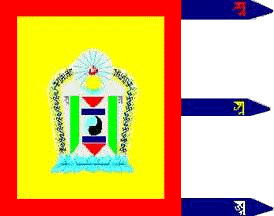
| "Baron Ungern, Khan of the Steppes" by Leonid Yuzefovich | Background music is the Qing Dynasty anthem. The top two flags are the Khanate of Mongolia and Ungern's Asian Cavalry Division. The bottom are Russia (imperial and modern) and modern Mongolia. | |||||||||||||||||||||||||||||||||
| Painting thanks to Eugene Vigilyanskyi | ||||||||||||||||||||||||||||||||||
| Flags from 3D Animated Flags at http://www.3dflags.com/ | ||||||||||||||||||||||||||||||||||