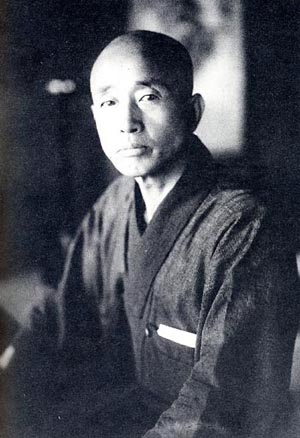
Everyone tends to dismiss the slogans and campaigns of the Empire of Japan for a "Greater East Asia Co-Prosperity Sphere" as simple propaganda designed to cover up more sinister motives on behalf of the Japanese militarists who wished for Japan to dominate and control the Far East. In most cases that tends to be the correct evaluation, but not in every case and a notable exception is the case of General Kanji Ishiwara of the Imperial Japanese Army. He is a unique case in that he was a man who helped mastermind the initial Japanese aggressions in the Far East and who was totally devoted to his Emperor and the military campaigns of his country and yet who was also a very noble and well-intentioned man who ended up avoiding prosecution at the Tokyo War Crimes Trials after the war and who even served as a key witness for the Allies because he had so much more noble aspirations than many of his contemporaries and saw their actions as a betrayal of the benevolent vision of the Japanese Empire which he had. Kanji Ishiwara was the benevolent face of World War II Japanese imperialism.
Ishiwara was born into a samurai family on January 18, 1889 in Yamagata prefecture but his family had been kept out of power by the fact that they had sided with the traditionalists in the fighting at the end of the shogunate and the Meiji Restoration. Nonetheless, Ishiwara managed to enter the Imperial Japanese Army Academy and graduated in 1909. He served in Korea before earning further acedemic distinctions and qualifying to join the Army Staff College from which he graduated second in his class in 1918. He then served as a staff officer and did further military studies in Germany as an attache. He privately hired several German officers to tutor him in strategy and modern military tactics before he returned to Japan as one of the best and brightest in the Imperial Army. While studying in Germany he became a convert to Nichiren Buddhism which foretold a massive conflict after which Japan would be the source of a Buddhist revival that would encompass the world. It presented a vision of Japan taking the lead in the "Yellow" race dominating the "White" race and others around the world and ushering in a sublime Buddhist world order. He thus became what one might call a Japanese-Buddhist holy warrior fighting for the salvation of the world.
After returning to the Army Staff College as an instructor he was tranferred to the Kwantung Army in Manchuria, the preeminent army in the Japanese military at the time. Seeing the Chinese in chaos, with nationalists, communists and independent warlords battling for control and with Japan already holding considerable investments in the country he saw an opportunity to push his vision toward reality. He thus became one of the primary instigators of the so-called Mukden Incident (along with Colonel Seishiro Itagaki) which was the pretext for the all-out Japanese invasion and ultimate conquest of Manchuria followed by the establishment of first the State of Manchukuo and later the Great Manchu Empire under the last Emperor of China of the Manchu dynasty. It was Ishiwara who acted on his own authority, without consulting the Kwantung Army commander, who ordered Japanese troops to take control of the main cities in Manchuria and Ishiwara fully expected to be executed or at least dishonorably discharged from the army for this insubordination. He thought he would be sacrificing himself for the greater glory of the Emperor but to his surprise the Japanese traditionalists rallied to the occasion and he was recalled to Japan and given command of a regiment rather than being punished.
In 1935 Ishiwara was made Chief of Operations for the Japanese Imperial Army General Staff and he used this position to push for his vision of pan-Asianism. Like most in the Japanese army (as opposed to the Imperial Navy which tended to focus southward) Ishiwara saw the Soviet Union as the greatest enemy of the Japanese. His goal was for the empires of Japan and Manchukuo to join together in an "East Asian League" to destroy the evil Soviet Union and then turn southward into Indochina and Southeast Asia to liberate their racial brethren from European colonial rule before finally rallying all of the formerly subject peoples of East Asia together to confront the powerful United States of America. His vision was very similar to the official line of the "Greater East Asia Co-Prosperity Sphere" put out by Japan with the important difference that Ishiwara sincerely meant it and believed in it. He was eager to see Japan convert herself entirely to building up her military strength toward this goal, doing away with the bickering political parties and the greedy and corrupt businessmen who held influence. Those close to him began to wonder if his ultimate goal was perhaps, what could be called a "Showa Restoration" in which Emperor Hirohito took direct control of the government, abolished all political parties and put the empire on a command economy directed entirely at the Asian crusade.
However, Ishiwara was not prepared to go that far and when a military rebellion broke out in early 1936 to put his theory into practice, Ishiwara stood up against it and called for martial law to stop the rebels and secure the situation as it was. In fact, so loyal was he that Ishiwara was put in charge of the security operations against those who had resorted to violence to put his plans into action. With his reputation secured as a loyal and trustworthy officer, Ishiwara was sent back to Manchukuo with a promotion to major general and an appointment as vice chief of staff of the Kwantung Army. He seemed to be in the perfect position for a rapid rise to great power, but his principles got the better of him. Upon returning to Manchukuo he was disgusted by what he saw. His vision had been for a brotherly partnership between the Manchus and Japanese and yet everywhere he looked he saw the Japanese behaving as colonial occupiers, ruling as overlords rather than as friends and brothers with the local population. This shocked and outraged General Ishiwara whose vision had always been one of the Japanese leading her Asian brothers in a great crusade, not ruling over them as a conqeror and master. In a move that had to take a great deal of courage he openly denounced the leadership of the Kwantung Army and even had the audacity to take his complaints directly to General Hideki Tojo. He wanted all officers to take a pay cut and complained that corruption was rampant and a stain on the army of the Emperor. His befuddled superiors were taken aback by this outspoken officer with so many morals and so he was relieved of command and shipped out of Manchukuo to command a relatively insignificant base near Kyoto.
This did not, though, manage to silence General Ishiwara who continued to speak out against further aggression against China and in favor of Japanese-Manchu cooperation in an invasion of the USSR and a grand alliance of Asian peoples. He was also effective enough in his current assignment to be promoted to lieutenant general in command of the 16th Division. However, his good fortune could not hold because of the fact that he had made a political enemy of General Tojo who would have liked nothing better than to get rid of Ishiwara but feared the backlash of conservative elements within the military if he did so. Ishiwara solved that problem for him, however, when he openly declared Tojo an enemy of Japan and called for him to be executed at which point Tojo had reason enough to retire Ishiwara from active duty after which he returned to his home in Yamagata where he continued to write his opinions and theories along with studying agriculture until the end of World War II. In spite of his intimate involvement in the Mukden Incident he was never tried for war crimes due to his opposition to Tojo, the further invasions of China and the attack on Pearl Harbor. He was called as a witness during the trials in Tokyo and showed that he was still enough of a Japanese patriot and courageous enough to publically call for indictment of President Harry Trumen for the bombing of Japanese civilians at Hiroshima and Nagasaki. He died a few years after the war on August 15, 1949 a loyal servant of the Emperor to the very end. |