 |
| Friends of Imperial China |
|
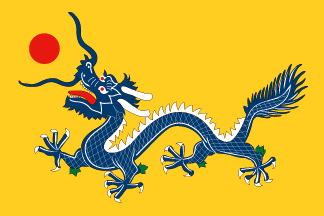
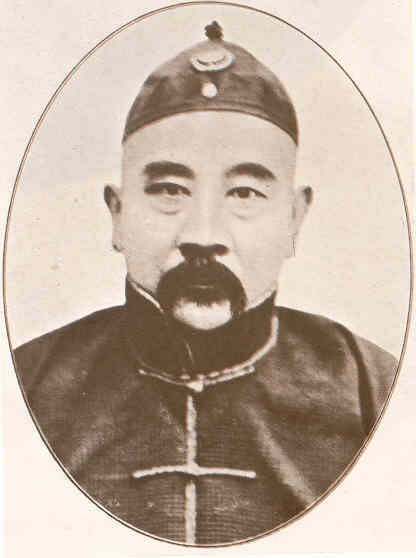
| General Chang Hsun was the leader of the forces known as the "Pigtailed Army" because they still wore the traditional Manchu hairstyle to show their loyalty to the Qing Dynasty. General Chang Hsun occupied Peking and on June 30, 1917 announced his request that Aisin-Gioro Pu-Yi resume his duties as Emperor of China (he had been permitted to retain only the title of 'Manchu Emperor'). On July 1, 1917 P'u-Yi was officially restored to the Dragon Throne as Emperor Hsuan T'ung. Dragon flags flew on every street and old imperial robes were taken out of hiding and worn again. Chang Hsun had the support of the devoted monarchists, such as Kang You-wei but misjudged the position of other leading politicians like Tuan Ch'i-jui. The restoration lasted only 12 days. |
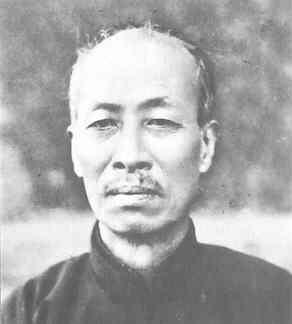
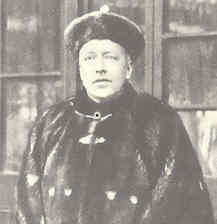
| Cheng Hsiao-hsu was a long-time supporter of the last Emperor of China. A traditional Confucian literary scholar and poet, Cheng nevertheless was a modern-minded man who knew China would have to adapt in order to survive and still keep her traditional institutions in tact. In his efforts as a young man to reform the Forbidden City, Pu-Yi named Cheng Hsiao-hsu Court Chamberlain. He was instrumental in gaining the aid of the republican government to keep the Emperor in control of the Palace. Later, in the Empire of Manchukuo, Cheng Hsiao-hsu was made Prime Minister. He fought for the Emperor's authority but was side-stepped by the Japanese. His son was assassinated by Communist guerillas and he moved to a monastary, after which Japan took total, direct control of Manchukuo. |
 |
 |
 |
 |
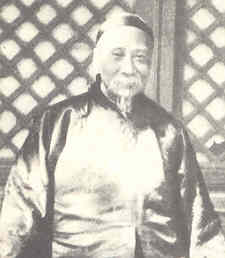
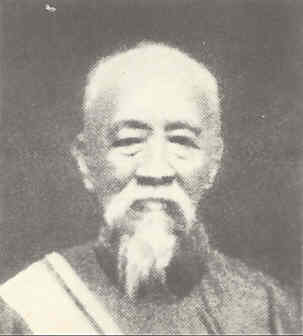
| Chen Pao-shen a scholar and eunuch in the Forbidden City, was one of the earliest and most trusted friends and advisors of the last Emperor of China. His primary duty was to educate the young monarch in the traditional way for Chinese emperors. He helped manage relations with the monarchist generals and sympathetic warlords and work for better treatment with the republican government. The Emperor depended heavily on the advice of his childhood tutor, but the two eventually drifted apart as Chen Pao-shen was adamantly opposed to the Japanese occupation of Manchuria and of the Emperor agreeing to become the Chief of State of Manchukuo. |
 |
 |
| Reginald F. Johnston was a British diplomat before being recruited to act as tutor in English to the last Emperor. It was quite a rare distinction for a foreigner to be granted such an honored post in the Forbidden City. The Qing court hoped the appointment would encourage British support for the Chinese monarchy. Johnston helped the Emperor gain a better understanding of the west and was much more cautious about those who appeared seeking his favor. After the Emperor left the Forbidden City he returned to Britain where he wrote the book "Twilight in the Forbidden City". He continued to support his imperial friend and even during World War II flew the Manchukuo flag at his residence in Britain. |
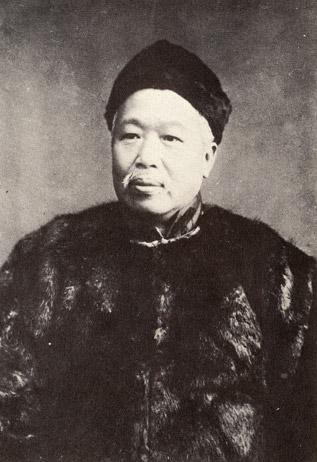
| Lo Chen-yu, a Confucian scholar turned antique dealer, he was one of the chief supporters of seeking aid for the restoration of the Chinese monarchy in Japan. He helped to build much of the relationship between the last Emperor and the Japanese. However, Lo Chen-yu was very much a traditionalist and eventually gave up on the effort when it became clear that Japan was not interested in restoring the old Qing Empire but of creating a new state under their protection in Manchuria. He retired and returned to the Chinese Republic. |
| Kang Youwei was one of the most prominent Chinese statesmen of the late empire and early republic. Zealously loyal to the Qing monarchy, he was nevertheless a committed reformer who believed that traditional China could only survive if it could modernize and beat the west at their own game, rather along the same lines as proved successful in Japan, creating a modern government and infrastructure but with traditional authorities and customs still in place. Along with Liang Qiqao (who later became a republican) he helped Emperor GuanXu usher in the "100 Days Reform" toward his goal of a constitutional monarchy for China. When this effort failed at the hands of the Empress-Dowager Cixi, Kang went into exile but continued to champion the cause of the Emperor who was then under house arrest. Loyal to the monarchy until his death, he also supported the restoration of 1917 and the efforts of the Emperor until his death. |