 |
|
|
|
|
|
|
|
|
|
|
|
|
|
|
|
|
|
|
|
|
|
|
 |
|
 |
|
|
The Struggle of the Church in China from Empire to Republic |
|
|
|
|
|
|
|
| ����������� China has been of great concern to the Catholic Church for centuries. St Francis Xavier died trying to bring his missionary work to China. Christians have played an important part in this traditionally non-Christian country for many hundreds of years. The Yuan Dynasty saw many Nestorian Christians serving as court officials to the famous Kublai Kahn, whose own mother had been a Nestorian Christian. The great emperors of the Qing Dynasty allowed the Jesuits a presence at court for their knowledge and education, which traditional China always respected. The Taiping Rebellion had Christian roots, all be they questionable ones, and the Chinese Civil War is often portrayed in terms of the contrast between the atheist Mao Tse-tung and the Christian Chiang Kai-shek. The role of Christianity in China has been glorious and tragic as well as often extremely confused. |
|
|
| ����������� The earliest missionary to China was probably a Nestorian Syrian monk named Alopen who came to the "Middle Kingdom" in 635 AD during the reign of the Tang Dynasty. A sizeable Christian community was established but later wiped out by persecutions in the Ninth Century. The Roman Catholic Church arrived on the scene in the Thirteenth Century in the person of Father John of Montecorvino, a Franciscan, who arrived in Beijing in 1294. He converted thousands of Chinese to Christianity and saw greater favor granted to the Catholic community by the Mongol rulers of the Yuan Dynasty. However, when the Mongols were overthrown the Chinese Ming Dynasty carried out another persecution of Christians, which devastated the Catholic community, almost wiping Christianity out in China completely. |
|
|
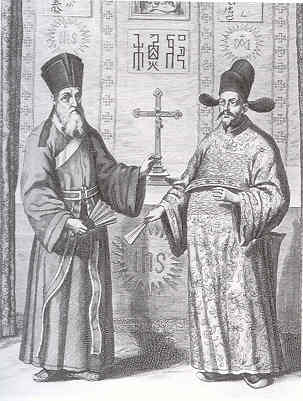
| ���������� However, Spanish and Portuguese voyages to the Far East in the Sixteenth Century brought in a new wave of Franciscan, Dominican, Augustinian and Jesuit missionaries to China via Portuguese India and the Spanish Philippines. The most well known of these missionaries to China was the Jesuit Father Matteo Ricci, who arrived in 1583. His vast knowledge and education impressed the Confucian scholar-gentry of China and led to the conversion of many mandarins in the Chinese court. Great progress was made and in 1654 the first Chinese native priest was ordained: Father Lo Wen-tsao Gregory, O.P. (better known as Fr. Gregorio de Lopez). In 1685 he became the first Chinese bishop of the Catholic Church, consecrated Titular Bishop of Basileus and made the vicar apostolic for Nanjing. The Pope granted Bishop Lo the right to name his own successor, but he chose the Italian Father Giovanni Francisco de Leonissa instead of a Chinese priest and the hierarchy remained foreign-born for most of the next three hundred years. |
|
|
| ����������� During this period there were still many ups and downs in the relations between the Chinese and the Catholic missionaries. Father Ricci was at the center of a controversy concerning to what extend traditional Chinese customs and terminology could be used by the Christian converts. Father Ricci allowed the Chinese to retain many of their traditional styles of worship, only now directed toward God, and preferred to use terms and phrases the Chinese were already familiar with to teach them about Christianity. Some doubted, however, whether it was wise to use the traditional Chinese word for "Heaven" to refer to God the Father. Ricci, knowing that "Heaven" was the supreme deity recognized by all Chinese, considered that this was the same God Christians worshipped, the Chinese simply had an incomplete understanding of him. This, along with the ultimate ruling by Rome that Chinese converts could no longer venerate their ancestors in the old way caused some problems. The rites concerning dead ancestors focused around an argument as to whether this was simply the respectful commemoration of ancestors or if this was ancestor worship, which should be forbidden. Most of these problems were simply the result of two very different cultures coming together and would simply take time to overcome them. |
|
|
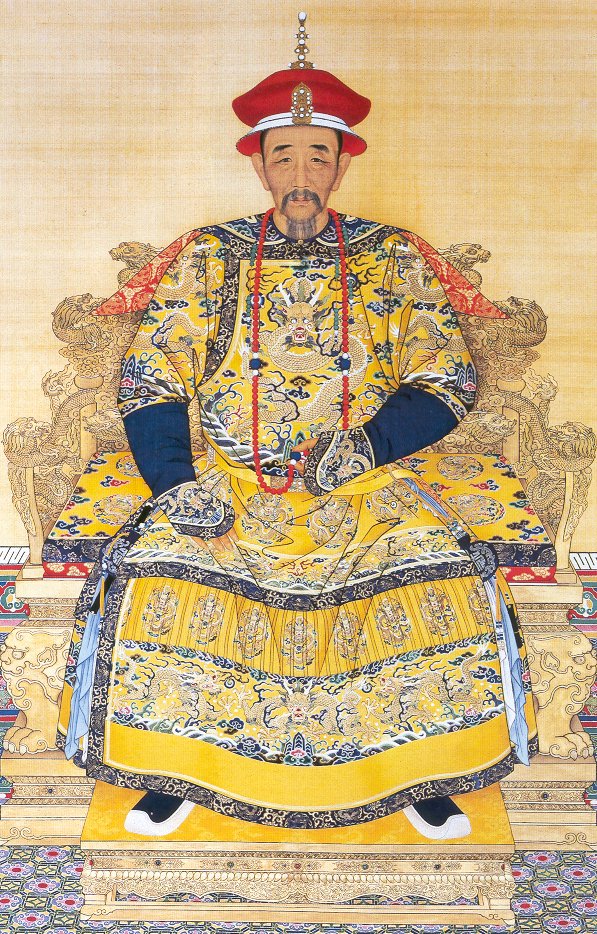
| ����������� Over the following centuries many Popes encouraged greater missionary work in China, which was aided by the cooperation of many of the Qing Dynasty emperors. Considering some of the things he had written, some have speculated that the great Qing Emperor Kangxi may have been a "closet Christian", though it is certain that some of his children were baptized in the Church by the Jesuit missionaries in Beijing. It was during the later years of the Qing Dynasty, the last Chinese imperial dynasty that the strange case of the Taiping Rebellion occurred. The disturbance arose mostly due to the problems caused by a population boom, as well as the huge influx in recent years of foreign ideas and the natural decline of the aging Qing Dynasty. |
|
|
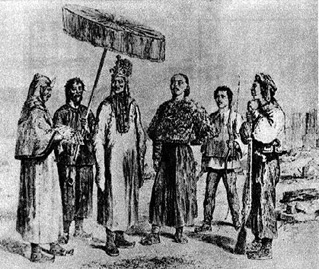
| ����������� The Taiping Tianguo or Kingdom of Heavenly Peace was the rival Chinese state set up by a Chinese Protestant Christian named Hong Xiuquan. Hong Xiuquan was a failed scholar who had built up a grudge against the Qing Dynasty after failing three times to pass the examinations to become a mandarin. He later began having visions and was taken in by a Baptist missionary. Over time, Hong Xiuquan began to believe that he was the brother of Jesus Christ, a Son of God, and was going to overthrow the Qing Empire and establish the Taiping Tianguo (Kingdom of Heavenly Peace) based on his own style of Christianity and the 10 Commandments. Soon Hong attracted many followers, who accepted him as the Emperor of their new nation and a living divinity. The Qing Dynasty began to respond and Hong built up an army that eventually reached from Guangxi to the old Ming capital of Nanjing, which was set up as their new national capital. |
|
|
| The Qing Dynasty was overwhelmed by the combined problems of a bloated bureaucracy, the Taiping Rebellion and the ongoing Western incursions. However, they were saved by the rise of local armies under the mandarins Zeng Guofan, Li Hongzhang and Zuo Zongtang, who were in turn supported by foreign forces commanded by the British general Charles George "Chinese" Gordon. By 1864 the Taipings were defeated and the authority of the Qing Emperor reestablished over the rest of China. Although China had always existed in the continuous rise, glory and overthrow of various dynasties, this was the first time such a rival dynasty was Christian oriented. It also had the effect of increasing suspicion of Christians within the circles of power in imperial China. |
|
|
| Nevertheless, missionary activity continued, even after the horrible persecutions during the Boxer Rebellion and after the fall of the Chinese Empire in 1911. The largest expansion came with the reign of Pope Pius XI who immediately began to focus on China after his election to the Throne of Peter. In 1926 history was made when Pope Pius XI created a native Chinese hierarchy by appointing as vicars apostolic the two Chinese priests who, a few years before, had been made the first native Chinese prefects apostolic, and by subdividing several other existing vicariates apostolic, then headed by European or American missionary bishops, to create four additional vicariates apostolic, each to be headed by ethnic Chinese. The six Chinese priests appointed as titular bishops to head these six vicariates thereby become the first ethnic Chinese to be made Roman Catholic bishops since Msgr. Lo Wen-tsao almost two and a half centuries earlier. |
|
|
| The six priests all traveled, together with Archbishop Costantini to Rome, where on October 26, 1926, in St. Peter's Basilica, they were personally consecrated bishops by Pope Pius XI. |
|
|
| Within fifteen years, the number of ethnic Chinese bishops had increased from 6 to 23. By 1946, there were in China fully 99 vicariates apostolic and 40 apostolic prefectures. By then ethnic Chinese bishops headed all of the important sees. That same year Pope Pius XII completed the work of his predecessor by establishing a regular territorial hierarchy for China. He changed almost all of the vicariates apostolic into full-fledged dioceses. China was organized into 20 metropolitan provinces, each headed by an archbishop. |
|
|
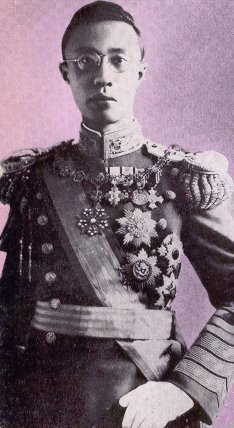
| The period of World War II was a very difficult and delicate time for the Church in China. When the last Emperor of China, with the support of the Japanese military, established the State of Manchukuo Pope Pius XI was quick to recognize the new country and sent a papal nuncio to the Emperor's court. After the war, many would accuse the Vatican of complicity with Japanese aggression because of this act. However, the Pope had simply taken the opportunity to establish peaceful relations with a country, long recognized as a separate nation, which could have played a major stabilizing role in that part of the world if the Manchu Emperor had been able to survive the defeat of Japan. Pope Pius XII also tried to ensure that peace and neutrality was maintained by the Church toward Japan while simultaneously working to bring relief to the suffering people of China during the conflict and in the horrific civil war that followed. |
|
|
| After the defeat of Japan, the struggle was renewed between the Communists under Mao Tse-tung and the Nationalists of Chiang Kai-shek. Although President Chiang was a convert to the Methodist Church, many doubted the sincerity of his conversion, believing it to have been a simple ploy to gain Western support. However, regardless of his own standing, and the fact that the Nationalists could be quite atrocious and autocratic at times, the Christian community still received far more tolerance from them than the Communists who denounced all religions as "poison". By late 1949, when the Communists won the war against the Nationalists, there were 139 archbishops and bishops on the mainland of China, of whom 26 were native Chinese and 113 were foreign missionaries. |
|
|
| The Communist victory did not, at first, have much affect on the ethnic Chinese clergy. Rather than immediately turning on their own, the new government of the "People's Republic of China" first concentrated on expelling or imprisoning the many European and American missionaries. In fact, between the end of 1949 and the first months of 1952, the Vatican was even able to increase the number of dioceses on the mainland of China from 139 to 144, and to name, and have consecrated, 18-22 additional bishops, all but one of whom were ethnic Chinese. Ultimately however, the Communist victory placed all of the Christians in China, especially the Roman Catholics, in a very dangerous position. Especially during the Korean Conflict, when the Communist Government was very hostile towards any entity with any foreign connections. |
|
|
| By the mid-1950s, all of the missionary bishops had either been expelled from the country or imprisoned. |
|
|
| The Communists then turned their attention to the ethnic Chinese Christians, and particularly towards their bishops. In September 1955 a large number of Chinese priests and bishops were arrested, the best known of them being Msgr. Kung Pin-mei Ignatius, who had been the Bishop of Shanghai since 1950. Soon, the Church in China was subjected to a massive persecution, which would even put the likes of Nero and Diocletian to shame. |
|
|
| Following the arrest of Bishop Kung there was born the idea of an "independent" Catholic hierarchy in China. |
|
|
| After the arrests, in September 1955, of Bishop Kung and of his two vicars general, the clergy of the Shanghai Diocese became so concerned over their having no episcopal oversight that they elected as their leader an elderly priest named Fr. Chang Shih-lang. They sent a telegram to the Congregation for the Propagation of the Faith in the Rome asking for the Papal Mandate for his consecration. The Congregation, however, replied negatively to the request, emphasizing its position that bishops are only to be chosen by the Holy See. The idea of having Chinese electing the bishops for China, though, did not go unnoticed by the Chinese government. |
|
|
| In May 1956, the Communists implemented the "let a hundred flowers bloom" campaign, during which the Party encouraged the Chinese population to express freely their opinions of the Party and its policies. Four of those Chinese bishops then still at liberty took the government's invitation to express their opinions seriously and traveled to Beijing to meet with Chou En-lai and other government officials. However, no positive results could be obtained and the situation of the Church in China did not improve. By early 1958, with most of even the ethnic Chinese bishops having either fled the country or been imprisoned, the Government demanded that the Church in China sever all its ties with foreigners. The situation by then was so acute that by 1958 fully 120 of the 144 dioceses in Mainland China had no functioning bishop. The 24 bishops still trying to govern their dioceses were all caught between a rock and a hard place. The Revolutionary Government applied intense pressure to make them subservient to the program of the Communist Party, and the Vatican just as intransigently was demanding from them opposition to atheistic Communism. |
|
|
| The first prominent Chinese cleric known to start cooperating with the Communists was Fr. Li Wei-kuang, the Vicar General of the Archdiocese of Nanjing. His archbishop had fled the country, leaving Fr. Li as the acting head of the Nanjing archdiocese. For reasons unknown, he chose to publicly support the Government's expulsion, in 1951, of the Apostolic Inter-nuncio to China, Archbishop Antonio Riberi. For this action, Fr. Li was, by name, excommunicated by Pope Pius XII in February 1952. Unfortunately, though he was the only to be excommunicated by name, he was by no means alone in following the Communist government instead of Rome. |
|
|
| In July 1957 a newly formed Chinese Catholics' Patriotic Association held its first general assembly, which was attended by 241 Catholics, allegedly including 10 bishops and over 200 priests. Archbishop Pi Shu-shih Ignatius of Mukden in Manchuria was elected the Association's chairman. At this assembly several delegates proposed that the Church in China henceforth elect its own bishops, without any involvement from the Vatican. The attending Chinese bishops, however, tried to deflect this suggestion and even managed to send to the Vatican a message recounting their dire circumstances and pleading for prayers and understanding of their situation. |
|
|
| On December 16, 1957, the Communists, frustrated by the stalling by the Patriotic Association on the issue, by-passed both the Association and the hierarchy, by encouraging a council of priests and laity to begin establishing their own hierarchy under the control of the Communist Party. Father Li Hsi-ting John was elected Bishop and between April 20 and July 20 of 1958, in seven different ceremonies, 13 more Chinese priests were consecrated "patriotic" bishops for 6 Chinese dioceses, all of which lacked the Papal mandate. |
|
|
| ����������� Eventually, two Catholic Churches would emerge in China. The only visible Catholic Church is the ?Patriotic? Church which is under the control of the Communist Party, does not recognize the supremacy of Rome and which has supported all government abortion and infanticide programs. The other is the unseen, underground Catholic Church which remains loyal to the Pope and established doctrines, but which can only operate in the greatest secrecy with help from bases in Taiwan. From 1962 to 1979, however, there were no further consecrations of any "patriotic" bishops. The terrible Chinese Cultural Revolution raged during the first seven of those years and all religions in China were severely repressed. |
|
|
| At the start of the 1980s, however, with domestic order restored following the death of Mao Tse-tung in 1976, the surviving "patriotic" bishops began a remarkable come-back. And there were scores of new consecrations. As a result, by the end of 1999, 133 so-called "Patriotic bishops" are known to have been consecrated in China without the Papal mandate. |
|
|
| They trace their apostolic succession from those ten Roman Catholic bishops of China in office at the time the Communist took over Mainland China who acted as the principal consecrators, or as the co-consecrators, for the bishops of the Chinese Catholic Patriotic Association. |
|
|
 |
|
|
 |
|
|
H.I.M. Emperor Kangxi of China |
|
|
|
|
|
|
Manchu Emperor Kang Teh |
|
|
|
|
|
 |
|
 |
|
|
|
|
|
Hong Xiuquan of the Taipings |
|
|
|
|
|
|
Fr. Matteo Ricci (right) |
|