E.W. Barton-Wright maintained a life-long fascination with all forms of personal combat, especially those that could be turned towards self-defence as well as sport. His education in England, Germany and France, and subsequent travels through Spain, Portugal, Egypt and Japan afforded him a veritable smorgasbord of fighting arts. Upon his return to England in 1898, he established the Bartitsu Club as a centre for training in a wide range of combatives.
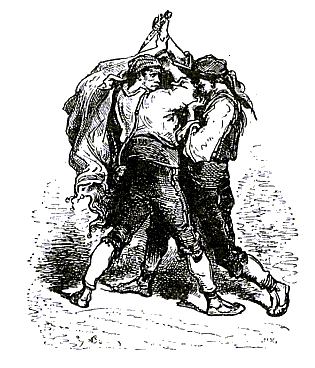
Along with the four major contributing systems, Barton-Wright was familiar with fencing, wrestling and "the use of the stiletto." He also claimed to have fended off attacks by assailants wielding knives and quarterstaves while he was living in Portugal.
The first technique demonstrated in his 1899 article, the New Art of Self-Defence, has been identified as a trick commonly employed by the French Apaches - street gangsters who frequented the Montmartre district of Paris, known for their devious repertoire of improvised weapons and surprise attacks.
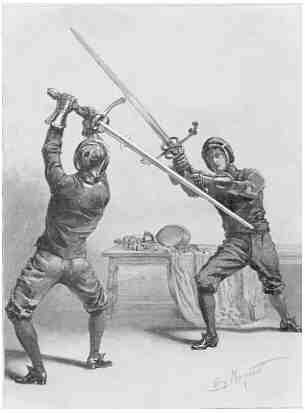
Sir Alfred Hutton, writing in the Sword and the Centuries, referred to the Bartitsu Club as "the home of antique fencing in this country." Hutton and his colleagues Egerton Castle and Cyril Matthey were involved in re-creating a number of historical fencing systems, such as the use of the two-handed sword and the rapier. They gave frequent exhibitions during the mid-late 1890s and held training sessions at Barton-Wright's academy in Shaftesbury Avenue, London. Although these antique arts do not appear to have been formally incorporated into Bartitsu, it may be assumed that Barton-Wright had some familiarity with them.