 |
|
|
|
|
|
|
|
|
|
|
|
|
|
|
|
|
|
|
|
|
|
|
|
|
|
|
|
|
|
|
|
|
 |
|
|
|
Gallery |
|
|
|
Self-Defence with a Walking Stick: pictures courtesy of Keith Ducklin of the Royal Armouries Museum, Leeds |
|
|
|
 |
|
|
 |
|
|
|
|
|
 |
|
|
|
|
|
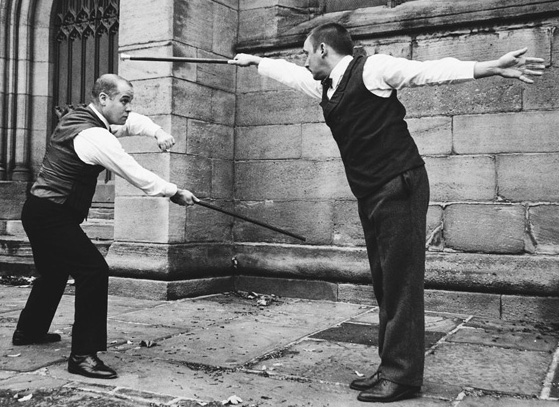
1) The defender (right) demonstrates a"guard by distance", inviting an attack to his extended left hand. |
|
|
|
|
|
|
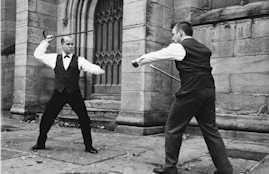
2) The defender steps back to avoid the cut and simultaneously brings his own cane down on the attacker's head. |
|
|
|
|
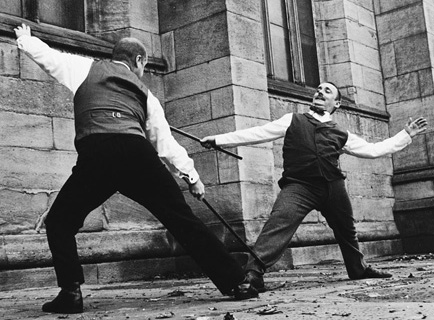
The defender (left) uses a hooked cane to trap the attacker's right ankle and pull him off balance. |
|
|
|
|
|
|
|
|
 |
|
|
|
 |
|
|
|
|
 |
|
|
|
|
|
|
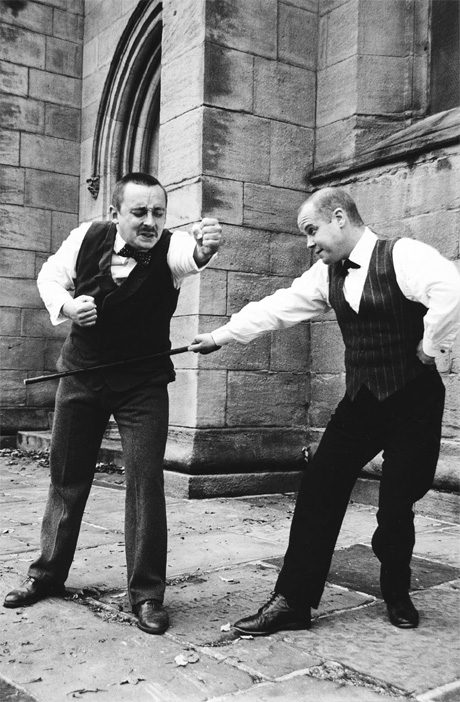
The defender (right) sidesteps the attacker's left lead-off punch and strikes to the lower abdomen. This is a modified Bartitsu technique; in the original, the knee was the chosen target. |
|
|
|
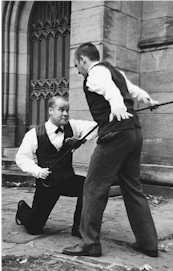
The defender (left) drops to one knee and performs a bayonet thrust with the cane tip to the attacker's solar plexus area. |
|
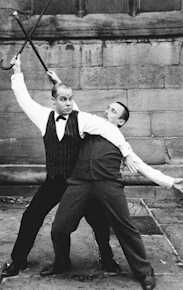
The defender (left) executes a back lever takedown, |
|
|
|
|
|
|
|
|
|
|