 |
|
 |
| Atis |
 |
 |
 |
 |
 |
 |
 |
 |
 |
 |
 |
| Medicinal Plants |
| for |
| DIARRHEA |
| Atsuete |
| Banaba |
| Bayabas |
| Botonsillo |
| Carrots |
| Chico |
| Datiles |
| Golasiman |
| Kasoy |
| Niyog |
| Saguing |
| Takip kohol |
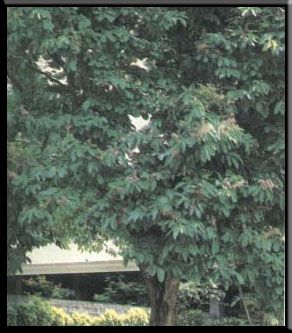 |
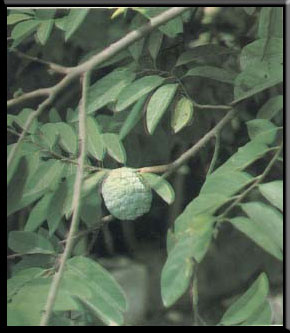
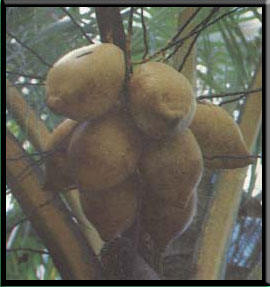
| Local Names: Atis (most dialects) Sugar Apple / Sweet Sop ( English ) Scientific Name: Anina Squamosa Description: A tree with oblong leaves that are pointed at both ends. The flowers are single, greenish white and axillary. The large fruit is heart shaped with scale-like cover. Medical Uses Crush leaves. Apply as poultice on the abdomenDrink as tea. |
| Local Names: Botbotonis (Ilok.) Botonsillo (Tag. / Bis.) Bachelor's button ( English ) Scientific Name: Gomphrena globosa L. Description: A stiff, hairy shrub with thick and purple nodes. The flowers are ethier violet, white or pink. Medical Uses Boil 10-15 flowers in two glasses of water. Drink the decotion as needed. Take as tea three times a day. |
| Local Names: Niyog (most dialects) Lubi (Bis.) Coconut ( English) Scientific Name: Cocos nucifera L. Description: A tall unbranched tree with a stout trunk marked with annular scars. The leaves are crowded at the top of the trunk and are divided into numerous bright green leaflets. Medical Uses Use coconut water, Add a pinch of salt and sugar. Use as substitute for water to replace lost electrolytes |
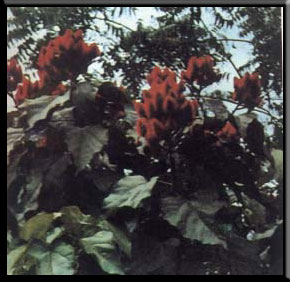
| Local names: Atsuete (most s\dialect) Asuete (Ilok.) Annato (Eng.) Scientific Name: Bixa Orellana L. Description: A small tree bearing capsular fruits covered with soft spines. The bearing many contain many small, red seeds that produce the red annato dye. The leaves are ovate with a broad base and pointed tips. Flowers are small white or pinkish clusters. Medicinal Values: prepare an infusion of 4-5 leaves in one glasses of hot water. Drink as needed. To prepare a stronger dose it is advisable to macerate the leaves in water. |
| Local names: Banaba (most s\dialect) Scientific Name: Lagerstroemia speciosa L. Description: A decidous tree with grey to creamy barks. Flowers are purplish and occur in clusters. The wide leaves are smooth and oblong. The fruits are small and winged. Medicinal Values: Grind or pound the dried bark to produce bark powder. Soak a teaspoonful of the powder in a glass of boiling water. Cool and drink the infusion. |
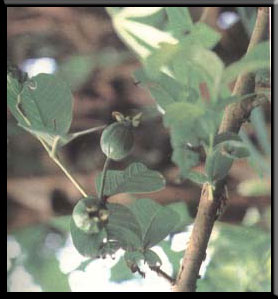
| Local names: Bayabas (most dialect) Bayawas ( Bik.) Guava (Eng.) Scientific Name: Psiduim guajava Description: A short tree containing an romantic an aromatic subtance. It has opposite leaves which are oblong and pointed at the tip. It has few white flowers and rounded green fruits containing numerous seeds. Medical Uses: Prepare a decoction by boiling 3-4 dried leaves or 5-6 fresh in the glass of water for 15 minutes. Drink � glass of the decoction every 3-4 hours. For children the dose is reduced to 3 teaspoons every 3 hours. |
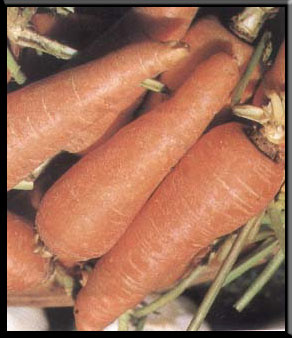
| Local names: Carrots (most dialect) Scientific Name: Daucus carota Description: Herbaceous, succulent plant. The most outstanding feature of this plant is its enlarge primary root with bright orange color. Medical Uses: Boil one or two carrots. Mash. Eat with salt. This will be replace lost body fluids and control bacterial growth in the digestive tract. |
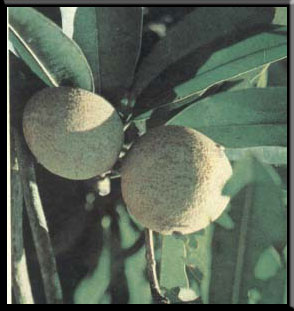
| Local names: Chico (most dialect) Chico / Sapodilla (Eng.) Scientific Name: Achras zapota L. Description: A small branching tre. The leaves are oblong with a brownish powdery lower epidermis. The fruits are ovoid, fleshy and rough. The black, hard seeds are embedded in the sweet pulp. Medical Uses: Prepare the decoction of the bark. Drink as needed. The fruit that is not overly ripe yet is good for dysentry. |
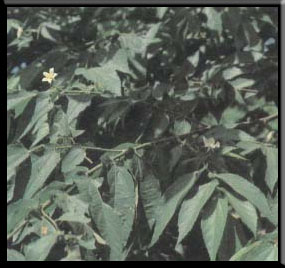
| Local names: Datiles (Bis. / Bik. / Tag. ) Mansanitas (Bis.) Ratiles (Tag.) Aratiles / Seresa (Ilok.) Scientific Name: Muntingia calabura L. Description: A very fast growing tree with widely spreading branches. The small flowers are white usually in pairs or solitary. The leaves are alternate, oblong, pointed and hairy. The fruits are small, rounded, shiny and reddish when ripe. They contain many small seeds embedded in its sweet pulp. Medical Uses: Prepare the decoction of 20 leaves. Drink as needed. |
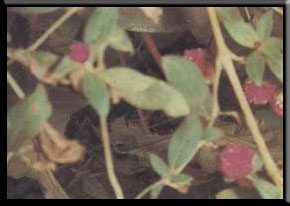
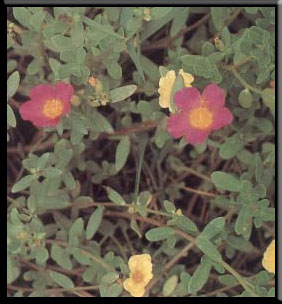
| Local names: Golasiman (Tag.) Alusiman / Gulasiman (Bis. /Bik.) Ngalug (Ilok.) Purslane (Eng.) Scientific Name: Portulaca oleracea L. Description: A spreading, fleshy, branched, smooth herb. The leaves are succulent, flat and oval in shape. The yellow or red flowers are sessile and axillary. They produce small, capsular fruit. Medical Uses: Prepare the decoction of the leaves. Drink as tea as often as necessary. |
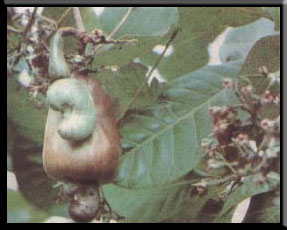
| Local names: Kasoy (most dialects) Cashew (Eng.) Scientific Name: Anacardium occidentale L. Description: A spreading small tree with thick, rough ovate leaves. The leaves are alternately attached to its twisted stems. They produce small yellow flowers crowded at the tip of the branches. The yellow fleshy fruit has a kidney shaped seed attached to its apex. Medicinal Values: Drink the decoction of the bark as often as needed. |
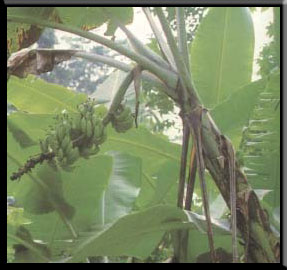
| Local names: Saguing (most dialects) Sabs (Ilok.) Batag (Bik.) Banana (Eng.) Scientific name: Musa paradisiaca L. Description; A herbacious plant with a sinlg, erect, fleshy stem. The leaves are very wide with long fleshy stalks that clasp the stem. The flowers are enclosed by large, red bracts. The fruits are in bunch and are finger-like,fleshly and sweet when ripe. Medinal Values: Drink a decoction of the trunk |
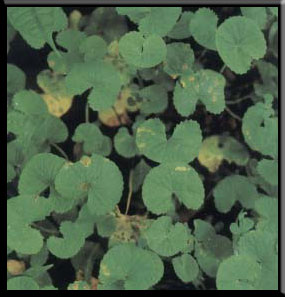
| Local names: Takip-kohol (mopst dialects) Yahong-yahong (Bis.) Indian hydrocotyle (Eng.) Scientific Name: Centella asiatica L. Description: A creeping, hairy, herb. The leaves are small, rounded , wide and kidney-shaped. These are attached to the stem by means of an erect and long petiole usually in groups of 2�s or 3�s. Medicinal Values: Prepare a decoction of the plant drink as needed. |
 |
 |