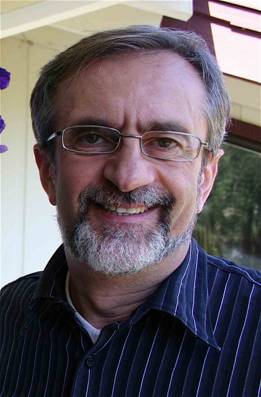
Professor Gianfranco Minati
(December, 2008)
Home 2. SCIENTIFIC AND PROFESSIONAL
ACTIVITY 3. SCIENTIFIC AND PROFESSIONAL AFFILIATIONS 4. ORGANIZATION OF INTERNATIONAL ACTIVITIES 5. FIELDS OF INTEREST 6. PUBLICATIONS 7. CURRENT RESEARCH ASSOCIATES APPENDIX:
THE BIOCOGNITIVECONVERTER (BIOCC) |
|
1. BIOGRAPHICAL NOTES
Born in
Graduated
in Mathematics from the
s-mail: Italian Systems Society (AIRS)
via Pellegrino Rossi, 42
20161
email: [email protected]
phone/fax +39-02-66202417 or ph
+39-02-36530183
2. SCIENTIFIC AND PROFESSIONAL ACTIVITY
Current
- Doctoral lecturer at the Polytechnic of Milan/Department 'Building Environment Sciences and
Technology' http://www.polimi.it
;
- Adjunct Associate Professor
(2000-current)
- Founder and President of the
Italian Systems Society (AIRS),
- Vice President of the Union
Européenne de Systémique (UES),
- Member of the Scientific
Committee of Conferences and Systems Societies.
Current research projects relate to
§
Experimenting
“Meta-structure in collective phenomena - Methodologies for modelling and managing processes of
self-organisation and emergence”, with research associate 7 (see section
9). See reference No. 1, books;
§
Architecture
as the design of meta-structures to influence processes of emergence in social
systems. Self-architecture:
influences of Architecture on social systems and influences of social systems
on Architecture, with research associates 9 and 1 (see section 9). See reference No. 4, 8 and 9, papers;
§
Establishing
a managerial culture consistent with the science of complexity. Management for
corporations, medicine, families, schools, etc., see references No. 3 and 13,
papers;
§
The
hypothesis of the BioCognitiveConverter
(BIOCC). When matter starts to suffer, desire, and enjoy. The becoming turns
into thinking. Life beyond Maturana and Varela. From non-living to living
matter with acquisition of emergent properties through meta-structures? See
reference No. 1, books and Appendix.
Some past activities
- Invited Lecturer at the 7th
Congress of the UES
- Invited Lecturer on Self-Architecture and Self-Design as
processes of emergence at the Istituto Superiore per le Industrie
Artistiche Disegno Industriale, ISIA, Rome, 2008;
- Lecture Creative Living as Health, and Health as Creative Living,
Bobbie Collen presentation "for Healthy and Creative Living",
- Invited Lecturer on General
Systems Theory (2003-2004) at the
--
Istituto Superiore per
le Industrie Artistiche Disegno Industriale, ISIA,
--
Università degli
Studi di Milano/Dipartimento di studi sociali e politici,
- -
University of Calabria/Department of Mathematics &
Performance Computing, Arcavacata, Rende (CS).
- Member (2005-2006)
of the Saybrook Institutional Review Board (SIRB); http://www.saybrook.edu/ ;
- Consulting Faculty (1999-2003)
at the
- Member of the
- Member of the Maurizio Milanesi
Committee (1994-2000), organized by V. Coda (
- Adjunct Faculty (1994-1999) at
the Saybrook Graduate School and Research Center, San Francisco (CA), USA,
http://www.saybrook.edu/;
- Member of the board (1990) and
Consultant to the President (1996-1997) of a leading Italian company for
banking software, Trend SpA,
- Lecturer (1985-1986) in
Systemics at the
- Fellow and member of the
International Systems Institute (ISI), San Francisco (USA), http://www.systemsinstitute.com/
;
- Executive of an Italian holding
company, Ital Information Systems SpA - Italmobiliare SpA,
3. SCIENTIFIC AND PROFESSIONAL AFFILIATIONS
Present or past member of several scientific and professional associations in
- AAAS-American Association for
the Advancement of Science;
- ACM-Association for Computing
Machinery (
- AFSCET-Association
Française de Science des Systèmes Cybernétiques,
Cognitifs et Techniques;
- ASC-American Society for
Cybernetics;
- Cognitive Science Society;
- IEEE-The Institute of
Electrical and Electronics Engineers (
- Italian Systems Society;
4.
ORGANIZATION OF INTERNATIONAL ACTIVITIES
- President of the Fourth Conference
of the Italian Systems Society, Castel Ivano,
·
President of the Third
Conference of the Italian Systems Society, Castel Ivano, Trento, Italy, Oct.
7-9, 2004, opening lecture by George Klir;
·
President of the Second
Conference of the Italian Systems Society, Castel Ivano, Trento, Italy, Nov.
9-10, 2001 opening lecture and session by Herman Haken;
- President of the First Italian
Conference on Systemics, Università degli Studi di Milan,
Dipartimento di Scienze della Informazione,
- International Conference of the
European Systems Union,
- Human Science Seminars, Castel
Ivano, Trento, Italy in 1992, 93, 94 and 95, sponsored by the Saybrook
Institute and held with Arne Collen (Saybrook Graduate School; San
Francisco).;
- Numerous invited lectures and
seminars in
5. FIELDS OF INTEREST
· Theoretical issues on Systems
Science, such as: Architecture as design of boundary conditions for processes
of emergence in social systems; Collective Behaviour; Conversion of biological
needs of living matter into cognitive properties; Dynamic Usage of Models;
Emergence; Ergodicity; Logical Openness; Meta-structures; Models;
Multiple-Systems (Collective Beings).
· Systemics for Education and
Management;
·
Systemic approaches for
disabilities;
·
Ethics for management
and education;
·
Ethical codes and
ethical balances;
·
Virtual systems;
·
Music and systems;
·
Torah and Systems.
6.
PUBLICATIONS
Books:
- Minati,
G., (2008), New Approaches for
Modelling Emergence of Collective Phenomena - The Meta-structures project,
Polimetrica,
- Minati,
G., Pessa, E., and Abram, M., (eds.), (2008), Processes of emergence of systems and systemic properties. Towards
a general theory of emergence. World Scientific,
- Guberman S. and Minati G.
(2007), Dialogue about systems”, Polimetrica,
- Minati, G., and Pessa, E.,
(2006), Collective Beings. Springer,
- Minati, G., Pessa,
E., and Abram, M., (eds.), (2006), Systemics of Emergence:
Research and Applications. Springer,
- Di Battista, V., Giallocosta,
G., and Minati, G., (eds.), (2006), Architettura e Sistemica,
Polimetrica,
- Minati, G., (2004), Teoria
Generale dei Sistemi, Sistemica, Emergenza: un’introduzione. -
Progettare e Processi Emergenti: Frattura o Connubio per
l’Architettura?, Polimetrica,
- Von Bertalanffy, L., General
System Theory: Foundations, Development, Applications.
- Minati, G., and
Pessa, E., (eds.) (2002), Emergence in Complex Cognitive, Social and
Biological Systems.
- Minati, G. (2001), Esseri
Collettivi, Apogeo scientifica,
- Minati G. (1999), Introdution
à
- Minati, G., (ed.), (1998), Proceedings of the first Italian
Conference on Systemics, Apogeo scientifica,
- Minati, G., (2008), Sistemica,
Apogeo scientifica,
- Minati, G., and Collen A.,
(1997), Introduction to Systemics, Eagleye Books, San
Francisco, http://www.amazon.ca/Introduction-Systemics-Gianfranco-Minati/dp/0924025069/ref=sr_1_3?ie=UTF8&s=books&qid=1199559278&sr=8-3
.
- Minati, G., (1996), Introduzione
alla sistemica, Kappa Edizioni,
- Minati G., (1989)
- Minati G., (1986), Knowledge,
Management, Computer, Ipsoa-scuola d’impresa, N° 7 ,
- Minati G., (1985), Guida
all’ automazione dell’ufficio, CESTEC-Centro Lombardo per
lo sviluppo tecnologico e produttivo delle piccole e medie imprese,
- Minati G., (1983), Le
tecnologie dell’ informatica nell’ era
A selection
of papers:
1.
Minati, G., (2008a),
Systemic Properties: acquisition and persistence over time, In: Proceedings of
the 7th Congress of the UES,
2.
Minati, G., (2008b),
Processes of structured and non-structured interactions, phase transitions,
self-organisation and emergence, In: Proceedings of the 7th Congress of the
UES,
- Minati, G., (2008c),
Meta-modelling for the management of complexity in social systems, chapter
submitted for the book edited by S. E. Wallis Cybernetics and Systems Theory in Management: Tools, Views and
Advancements.
- Minati, G. (2008d), Cities as
Collective Beings. World Futures
64(8): pp. 577–589. Proceedings
of the workshop Systemic
Approach and microscale urban complexity, Polytechnic University of
Milan, February 23-24, 2006.
- Minati, G., (2008e), Acquired emergent
properties, In: Proceedings of the Fourth National Conference of the Italian
Systems Society (AIRS), Processes of emergence of systems and systemic
properties. Towards a general theory of emergence (Minati G., Pessa E. and Abram M,
eds.), World
6. Minati, G., (
- Minati, G., (submitted), The Dynamic
Usage of Models (DYSAM) as a theoretically-based phenomenological tool for
managing complexity and as research framework.
- Minati, G. and Collen, A.,
(submitted to Cybenetics &Human
Knowing), Architecture as the Interdisciplinary Design of
“Boundary Conditions” for Emergent Properties in Human Social
Systems.
- Di
Battista, V.,
- Minati, G. and Magliocca,
- Minati, G., (2007a), Verso una
scienza costruttivista, Dedalus,
Anno 2(2-3): pp. 80-88.
- Minati, G., (2007b),
Émergence dans les Systèmes Complexes. In:
- Minati, G., (2007c), Some new
theoretical issues in Systems Thinking relevant for modelling corporate
learning, The Learning Organization (TLO), Emerald, Vol. 14(6): pp.
480-488.
- Minati, G., (2006a), Multiple
Systems, Collective Beings, and the Dynamic Usage of Models, Systemist,
Vol. 28(2): pp. 200-211.
- Minati, G., (2006b), Time,
processes and cycles. In: The New Roles of Systems Sciences for a
Knowledge-based Society, Proceedings of the first World Congress of
the International Federation for Systems Research (IFSR), Nov. 14-17,
2005, Kobe, Japan, pp. 417-419.
- Minati, G., (2006c), Emergence
of Collective Beings, Systemics, Collective Behaviours, Dynamic Usage of
Models, In: Seventh International Conference on Computing Anticipatory
Systems (Casys’05), Liège, Belgium, August 8-13, 2005,
pp. 326-341.
- Minati, G.,
(2006d), Some Comments on Democracy and Manipulating Consent in Western
Post-Democratic Societies. In: Systemics of Emergence:
Research and Applications, (Minati G., Pessa E., and Abram M.
eds.). Springer:
- Minati,
G., (2006e), Towards a Second Systemics, In: Systemics of Emergence:
Applications and Development (G. Minati, E. Pessa and M. Abram, eds.),
Springer,
19.
Minati,
G., and Vitiello, G., (2006), Mistake Making Machines, In:
Systemics of Emergence: Applications and Development (G. Minati, E.
Pessa and M. Abram, eds.), Springer,
- Bruno,
G., Minati, G., and Trotta, A., G., (2006), Uncertainty and the role of
the observer, In: Systemics
of Emergence: Applications and Development (G. Minati, E. Pessa and M.
Abram, eds.), Springer,
- Minati, G., (2006), Uno
Strumento per il Semantic Information Retrieval, In: http://www.programmazione.it a
cura di Ignazio Licata, Jan. 13, 2006.
- Minati, G., (2005), General
systems theory as theory of emergence, In: Proceedings of
the 6th Systems Science European Congress, Ecole Nationale Supérieure d'Arts et
Métiers (ENSAM), Sept. 19-22.
- Pessa, E., Penna, M.P. and
Minati, G. (2005), Collective phenomena in Living Systems and in Social
Organization, Chaos and Complexity Letters, Vol.1(2): pp. 179-189.
- Minati, G.,
(2004), Towards a Systemics of Emergence, In: Proceedings or the 48th
Conference of the International Society for the Systems Sciences,
Allen J. K., Wilby J. (eds.).
- Magliocca, L., and Minati, G.,
(2004), Physical and Cognitive Rehabilitation, In: Proceedings of
the 48th Annual Conference of the International Society for the
Systems Sciences;
- Minati, G., (2004), Buying
consensus in “free markets”, World Futures, Vol. 60(1-2): pp. 29-37.
- Minati, G. (2004), From
evolutionary consciousness to conscious evolution. Are we in control?, World
Futures, Vol. 60(8):
pp. 567-575.
- Della Torre, S., and Minati,
G., (2004), Conservazione e recupero
- Minati G., and Bruno, G.,
(2004), Conoscere la sistemica attraverso la matematica, In: Conoscere
attraverso la matematica: Linguaggio, Applicazioni e Connessioni
Interdisciplinari, Congresso Nazionale MATHESIS, Anzio, Nettuno, 18-21
Novembre, 2004, MATHESIS, Sogin, pp. 241-251.
- Minati, G. (2003), When a call
for papers is a paper: processes of emergence from physical,
biological, social, political, and religious systems, In: Proceedings of
the Forty-Seventh Meeting of the International Society for the System
Sciences, July 7th - 11th , 2003,
- Minati, G., and Abram, M,
(2003), Sistemi e sistemica, Rivista dell’Associazione
Elettrotecnica ed Elettronica Italiana (AEI), Vol. 90: pp. 41-50.
- Minati, G., (2002a), Ethics as emergent
property of the behaviour of living systems. In: Encyclopedia of
Life Support Systems (EOLSS), Vol. 1, Physical Sciences Engineering
and Technology Resources, Systems Science and Cybernetics: The Long Road
to World Sociosystemicity, (Parra-Luna F. ed.), EOLSS Publishers,
- Minati, G., (2002b), Music and
systems architecture, In: Proceedings of the 5th European Systems Science
Congress http://www.afscet.asso.fr/resSystemica/Crete02/Minati.pdf
,
- Minati, G., and Brahms, S.,
(2002), The Dynamic Usage of Models (DYSAM). In: Emergence in Complex
Cognitive, Social and Biological Systems (G. Minati and E. Pessa,
eds.),
- Minati,
G., (2002c), Emerge and Ergodicity: a line of research, In: Emergence in Complex Cognitive,
Social and Biological Systems, (G. Minati, E. Pessa, eds.),
- Minati, G., and Ricciuti, A.,
(2002), Balancing and compensating equilibrium deficits in beings provided
with cognitive processing capabilities. Applications for disables, In: Emergence in Complex Cognitive, Social and Biological
Systems, (G. Minati, E. Pessa,
eds.),
- Magliocca, L. A., and Minati,
G., (2002), Transforming leadership through coalitions: building the
ethics of sustainable development in globalization, In: Emergence in
Complex Cognitive, Social and Biological Systems, Proceedings of the
Second Italian Conference on Systemics, Kluwer.
- Minati, G., (2001a), Conceptual
systemic frameworks for the representation of growth, development and
sustainable development. The role of ethics, presented at the Centre for
Systems Studies,
- Minati, G., (2001b), The
Concept of Emergence in Systemics. In: General Systems Bulletin,
International Society for the Systems Sciences,
- Minati, G., and Brahms, S.,
(2001), Experimenting with the dynamic usage of models (DYSAM) approach:
the cases of corporate communication and education, In: Proceedings of the
45th Annual Conference of the International Society for the Systems
Sciences.
- Minati, G., (1999a),
- Minati, G., (1999b), Knowledge
for beings able to design, The 3rd. International Working Conference of
The Andean Institute Of Systems - IAS SISTEMICA'99: "Paradigms, Education,
Culture and Technology for the Management of the (Latin American)
Organizations in the 21st. Century" (Lima, Peru), June 27 - July 2.
- Minati, G., Carrozzi (1999),
L., Team, Virtual Team: The experience of a virtual corporation in
- Collen, A., and Minati, G.,
(1999), Seven activities to engage systems thinking, In: Proceedings of
the 1999 Conference of the International Society for the Systems Sciences,
Asilomar (USA).
- Minati, G., (1998a), Conceptual
Frameworks for the Representation of Growth, Development and Sustainable
Development, In: Proceedings of the first Italian Conference on Systemics
(Editor: G. Minati), Universita degli Studi di Milan, Dipartimento di
Scienze della Informazione,
- Minati G., (1998b), Knowledge
For Beings Able To Design. Knowledge To Design Future, Fuschl
Conversation, Team topic: Designing Cognitive Systems In The Systems
Sciences For Human Betterment, April 19-24.
- Minati, G., Penna M. P., and
Pessa E. (1998). Thermodynamic and Logical Openness in General Systems.
Systems Research and Behavioral Science, John Wiley and Sons Ltd., Vol.
15(3): pp. 131-145.
- Minati, G., (1997a), Production
of knowledge in social systems, Proceedings of World Multi conference on
systemics,
- Minati, G., (1997b), The future
for beings able to design. Knowledge to design future, Proceedings of the
Conference: "Paradigmas, Educacion, Cultura y Tecnologias para
- Minati, G., Penna, M. P., and
Pessa, E., (1997), A conceptual framework for self-organization and
merging processes in social systems. In: Systems For Sustainability:
People, Organisations and Environment, (F. A. Stowell, R. Ison, R.
Armson, J. Holloway, S. Jackson and S. McRobb, eds.), Plenum,
- Minati, G., Penna, M. P., and
Pessa, E., (1996), Towards a general theory of logically open systems. In:
3rd Systems Science European Congress, (E. Pessa, M. P. Penna, A.
Montesanto, eds.), Kappa,
- Minati, G., and Resconi, G.,
(1996), Detecting Meaning, In: Proceedings of the 3rd European Conference
of the European Systems Union, Oct. 3-6,
- Minati, G., (1995), Detecting
Ethics in social systems, in Critical issues in systems theories and
practice, Kluwer.
- Collen, A., Minati, G., and
Ciapessoni, E., (1994), Logical openness in systems, Systems Research, Vol. 11(2): 65-72.
- Minati, G., (1994), Uno strumento
per il Semantic Information Retrieval (SIR), Synthesis, Di Renzo Editore,
- Minati, G., (1994), Semantic
Correlation System (SCS): verso la realizzazione pratica, Copyright n°
340946,
- Collen, A and Minati, G.,
(1993), Openness in a general process model for systems design in
education, In: Comprehensive
Systems Design: A New Educational Technology - NATO ASI Series / Computer
and Systems Sciences, (Charles M. Reigeluth, Bela H. Banathy, and J.R.
Olson eds.), Vol. 95: pp. 272-280. http://www.amazon.com/Comprehensive-Systems-Design-Educational-Technology/dp/3540566775/ref=sr_1_8?ie=UTF8&s=books&qid=1199722753&sr=8-8
- Minati, G., (1993), The project
INTERSCIENCE. A project for semantic processing based on general systems
theory, In: Proceedings of the 2nd conference of the European Systems
Union,
- Minati, G., (1992), Designing Open
Systems. Language, Semantics and Systems, In: Proceedings of the 2nd
- Minati, G., (1989), A
bibliography for systems theory?, In: Proceedings of the first European
Conference of the European Systems Union, Oct. 3-6,
- Minati, G., Sedehi H., Serra R,
(1985), Some remarks about the relationship between General Systems Theory
and Synergetics, In: Proceedings of the Conference of the International
Society for the Systems Sciences, Los Angeles (USA).
- Minati, G., (1984), New
Principles and technologies of Management, seminar in collaboration with
the U.S. Department of Commerce,
7.
CURRENT RESEARCH ASSOCIATES
- Arne Collen,
- Eliano Pessa,
- Giordano Bruno, University
"
- Giuseppe Vitiello, Department
of Physics "E.R.Caianiello", University of'
- Ignazio Licata, Institute for Basic Research,
- Larry A. Magliocca, The Ohio State University, OHIO, USA [email protected]
- Salvatore (Toti) Di Gregorio, University of
Calabria, Department of Mathematics
& Center of High Performance Computing, Arcavacata, Rende (CS), Italy [email protected]
- Valerio Di Battista, Polytechnic of Milan,
Pictures
by Arne Collen

APPENDIX: THE BIOCOGNITIVECONVERTER (BIOCC)
“Reptiles” 1943, by Maurits
Cornelis Escher (1898-1972) not directly represented because of copyright reasons http://www.globalgallery.com/enlarge/015-20763/ An illustration for the BioCogniveConverter (BIOCC) -When matter starts to suffer, desire, and enjoy. The becoming turns
in thinking- Life beyond Maturana and Varela From non-living matter (represented by a
drawing of reptile*) to living matter (a reptile) with acquisition of emergent
properties like knowledge (symbolised by books, geometrical shapes and
emission of breath representing inspirations and ideas) back to non-living
matter (drawing again) waiting for further transformations (Fiorella
Minati, 1979). Living
systems live in a temporary bubble
of emergent acquired properties, i.e.,
in a temporal reality made of emergent acquired properties.
The
BioCogniveConverter (BIOCC)
giving spirit a body
(Fiorella Minati, 1977)
Within the
emergent process of transformation from properties of matter into behaviour,
corresponding to the process of transformation from non-living to living matter
(i.e., biochemical emergent matter able to regenerate, reproduce and evolve),
it is possible to identify an ideal
general functionality, namely a BioCogniveConverter
(BIOCC). BIOCC may be considered as an ideal functionality acquired by biochemical systems during the process of emergence. It
is presumably established at the upper level of a hierarchy of processes of
emergence
turning biological needs such
as:
§
The
need of adequate food;
§
The
need of sexual coupling with a biologically
suitable partner for reproductive reasons;
§
The
need to protect puppies;
in
cognitive evaluations and behaviours such as:
- Attraction for shapes, colours,
odours, sounds, flavours and tactile sensations produced by materiality
having biological positive effects and symmetrical repulsion for what
having biological negative effects. Biochemical matter then start to feel
pain, pleasure, feel scared, cry and smile… There are corresponding
attracting effects for further emergent properties such as complex
qualities like intelligence, ability to sing, dance, and play music, etc.
- Targeted
attraction for the opposite sex for the advantage of reproduction by
allowing selection depending on species, age, physical conditions, etc.
What biologically suitable looks
cognitively nice and induce
behaviour.
- Attraction for puppies.
This relates to evolutionary
advantages for the acquisition of mind (see, for instance, Popper, K., 1978,
Natural Selection and Emergence of Mind, dialectica
32:3-4, 339-355), the issues of qualia and consciousness of BIOCC in
particular. It must be studied the possible correspondence between language and
BIOCC. Cognitive sciences, Psychiatry, Genetics, Anthropology, Evolutionism and
Psychoanalysis make disciplinary research in this context.
We limit ourselves to analyse some
possible characteristics of such as ideal functionality:
- It surely has some aspects due
to evolutionary learning from
experience, like drinking, not responsible moreover for all its
characteristics. Learning may have adaptive effects.
- It is not cognitively transmissible having at the most adaptive effects.
- It allows a kind of autonomous self-consistence generating spirituality as property
compensatory and balancing collateral emergent unwanted effects such as
sufferance and delusion. The same ideal functionality applies by extension to other different
emergent aspects not biologically relevant and generating abstractions
such as beauty, good, goodness and qualia.
Uniqueness of human beings is related to awareness of BIOCC, self-usage for development of qualia,
knowledge, culture and identification of their limits. BIOCC would be
moreover a subsequent, further level of emergence enabling detection and
modelling of phenomena otherwise non detectable (non reductionistic, open nature of the approach). Phenomena of
spirituality assumed as special behaviour in front of a dead companion
have been detected, for instance, with chimpanzees and elephants.
- It cognitively represents physical states by
dreams, visions predictive of physical evolutions (typically pre-death)
and sensations.
- Induced behaviours not
biologically suitable are considered as malfunctions of BIOCC.
BIOCC allows enduring negative epiphenomena and emergent effects, but also
to detect and give symbolic meanings to emergent processes and epiphenomena
otherwise completely insignificant.
- Is it possible to simulate such an ideal device? It
is like to make electronic devices able to acquire the ability to look for and enjoy electric power.
- Can acquired properties become autonomous, i.e., independent from
lower physical levels?
- Behaviour may be induced by
pre-established bio-chemical process, e.g., sexuality and protection for
puppies. Cognitive decisions are actuated by, turned in, mediated by
bio-chemical process. The two cases interact and one induces the other.
What is a free decision?
- What the difference between
BIOCC and mind, if any?
- Are we studying BIOCC by using
emergent effects and epiphenomena of BIOCC itself?
Gianfranco Minati,