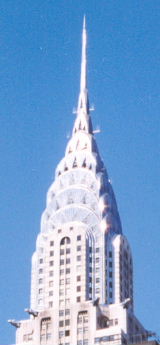
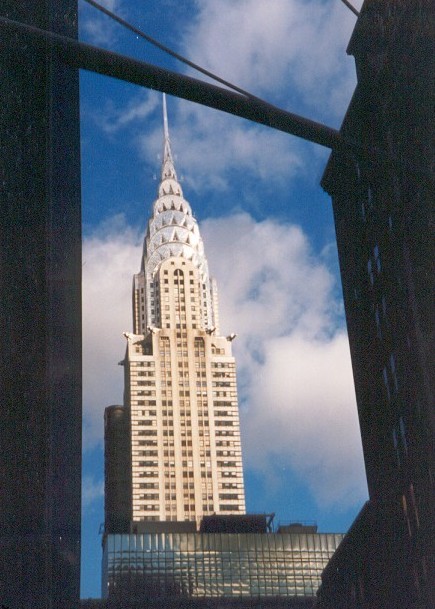
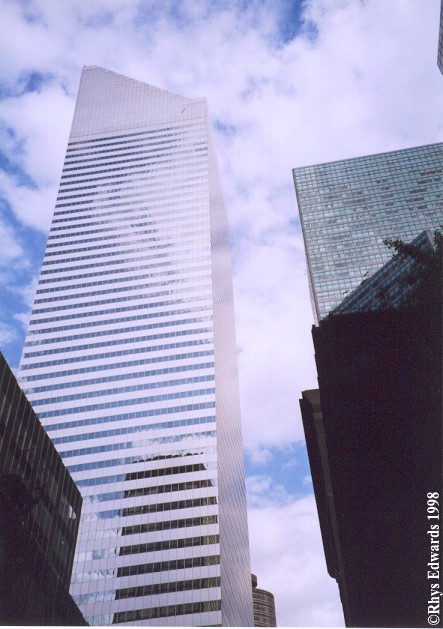
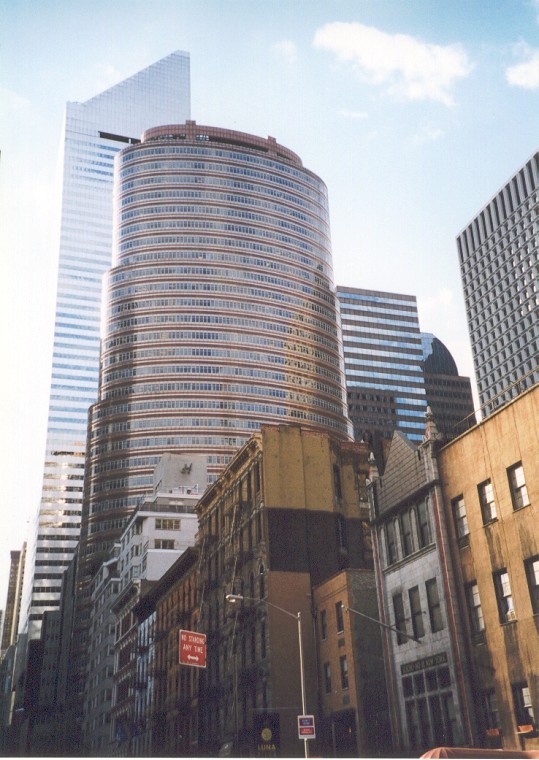
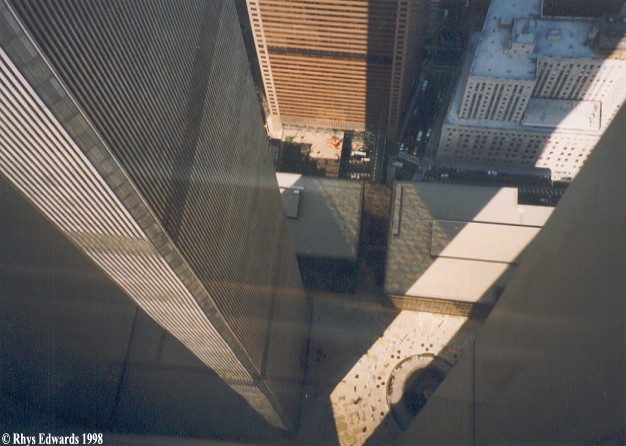
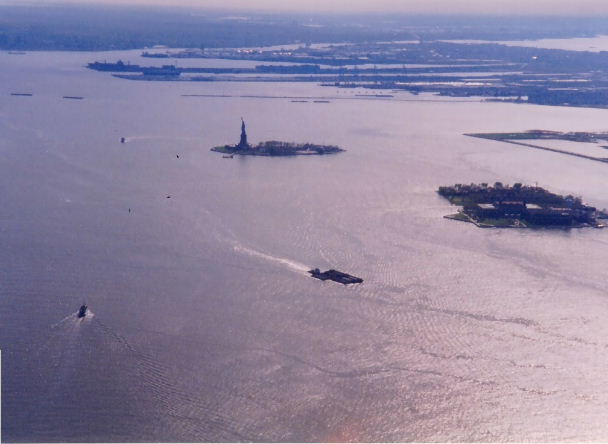
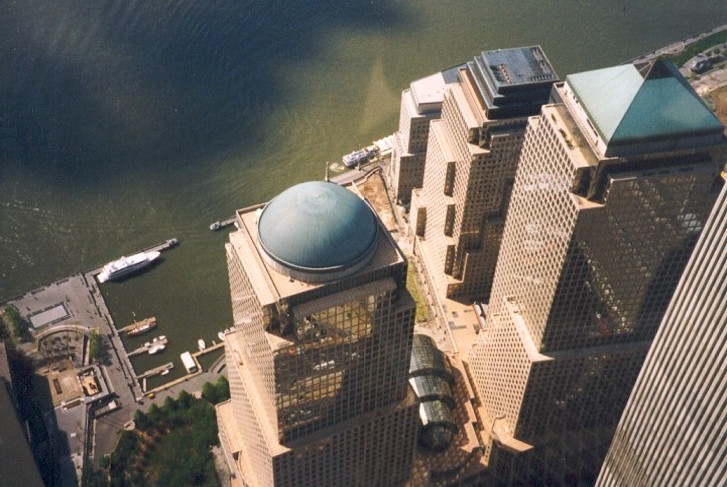
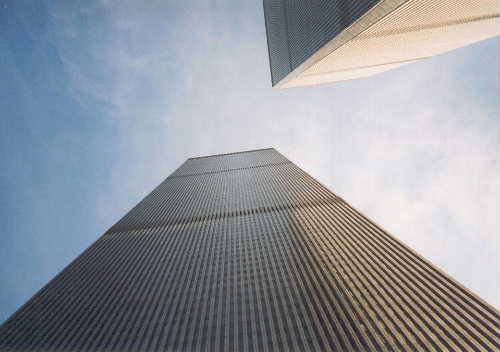
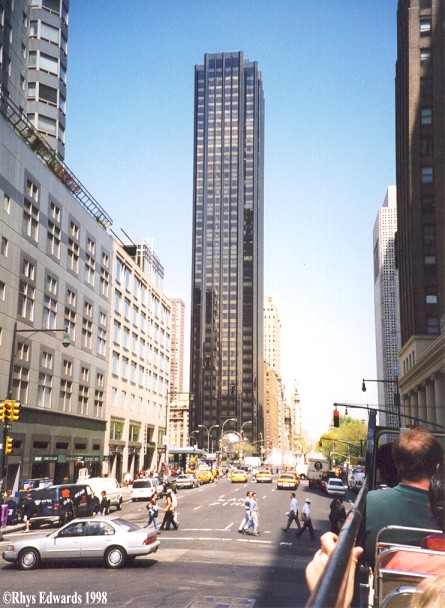
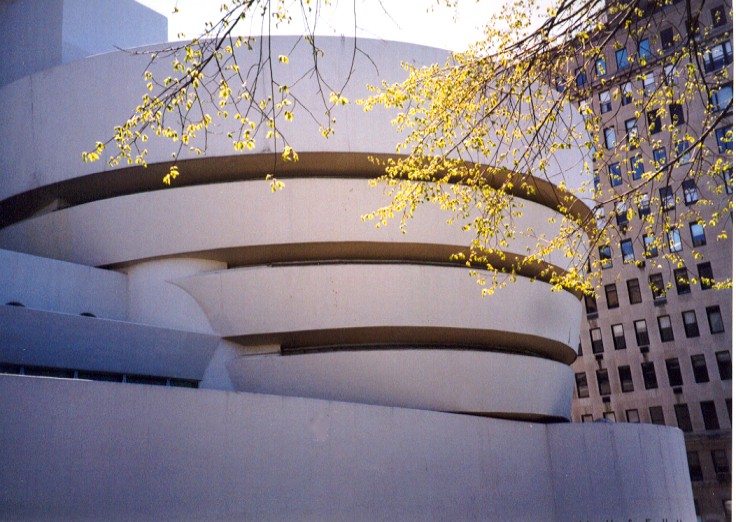
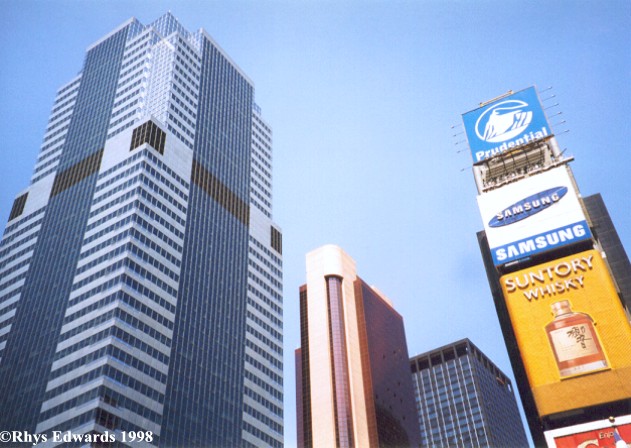
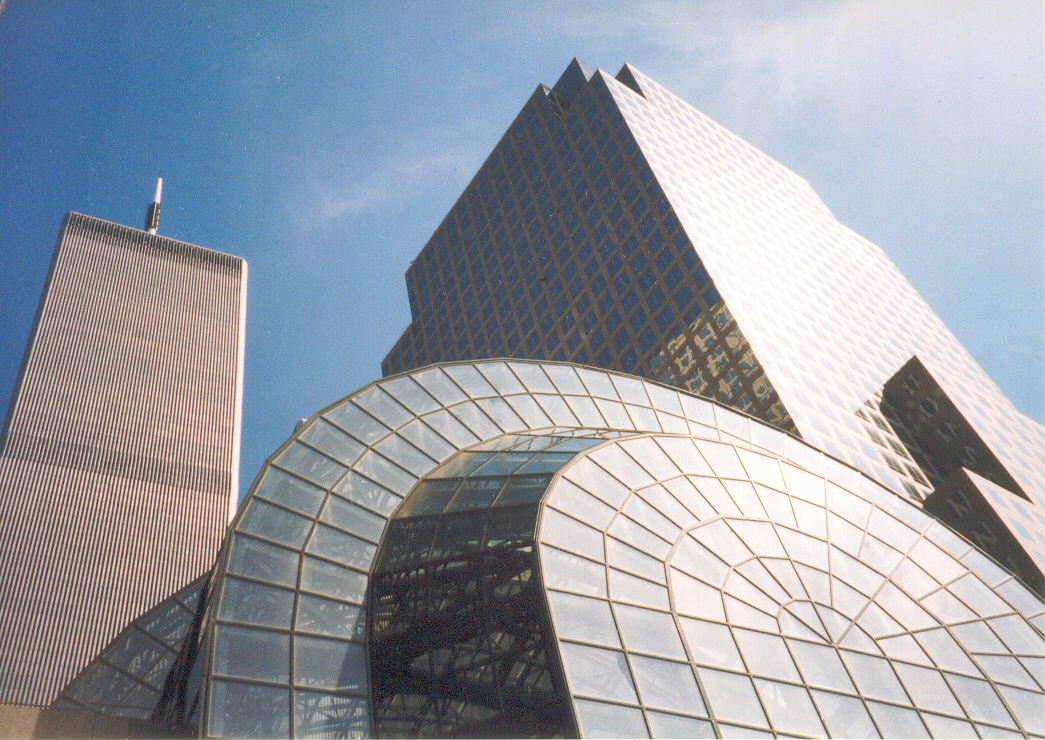
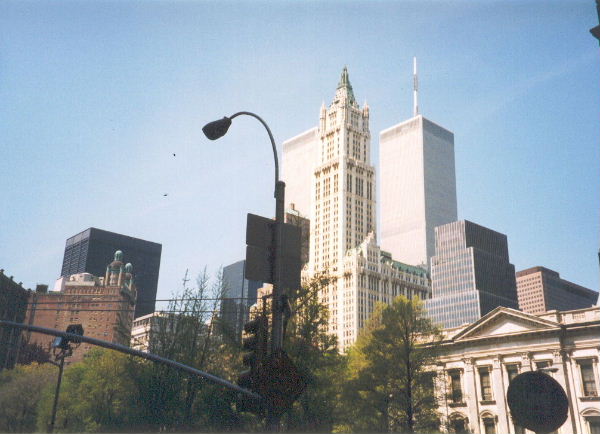
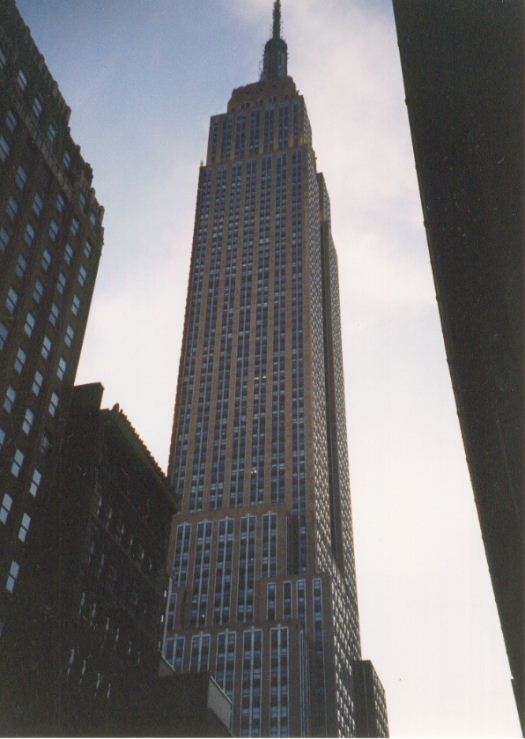
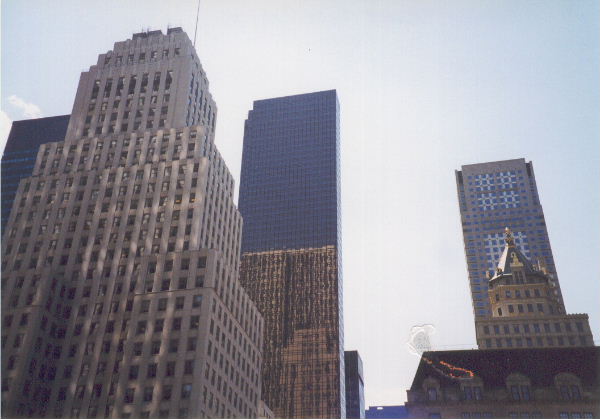
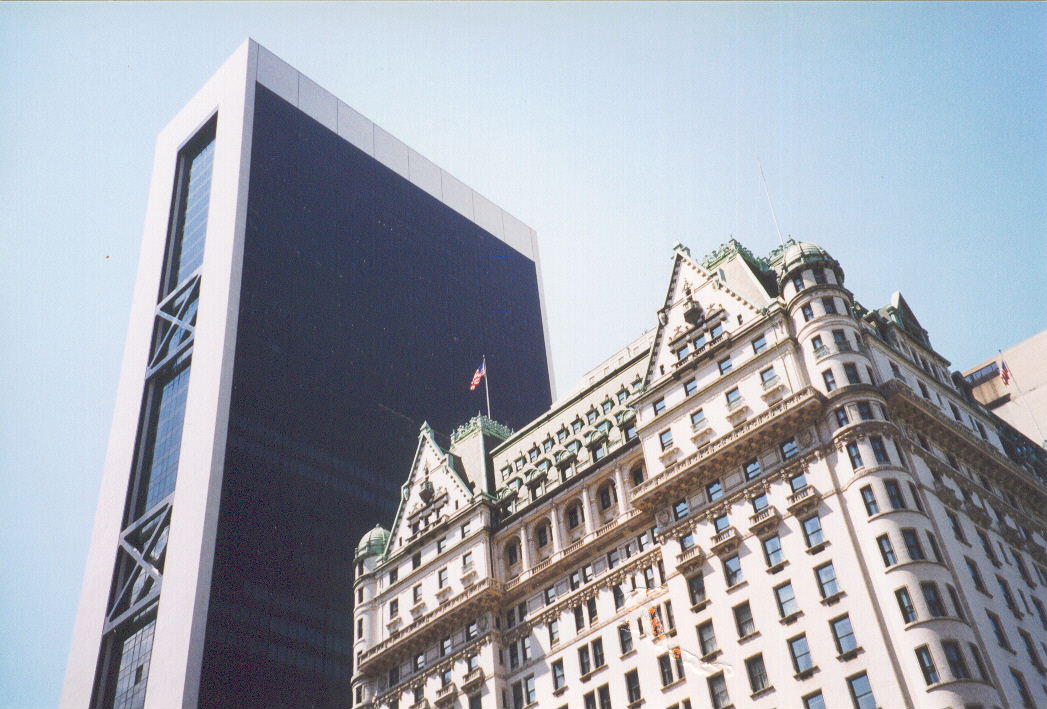
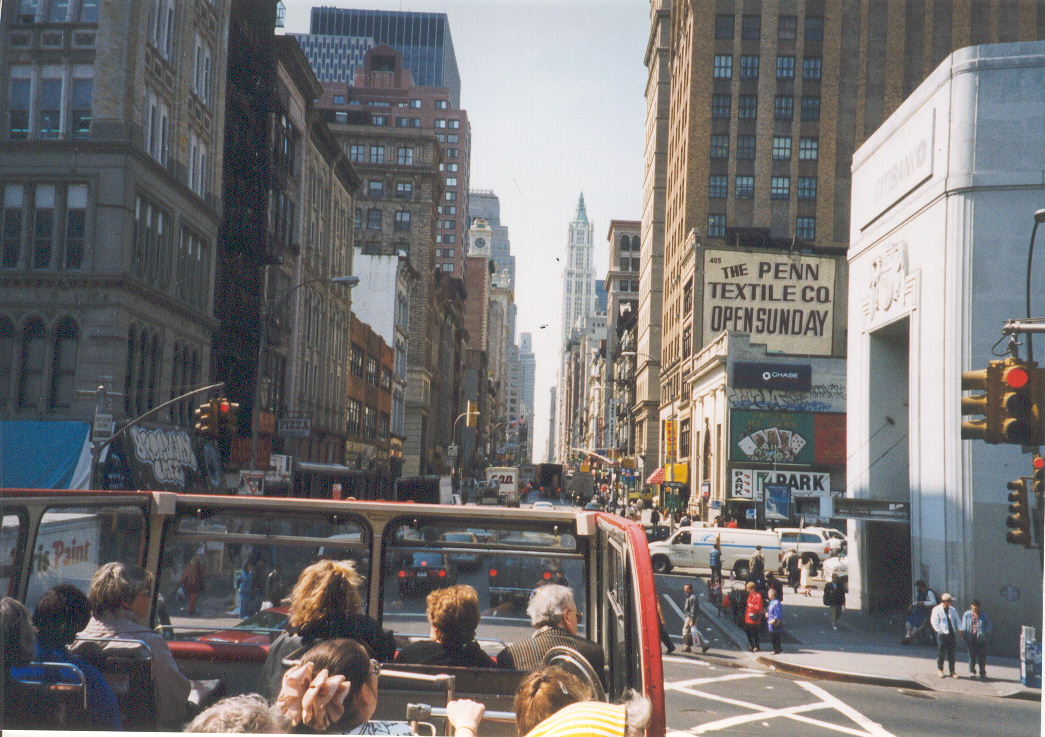
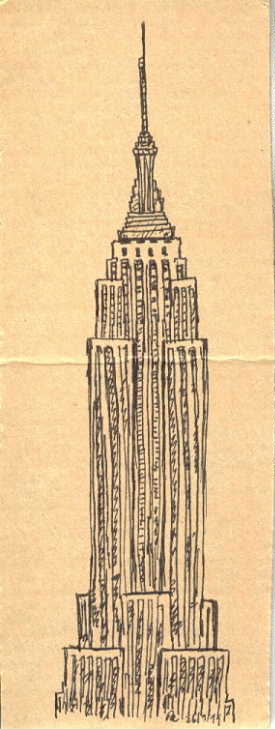
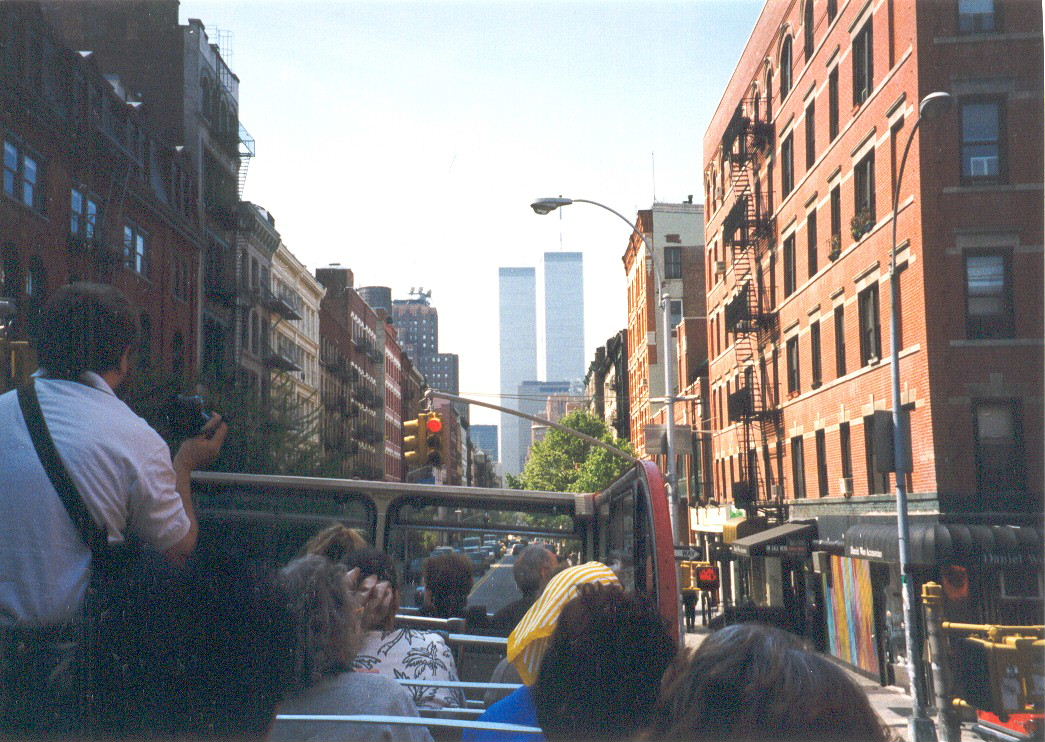
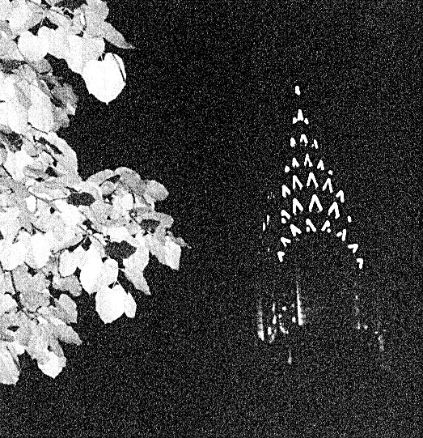
Post-impressions: NYC by Rhys Edwards Preface This �travel memoir� is, curiously, and perhaps aptly, a secondary exploration of a city I had never seen in real life but had experienced many times in film literature and television. This irony is not lost on the millions of tourists who visit Manhattan every year. However, it is not a simple case of ubiquity breeding contempt; rather, it is the shock of the familiar that New York City (Manhattan) evokes in the bedazzled seen-it-all spectator. In this sense, the title post-impressions is just that: an impression of NYC that is always in process, unfixed, deferred by a sense of the seen-it-all spectators� knowing deja-vu. If the global village exists, then, NYC is the knowing embodiment of that concept. I cannot reiterate this point enough: NYC does not merely exist a tangible, visible entity; rather it is bound up in the cultural, social and historical dynamics that define its past, present and future. Read on... Post-impressions: NYC Before my long-awaited visit to Manhattan (hereafter NYC), the city was only a figment of my cinematic imagination. I had visited NYC countless times before in films, books, magazines, dreams, advertisements and so forth. Now, the reality of it all beckoned. To speak of NYC in terms of first impressions is misleading since the city has already made impressions. In this sense there was nothing new about what I witnessed as I first set foot on the island officially known as Manhattan. I had come to the city with preconceived ideas of how it would appear on ground level: looming, dark, noisy, dirty etc. In this sense, NYC was a city of clich�s awaiting confirmation. However I was surprise to say the least by what I encountered on walking level. East 39th St off 2nd Avenue was the vantage point. The street appeared clean, quiet and surprisingly light, the blue sky dominating the narrow yet towering buildings. As I crossed 2nd Avenue towards East 42nd St, midtown began to gather momentum. The glorious yet underrated Chrysler at its epicentre, followed by glimpses of Citicorp�s inimitable ski-roof. Lipstick's curvaceous fa�ade could be also seen as well as well as countless other Miesian glass boxes too numerous to individualise. To my surprise, these buildings were deceptively narrow, suggesting great height rather than bulk. Chrysler's majestic steel spire could be seen at street level. What was striking about witnessing blocks of midtown on street-level was the constructed sense of it all: it was a real reminder of the city's youth, its decadent history and above all its stomach-churning beauty. The city�s grid system, so narrow yet fluid in its endless linearity conveyed an illusory totality of design and access. I could see the end of 2nd Avenue from East 39th, but could only imagine what lay ahead at its nethermost corner. I was also surprised to see steep and undulating streets, belying the solidity of the vertical skyline. During Saturday night, the east street blocks seemed quiet and strangely subdued. Synchronised traffic lights allowed yellow taxis to glide effortlessly, evoking a kind of pandemonium postponed. As I walked towards that beacon of NY cinematic fantasy, the Empire State, the atmosphere changed. Tourists and street-sellers selling bootleg copies of Titanic swarmed outside the lobby exchanging weary glances and easy dollars. This was, of course, a major tourist site and a timely reminder of New York's mass appeal. Weary of queuing for more than two hours to go up to the observatory of the Empire State, I walked down towards Madison Square Garden. Distinctive golden-age skyscrapers dwarf this �square� of skeletal trees; the most notable being the Metropolitan Life Building and the innovative yet curiously underrated Flatiron. Both buildings lined this green space, reminding us that trees are not tall enough to encroach upon urban spaces. That observation sums up NYC�s essence: the eradication of the natural in favour of the technological. Some might argue that Central Park, the metaphorical �lungs� of NYC contradicts such a claim. However, people forget that Central Park is ironically man-made, a symmetrical enclosure of the supposedly natural within an overwhelming urban context. Sunday Blues My first Sunday in NYC was a strangely subdued experience, probably because it rained all day. The rain drove in over NYC, baptising the avenues and streets. I remember seeing concrete glistened magically, reflecting glass skyscrapers for that added lustre. The scenario was fitting for a movie. Imagine Gershwin or Sinatra as background music and the clich� becomes all too real. Using distinctive skyscrapers such as the famous ski-roof top of the Citicorp as guiding lights in an otherwise repetitive yet exciting urban setting, I walked down an empty 3rd Avenue. In my mind I had been here before, but in reality it was hard to grasp being here. As I noted elsewhere, New York exists just as powerfully as a celluloid imprint in the mind. I had foolishly thought that it would appear like that. To a certain extent it did appear that way, but without the panoramic, omnipresent Technicolor camera as visual guidance, NYC was there to be devoured on a new, earthy and exciting level. It was not a case of reality bites, more reality excites. I arrived at the famous 915ft Citicorp skyscraper. This white whistle-like structure is distinctive not only for its daring ski-top roof but also its celebrated cantilevered stilts, precariously supporting the buildings massive bulk [Incidentally, the stilts were built not for aesthetic effect, but to protect the church plot owned b the church which stands dwarfed by one of the stilts. On ground level, it appears like a NASA rocket ready for lift-off. In this sense, Citicorp is, in terms of the dominant NYC architectural vernacular, a truly unusual building for NYC. Rather than assume the hard-edge fa�ades so beloved by countless modernist glass boxes, Citicorp�s stainless steel and glass frame acquire a paradoxical definition in misty conditions, rendering its bulk almost translucent. Its contours almost disappear in the dull mist. However, in other ways, Citicorp continues the traditions of NY: its unusual ski-top roof evokes the golden age of skyscrapers where a building�s crown was central to its architectural effect. Inside the building the elegant atrium (which, incidentally, houses regular concerts and exhibitions) was empty. The shops had not opened yet and it was 10.00 am. They would open at 11.00 am. Meanwhile I wandered along the three levels of the atrium. Luckily a caf� was open. I had a coffee and a Danish pastry. I sat down in the empty atrium exhibition space, wondering why NYC was still in slumber. Is this the city that never sleeps! I was beginning to doubt such a verbose claim! Within a couple of minutes, some New Yorkers came in, clutching obligatory copies of the mammoth New York Sunday Times. They headed nonchalantly to the caf�; purchased coffee; sat down in the exhibition space and read their cares away in that elegantly relaxing way. New York on a Sunday is worlds away from the manic demeanour perpetuated by myths of the city. After finishing my coffee, I went for a browse around the numerous shops. The famous New York bookstore chain Barnes & Noble occupied two floors. This was a multi-purpose, commodious store tailored to meet the needs of bookish New Yorkers. As well as selling newspapers and magazines, Barnes & Noble actively encourages customers not to purchase books by creating hospitable surroundings for reading purposes. There are leather chairs and sofas alongside bookstands and even a coffee shop. Perhaps the idea here is to encourage the consumer either to buy a book and drink a coffee or to merely read a book and relax all day in the shop. This effect is partly produced by the pastel decor that is light but not too conservative. I left the atrium and ventured outside into the rain-soaked streets, feeling vulnerable and exposed under Citicorp�s nine-storey high stilts. If this was the building that had threatened to demolish NYC, it was time to move away swiftly! However, this area of midtown is hard to leave if you value [post] modern architecture. Along with the captivating curves of the Lipstick Building, the Citicorp embodies a curiously Californian ideal. Both seem like creations of LA�s decentred hyper reality, Bunker Hill, where glass and marble fa�ades reflect the smog-filled sky in a cascade of corporate identities. New York City is also an internationally renowned shopping magnet, attracting millions of tourists each year. It is the city of the upmarket department store tr�s grand. The most famous shops of this kind are Bloomingdales (purveyors of the world-famous utilitarian Big Brown Bag), Macy*s, Saks, Bergedorf Goodman and so forth. I first encountered Macy*s on a dull Sunday afternoon. My first impressions of the place were mixed. The jaded glamour of the art-deco interior suggested a belle �poque of former opulence. If the Titanic had only been a department store.......... Downtown The trip from midtown to downtown encompasses a historical trajectory from city to village. This is marked by the contrasting urban geographies of midtown and downtown. While midtown is determined by the immaculate Haussman-inspired grid system, downtown, in direct contrast, is characterised by criss-cross streets. Downtown�s streets have names rather than numbers, which has the effect of breaking up the city�s seemingly unified urban plan. Passing through downtown on the Gray Line Tourist Bus, I witnessed the New York of yesteryear: turn of the century warehouses converted into chic condos; small narrow streets replete with specialist shops; the hustle and bustle of Chinatown; and the affected bohemian chic of Soho with its trendy art galleries and coffee bars. However, the small-rise villages of downtown only lull the spectator into a false sense of security: the ominous spires of the World Trade Center are potent reminders of New York�s penchant for height and bulk. From the viewpoint of the open top-deck of the Gray Line Tourist Bus, these blocks of steel and concrete can always be seen; either sneaking mischievously between buildings or standing arrogantly (yet majestically) above everything. Second to the Empire State, the World Trade Center (affectionately called Twin Towers by disaffected New Yorkers) is the supreme symbol not only of NYC but also of Capitalism itself in all its muscle-bound glory? Viewing these towers close-up is an awesome, extra-sensory experience, one that reminds us not only of technology�s dominance but also its iconic stature. For what is such a building: an architectural talking point or a supreme icon of multinational capitalism? The answer lies in how we view these buildings in the context of such pervasive economic force Unlike the queues of the Empire State, it is relatively easy to reach the top of the building in no more than fifteen minutes. For those suffering from vertigo, the 103rd floor of WTC Tower B is the stuff of nightmare. The building�s great height can also be fully appreciated at this death-defying level: surrounding tall buildings are dwarfed; people on the street can hardly be deciphered; and cars are reduced to dinky toy models. The effectiveness of the experience of the WTC depends on spectator participation. There is the option of going on the open-air roof or sitting uncomfortably close to the windows in narrow seats, where the vertical drop can be fully realised. Liberty Island Second to the Eiffel Tower, that other famous French monument, the Statue of Liberty, is probably the most famous tourist attraction in the world. This 300ft statue is situated on the appropriately titled Liberty Island that is beyond the southern most tip of downtown. In order to get there, I had to queue for half-an hour for the Staten Island Ferry. The journey to Liberty Island was tantamount to finding the United Nations relocated on a ferry rather than its present site. There was enough to shame a multi-cultural Benetton advertisement on the ferry deck: Africans, Jews, Greeks, Germans, Anglo-Saxons, Japanese, Korean, Americans, French and others of various ethnic origin could all be seen huddled together on board, unified in their sentimental yearning to witness Liberty close-up. The attraction was obvious: Liberty Island and its famous symbol signified the essence of the American ideal: emancipation and the detainment of one�s roots in the new world. It is well known that the Statue was the first monument most immigrants witnessed on their way to Ellis Island. I in this sense, Liberty probably expressed a tangible symbol of freedom to incoming immigrants ironically set against the austere confinement awaiting them at Ellis Island. As well as encompassing the American ideal of freedom, Liberty is well aware of its adopted country�s penchant for market-forces. The Liberty Experience comes at a price - one that many tourists could not resist. For $10 or so, you could walk up to Liberty�s crown. The queues outside the statue testified our freedom to spend however we choose. After leaving the island, the ferry stopped at Ellis Island for five minutes to allow tourists to explore the island and its museum of immigration. Tellingly, nobody visited to the island, choosing instead to view the Island from the safety of the stationery ferry deck. Unlike the clear-cut symbolic quality of the Statue of Liberty, Ellis Island�s decrepit neo-gothic architecture hid an anguished and turbulent history too sinister to recollect on a fine spring afternoon. Greenwich Village The dominant urban geography of Manhattan, as discussed elsewhere, is based on the symmetrical spatiality of the grid system. Conversely, Greenwich Village presents the bemused spectator-tourist with a riposte to such single-minded urban planning. The villages of downtown constitute NYC�s geographical and cultural otherness. These criss-cross streets and alleyways hold the key to NYC�s creative nucleus: it is the hub of artists and media-folk, all contained within and by the forces of gentrification. I walked down Bleecker St, and was surprised by its narrow pavements and small speciality shops. Curiously it resembles Old Compton Street in London�s Soho. Battery Park The southern-most tip of Manhattan is also its most recent addition. Built on the reclaimed land from the excavations of the WTC building in the early 1970�s, Battery Park City represents what some commentators have called a gated city. Such a definition invokes the idea of relative seclusion and inclusion for the residents and workers who happen to work there. Moreover, the notion of a gated city is also a predominantly WASPish haven of single �Wall St stock brokers and service -sector workers. Since its mix of apartments, parks and office space is multi-purpose, there seems little inclination to attract low-paid workers to the area. Battery Park, then, is the privileged location of select New Yorkers, in particular those who are weary of the cosmopolitan nature of the villages and the supposedly dangerous streets of midtown and uptown. Architecturally, Battery Park City�s four interlocking skyscrapers (known as World Financial Center) is radical in its choice and execution of design. Rejecting the dominant Miesian glass-box aesthetic that plagues much of NYC�s cityscape, these quirky towers represent a quirky, toned-down postmodernism. Their penchant for curves, angularity and bulk evoke an implicit reference to art-deco minimalism. However, the overwhelming success of Battery Park City is partly because of the timing of its completion before the global recession in the late eighties. Most visitors are quick to notice the similarities between Battery Park City and its sister site in London, Canary Wharf. Although Cesar Pelli designed both, the laissez-faire catastrophe of Canary Wharf is a telling reminder of what could have happened in Battery Park. Despite the impressive architecture of the entire site, there is something synthetic about its newness. Perhaps age will wither its postmodernist contours? However, in the context of the World Trade Center and its financial surrounding district, Battery Park City has transformed downtown Manhattan, rendering the awesome bulk of the Twin Towers almost human in scale. That is no mean feat. Moreover, the view from New Jersey City, Ellis Island and Liberty Island has made downtown NYC a visual tour de force, now rivalling the Empire State as the definitive postcard of the city Times Square Times Square is NYC�s most important living, breathing clich�. Bigger and supposedly better than London�s Piccadilly Circus (which, incidentally, seems minuscule in comparison to its in-your-face American counterpart), Times Square is commonly conceived as the [symbolic] centre of the New York City, even though it is situated in the west of midtown Manhattan. This contradiction is not the only one that defines Manhattan�s most famous locality. Far from being a square in the conventional mathematical sense, Time Square is, in effect, an urban juncture, a giant X zone, criss-crossing Broadway and beyond. In this sense, Times Square occupies an undecided, heterogeneous space, neither a marker of a specific place nor its affirmation. Currently, the unfinished aspect and manic demeanour of Times Square can be witnessed on street-level. Famed for its seedy side, Times Square under the guidance of NYC�s Mayor, Rudolpho Guiliani, is now at the apex of a gentrified revolution. A new high-tech, eco-friendly office block (Conde Naste Tower) was under construction at the time of my visit. It was about to be topped-out amid a frenzy of executives, architects, and engineers et al. It was a fitting symbol of a tide of change that will (or should perhaps) probably change the face of Times Square forever. Forget politics and puritanical interventions, the experience of Times Square is akin to an urbanised MTV aesthetic. As a celebration of conspicuous consumption, Times Square is a neon-brimmed hymn to multinational capitalism in all its glitzy glory. Not only does it extol the virtues of capitalism, Times Square also assaults the senses in what Jean Baudrillard might call an ecstasy of non-communication. There is even a giant CNBC visual screen newscast there perched prominently in one of the towers. The whole scene is analogous to an urban display of a TV commercial break: commercial brands symbols compete in a bold display. Gray Line to Harlem The Gray Line sightseeing bus offers the tourist a safe haven from the supposedly crime-ridden streets of Manhattan and beyond. Designed in the same style as an English double-decker bus, the Gray line is an ideal way of seeing the city from the security of an open-top deck.The Gray Line journey started at Penn Station just off Times Square. Heading north, it crossed many blocks in its path. The Gray Line Tourist guide eloquently pointed out various famous sites from the legendary soup kitchen featured in the hit sitcom Seinfeld (ironic considering the series is actually produced in Hollywood) to Donald�s Trump�s bronze-clad hotel (formerly the GW building) just off Columbus Circle. The bus followed a virtually direct line, passing the Lincoln Center, Yoko Ono�s apartment (the site of John Lennon�s murder in 1980). Judging from the guide�s observations on such places, NY was an ahistorical, pop-culture canvas of cross-references. This was a history of low as opposed to high culture, a telling reminder of NYC�s youth and its irreverent attitude to history. However, the Gray Line tourist guide provided a concise history of the northern part of Central park. He told us these parts of Central Park used to be marshland and subsequently had to be reclaimed and reconstructed. This observation testified that appearances are deceptive in Manhattan: what you see is what you [seem] to get. Moving beyond the northern tip of Central Park, for any tourist, is a ride into the unknown and the unknowable. It is a symbolic retreat into no-man�s land, the Manhattan of crime films, novels and so forth. Yet if such graphic cinematic depictions of Harlem�s violence were to be believed, nobody would come out of the place alive! The bus ventured forth, secure in the knowledge that it was only a fleeting visit. You could argue that such fears are arbitrary reactions to endless cultural stereotypes, the kind of which lead inexperienced observers into overreaction and presupposition. From the open-deck top of the Gray Line Bus, my first sight of Harlem was unexpected to say the least. The bus travelled down a narrow yet attractive village street, filled with turn of the century neo-gothic houses. Steps leading to the main entrance greeted each house. This gave the street a pleasing architectural unity. The Gray Line tourist guide demystified our presuppositions about present-day Harlem by reminding us about the history of its ethnic make-up. Before its current status as a black ghetto, Harlem was an affluent Jewish neighbourhood in the early 20th century. This explained the surprising grandeur of the typical Harlem house. However, in the context of Harlem�s present poverty and social deprivation, the houses now seemed to lull us into a false sense of security. As the bus turned the corner, the real Harlem was on view. Street-markets, cheap liquor stores, decrepit flats competed for our gaze. As a form of light relief, the Guide turned our attention towards the world-famous Apollo theatre, home and starting block of a multitude of Black singers. He then added that Luther Vandross was booed off stage during his debut at the Apollo! A lot of us took pictures from the vantage point of the open-top deck - for the majority it would be the only picture they took. The bus turned down an empty, badly cemented street, punctured by holes and uneven surfaces. I could feel the bus�s wheels buckle on the uneven cement. In a blink of an eye, the bus crossed a junction and reached the northern corner of Fifth Avenue. Fifth Avenue Heading northwards down Fifth Avenue is like going from rags to riches literally. The northern tip of Fifth Avenue is a stone throw�s away from the frontiers of Harlem. Such an antithesis typifies the idea of New York City not only as a city of sharp, startling contrasts, but also as a divisive, ghettoised urban space. The journey down Fifth Avenue spanned the entire length of the eastern side of Central Park. The bus travelled at a snail�s pace, hindered not only by unlawful parking, but also by innumerable tourist buses following the same path. At first the bus passed the part known as Museum Avenue, followed by a brief stop at probably NYC�s most famous building, Frank Lloyd Wright�s magnificent Guggenheim Museum. Affectionately known as the honey-pot for obvious reasons, the Guggenehim is held in high esteem by native New Yorkers, who oppose the Miesian monotony that plagues New York City�s financial and midtown districts. The scale of the building is perfect for the space it occupies. Neither too tall nor too bulky, the building�s helix like structure can be viewed on street-level. The only possible criticism that came to mind when viewing the building�s unique structural composition was the practicality of housing paintings on curved walls. Considering it houses art rather than office computers, it is fitting that such an aesthetically- unique design should disregard architectural practicality [or monotony?]. On street-level Fifth Avenue is a vibrant, affluent area, populated by the elderly rich strolling in and around Central Park and a peculiarly New York phenomenon: the professional dog-walkers. This opportunist species has tapped into a valuable resource. Taking advantage of the lonely dogs of NYC�s affluent, the dog walkers can be seen roller-blading while holding onto half-a-dozen dogs (presumably the dogs of different clients). Such a profession is living proof that America (NY in this instance) is the land of opportunity and opportunists. In contrast to the effortless glide of the traffic in parts of midtown, the congestion of Fifth Avenue off 70th to the Plaza Hotel is quite astonishing. No vehicle travelled beyond 20mph. Police cars monitored every parked car and any vehicle in the wrong lane. Amid the prestige and tranquillity of Central Park, this part of Fifth Avenue was a frenzy of immobility. Wall St The Gray Line bus also looped its way around lower Manhattan�s world-famous financial district. In Wall St, tall buildings dwarfed the pillared pseudo-Georgian fa�ade of the stock exchange. These tall buildings clouded Wall St, rendering each fa�ade with a doom-laden aspect. Unlike the grid system Wall St was narrow and circular - almost like a typical street in the City of London. The only difference was the bulk and height of the buildings. Unlike midtown, Wall St is not a tourist area. NYC�s brokers and their ilk populated the streets, carrying briefcases and wearing Nike air footwear. They looked as if they were ready for anything....and so they were. Numerous high-tech gyms could be seen, packed with corporate types either running on jogging machines or lifting weights. This reinforced my prevalent idea of NY as a city of contradiction masquerading as contrast: they ate huge amounts of food only to shed it in the gym; they worked stressful hours only to stress out in the gym. As the bus moved towards Southport Sea museum it left behind a culture of commerce and competitiveness, and opened my eyes to NYC�s deep connection with water. The importance of water is often underplayed in some observations of the city. NYC is most often characterised as an urban jungle of concrete and steel towers, the supposed enclave of deviance and decadence writ large. Yet what is remarkable about NYC�s location is its close affinity with the natural world. Separated by two rivers, Hudson and East, NY is enclosed by water and in this sense the dominant image of NY as a concrete jungle is a misguided one to say the least. Lost in NYC? The predominant and most unsettling cinematic depictions of Manhattan rely on the protagonist�s sense of fear, paranoia, alienation and and a desperation bordering on helplessness. Films such as The Out of Towners (1967), After Hours (1985) and most recently Escape from New York (1997) are well rehearsed in dramatising New York City�s mythical status as an island of no return. In Scorcesse�s black comedy After Hours, a Yuppie�s random nocturnal encounters with various lowlifers and bohemian artists in and around Greenwich Village and Soho turns into a nightmarish and bizarre rollercoaster ride. On the other hand, The Out of Towners, plays on tourists� negative preconceived fears of the Big Apple. The Out of Towners concerns a business trip by two suburban Americans whose first time visit to Manhattan ends in chaos and incarceration. It is a telling yet humorous tale of how NYC can unwittingly corrupt even the most innocent people The overriding message of such films is fairly obvious to decipher: NYC is no place for the timid, let alone outsiders. NYC, then, plays on our unconscious fears of the unknown. It is, in other words, a material embodiment of the irrational, the paranoid, and the grotesque. It is Absurdist theatre for real. If only Beckett or Pirandell turned their perverse gaze towards NYC...... Are such representations hysterical, scare-mongering attempts to perpetuate a mythic if clich� -ridden vision of NYC as a post-apocalyptic landscape of society�s dregs or a genuine reflection of reality? The answer, if there is a definite one, depends on the thorny question of geography. Returning to questions of extreme cinematic representations of NYC, my experiences of the city were satisfyingly disappointing in the context of such films. Disappointing that the caricature of criminality I had been subjected to in countless films and television programmes had been rendered redundant by the feeling of safety and freedom NYC supposedly brought to its seen it all before citizens. Am I idealizing my visit? No. I was genuinely surprised by the NYC I experienced. Is such a view too subjective considering my status as a naive tourist? To a certain extent or is such naivet� justifiable? Yet naivet� is something that NYC actively discourages and encourages in equal measures. Its appeal is based on confirming and exceeding preconceptions rather than the shock of the new so to speak. Far from feeling lost in NY, I actually enjoyed an affinity with the city. Rather than the customary feeling of d�ja vu, NYC inspired awe and amazement. Such extreme counter-reactions characterise the city�s contradictory nature. It is a city that, despite the rigidity of its super-structure, never looks and feels quite the same. St Patrick�s I first encountered probably the most famous and exclusive address in Manhattan on a wet yet humid Sunday afternoon. My first glance of Fifth Avenue was the back of St Patrick�s Church. Instantly, my memory bank recollected the film�s infamous Wedding scene in Arthur [1980] involving Liza Minnelli and Dudley Moore. This is the kind of cultural identification every street-corner in Manhattan engenders in the cinematic psyche: the strange feeling that the city is a movie rehearsal set twenty-four hours a day, three hundred and sixty five days a year. Rather than being impressed by the historical pastiche architecture of St Patrick�s Cathedral, I was far more beguiled by its position. Sandwiched between wedding-cake art-deco buildings and Modernist skyscrapers, St Patrick�s Church appears like a building only Disneyland could possibly muster. In other words, it is a striking example of NYC�s typically mosaic-like architectural styles and its idiosyncratic zoning laws. Where else in the world would capitalist cathedrals dwarf a cathedral? The interior of St Patrick�s is impressive in itself; but compared to St Paul�s is lacklustre. St Patrick Church�s devotion to historical artifice and religious grandeur seem like banal attempts to recreate history, rendering any genuine intentions redundant. As architecture, though, it instils Fifth Avenue with a surprise twist, unashamedly demanding its own air rights amid Miesian boxes as if decreed by an omnipresent force. Another cathedral-like structure competes for the tourist and the New Yorkers� gaze: the Rockefeller Centre. Built in an era when civic buildings actually meant something, this group of buildings are ironically upstaged by that infamous tiny ice-rink, rooted beneath the bronze sculpture of Prometheus. There is a definite sense of magic about the rink. Unlike the bigger rink in nearby Central Park, this rink is a compact, unobtrusive stage for skaters of all abilities. Ideally, the rink comes alive during the Christmas vacation when it is adorned and surrounded by trees and decorations. It is the picture-perfect evocation of a New York City Christmas, one that, despite the clich�s, still remains the quintessential vision of December in the Big Apple. Looking up from the ice rink is like spiralling a heavenly road to the ethereal skies. Directly above the rink, the severe yet awe-inspiring side view of the RCA building (now re-named GE) spirals violently to the sky as if it is piercing the clouds. It is definitely the most impressive street-level view of a skyscraper�s dimensions in Manhattan - with the exception of the thrilling vertical prow of the Flatiron building. This is partly because of the plaza and the positioning of the rink that gives the spectator a feeling of space and clarity. Unlike the bulk and eighties glitz of Trump, IBM and AT&T (a direct effect of the radical changes in zoning laws recently), RCA, in direct contrast, values its space and dimensions, thus allowing a greater understanding of its structure and romantic appeal. |
 |
 |
 |
 |
 |
 |
 |
 |
 |
 |
 |
 |
 |
 |
 |
 |
 |
 |
 |
 |
 |
 |
 |