
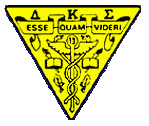
The central figure of our coat-of-arms is the caduceus. The caduceus. the smooth, winged rod entwined with two snakes, has an origin even more venerable than the rod of Aesculapius, the God of Medicine.
Reproductions of this symbol were found on Babylonian vases. The caduceus was given to Hermes, or Mercury, by Apollo in exchange for the lyre, and was a magic wand which exercised influence over the living and the dead, bestowing wealth and prosperity, turning everything it touched to gold. In its oldest form, it was a rod ending in two prongs entwined into a knot (probably an olive branch with two shoots adorned with ribbons or garlands), for which later, two entwining serpents, with heads meeting at the top, were substituted.
The mythologists explain this by the story that Hermes was traveling in Arcadia one day when he came upon two snakes engaged in mortal combat. Not wishing to have these sacred reptiles harm each other, he separated them with his olive staff, which thereupon became a symbol of peace.
The book and the torch, and oak leaves and acorns add significance to the coat-of-arms, and with the caduceus, have direct connection with the meaning of our mystic symbols. The 13 signifies our founding year, 1913, and the C stands for Cora E. Craven, designer of the crest.
Esse Quam Videi - "To be, rather than to seem to be."
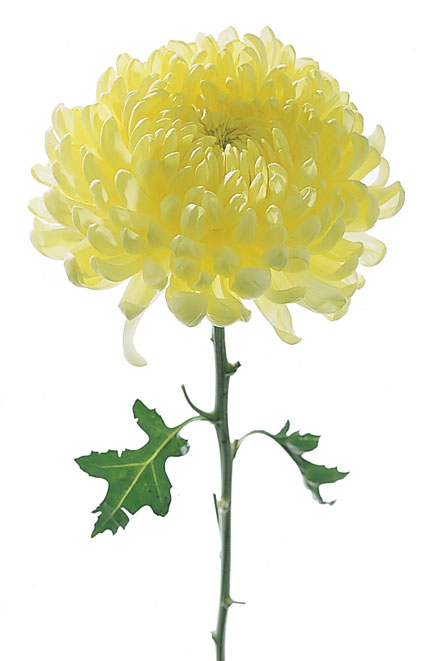
The yellow chrysanthemum.
Columbia Blue and Old Gold
The sign and password of this Fraternity shall be kept secret, shall never appear in writing, and shall be used at chapter meetings, Regional Meetings, and Biennial Conventions. May be passed on through personal contact only.
Hygeia Day: March 15
Hygeia Day of Lambda Kappa Sigma is observed annually on March 15th. Its purpose is to publicly call attention to the dedication of the members to the profession of pharmacy and to the advancement of knowledge in the health sciences. Each chapter presents a professional program to which the general public is invited.
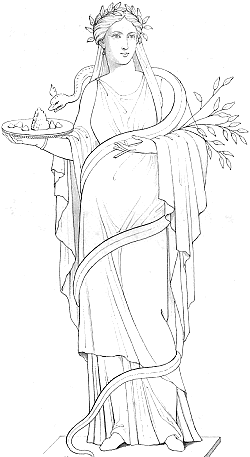
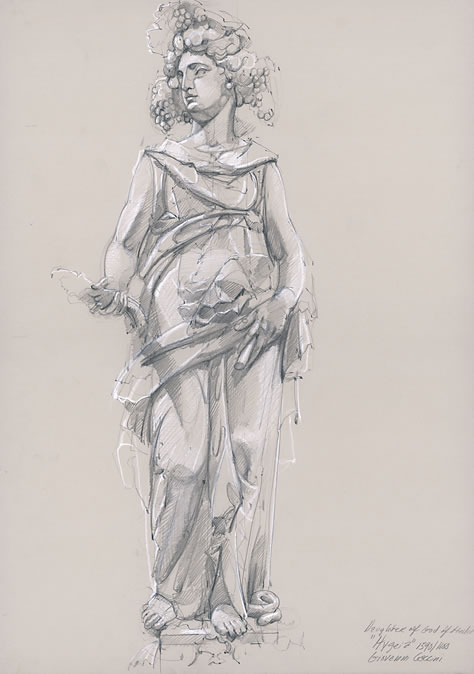
All chapters celebrate this date with a special candle-light ceremony honoring the founder, Ethel J. Heath, and the Charter Members, who had the foresight to lay the foundations of our Fraternity, and our chapters who sustain the work of our founders.