 |
| How to Speak to Your Cat |
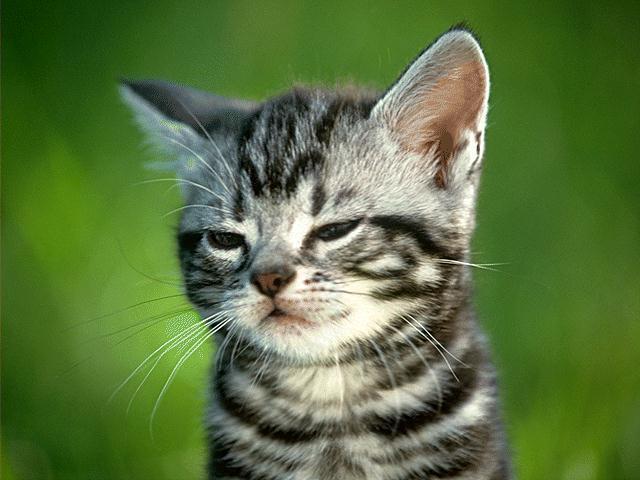
| Her Meow There's more to it than you think, pros say. For instance, studies of cat interactions show that a short, soft-spoken "mew" is the equivalent of "Hi, how ya doing?" In contrast, a loud and drawn out "meo-o-ow" is a demand for food or attention. If your cat makes a soft "R" noise that ends in a trill, she's asking you to come over to her! Now that you understand your cat better, how can you get her to better understand you? Experts advise taking advantage of her extremely sharp sense of hearing. "Cats' ears are most attuned to high pitches," notes pet behavior consultant Lisa Smith, and that's why she advises using high-pitched sounds like kissing noises to tell your cat. "Listen to me." Also try words that start with "w," "s," "f," "sh," "ch," or "h," because these consonants tend to be spoken in a higher pitch than others. Her Tail Is she twiching her entire tail back and forth? She's annoyed and asking to be left alone, experts say. But a slow twich of the tip of the tail means, "I'm feeling good." And what about a high quivering tail? "It doesn't get any better than this," reveals animal behavorist Carl Jordan, Ph.D. "because this means, "I think you're the best thing in the whole world!" Her Whiskers Are they sticking straight out to the side? She's content. Do they lie flat against her cheeks? She's afraid and feeling defensive. \How to reassure an anxious cat? The same way that cats signal each other that they're not a threat: approach her from the side instead of head-on, says veterinary behaviorist Scott Lne, DVM, Ph.D. "In addition, turn your body to the side instead of greeting your cat face to face, and you'll instantly appear more friendly." Her Purr You're sitting on the couch petting your cat, and she begins to purr. Is she happy and content? "Most cat owners would think so," says animal behaviorist John C. Wright, Ph.D. -but in many cases, they'd be wrong!" Cats purr when they're feeling an extreme emotion--whether it's happiness, irritation or pain," he says, so a purr while you're petting her might mean she's becoming overstimulated. How to tell? "If her pupils widen, her wiskers move forward and her ears go flat, she's saying "Thanks, but I've had enough." notes Wright. Her Eyes "When your cat looks steadily at you and gives you several long, slow blinks, she's giving you the equivalent of a kiss," reveals animal behaviorist Steve Aiken. How to say "I love you" back? Blink at her the same way she did!" On the other hand, marrow, dilated pupils say, "I'm annoyed." How to get back in her good graces? Get on her level and speak to her while sitting on the floor--it'll immediately make her feel more comfortable. Her Face You may know that when your cat rubs her face against you, she's saying "Hello." But did you know that even if you cat rubs herself against a nearby object, such as a chair leg, the message is the same? For shy cats, rubbing against their owner feels too intense, so they try something that belongs to you instead! To say hello back, get down on the floor and extend a balled fist ahead of you, then let her come toward you. "Your fist approximates a cat's nose, and nose-to-nose sniffing is standard procedure when cats greet each other," says Wright. |
|
 |