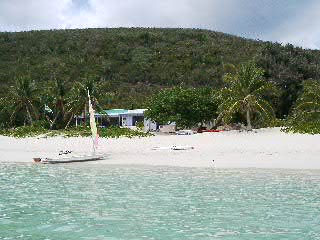
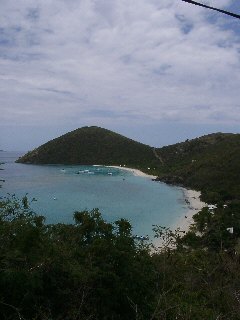
Mango, papaya, coconuts and breadfruit trees are abundant in the islands along with large amounts of indigenous forest flora. The hilly, subtropical forest and often mountainous terrian gives way to the pristine, white sandy beaches on the coasts. The waters in the Caribbean are host to a lage variety of tropical life including large palegics, sea turtles, eels, lobster, rays, and hundreds of different colorful fish. Coral reefs abound in the BVI.
The weather in the islands is reliably balmy. Daily high temperatures year-round range from 75-85 degrees. The humidity in the islands is very low due to trade winds that blow through the region. The high tempertures keep the crystal clear waters of the Caribbean warm year-round.
Christoper Colombus named the chain of islands on his second trip to the new world. Inspired by the unspoiled islands, Colombus named the island chain "Las Virginas Islas" for St. Ursula and her 11,000 virgins. Both Virgin Gorda and Anegada are still called by the original names givin by Colombus.
Spanish colonial rule gave way when the country could no longer handle the combination of rebellion from the Carib Indians and the invasion of island waters by dread priates. Famous pirates that sailed the Caribbean Sea in this region include Blackbeard, Henry Morgan and Sir Francis Drake.
Ownership of the islands was passed to the Dutch and then to the English. Britain introduced slavery to the island chain. The islands became producers of sugar cain, cotton, rum and indigo. Slavery was abolished in the region in the 1830's.
Today the islands are still owned by Britain. The islands have their own political system and much of the economy relies on tourism. Local customs and traditions give a unique and delightful "spice of life" to the islands.