


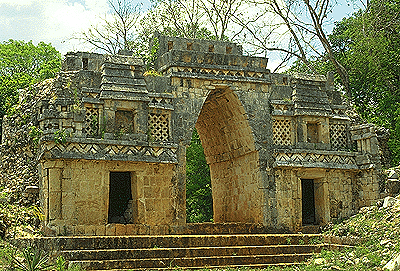
The name of the structure is The Great Gate at Labna. In parts A and B of Project 2 I discussed how art was a large part of Mayan culture. Art influenced everyday life, and left its mark on Mayan history from their elaborate writing system composed of symbols instead of letters to their sculptures and architecture. The Mayans would also use their art not only in functional ways, as in pottery and their buildings, but also for religious and spiritual purposes carving the likeness of royalty and gods in clay and stone. I discovered this photo while searching through one of my three links that I submitted in my first part of this project.
This particular piece of art is different from what most would call conventional art but possesses many of the same esthetic qualities of a fine painting or sculpture. The structure is almost perfectly symmetrical in its appointments, height, depth and width. And there is a most noticeable design carried out along the front with slenderer brinks creating a zig zag effect beneath what appear to be, and possibly could be, the first ever lattice work beside each of the upstairs windows. The Mayans are attributed with a rather original style of archway called the corbel arch, which they made out of nine layers of stone. It is said that all Mayan corbel arches had the same nine stone layers to represent the nine layers of the underworld coinciding with their superior cosmology.
While this particular piece of art suggests function over some more trivial use, the building was most like a passage way through two separate places, plazas or villages. This building is about Mayan craftsmanship, hard work and spirituality. The elaborate designs on the face of the building, lattice work and zigzag designs suggest that time and thought was put into its planning. And a structure of such beauty and substance created without metal tools or beasts of burden most definitely took a large deal of sweat and blood on the part of the lower class Mayans. And finally they way in which they adhere to the traditional nine stone layer archway shows that the Mayans were considerate of all aspects of living life the Mayan way.
I chose this structure to write about because it was one of the most beautiful I came across in my search of Mayan architecture. I feel that this building or gate way is a wonderful example of the artistry that went behind the majority of the Mayan works that have survived today. The quality of stone and design is magnificent and so well prepared. To make something to survive through the ages with such longevity is an amazing fete. I feel this way because so much of the architecture today is lacking in the basic principles that the Mayans obviously had mastered; originality, artistry, and craftsmanship. Today people send out construction work to the lowest bidder and the product quality is often times obvious when structural flaws become community problems. But the Mayans were all about community, so when something needed to be done, they didn�t cut corners and do it the easy way, they did it the right way.
I would like to know who designed it and for what reason. Was it a gate way to a temple, city or plaza? What resided, if anything, in its upper levels? How was it able to survive so long?