| Animal Testing |
| For more companies that DON'T test on animals - click here! |
| For more companies that DO test on animals - click here! |
| Some companies that DO test their products on animals are: Calvin Klein Cosmetics Clorox Colgate-Palmolive Cover Girl Elizabeth Arden, Inc. Johnson & Johnson Procter & Gamble Co. Pantene Playtex Products, Inc. Iams |
| Some companies that DO NOT test on animals are: Abercrombie & Fitch Almay Aloe Vera Bath and Body Works The Body Shop Conair Estee Lauder Gillette Company Gucci Parfums Hard Candy Lancome L'Oreal Mary Kay Cosmestics, Inc. Maybelline, Inc. Neutrogena Corp. Nordstrom Cosmetics Ralph Lauren Fragrances Revlon |
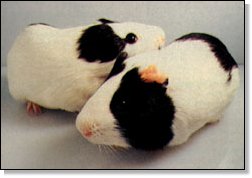
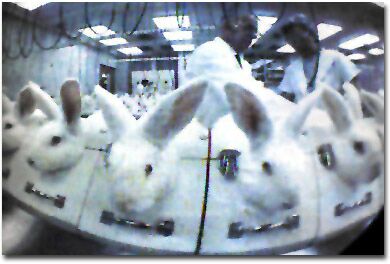
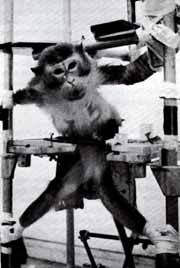
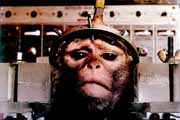
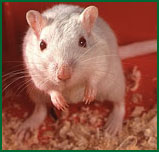
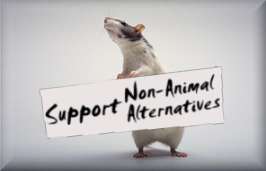
| Every year almost 100 million animals are killed in research laboratories. Animal testing is inaccurate and does not benefit humans or animals. These tested animals are routinely burned, poisoned, starved, given electric shocks, dosed with radioactive elements, inflicted with diseases, and are caged in sometimes near freezing temperatures. There eyes are surgically removed, their brains and spinal cords damaged, and their bones broken. Some of the animals used are, dogs, cats, mice, rats, guinea pigs, hamsters, gerbils, monkeys, owls, deer, sheep, llama, and cattle. Many drugs that are beneficial to humans are dangerous to animals. For example, Penicillin is an antibiotic to humans, but kills guinea pigs. Aspirin causes birth defects in rats, mice, monkeys, guinea pigs, cats and dogs, but not humans. Sometimes animals are forced to swallow products such as shampoo so Companies can test whether to put "May be harmful if swallowed" on the bottle. Companies should place these labels on all products anyways without ever testing the products on animals. The Physicians Committee for Responsible Medicine reports that sophisticated non-animal testing methods are more accurate, less expensive, and less-time consuming than traditional animal based research methods. If animal experimentation was eliminated, it would free up 6.8 billion dollars that could be used for education programs and medical assistance programs for low-income individuals; helping more than 30 million U.S. citizens who cannot afford health insurance, rather than making animals sick. Tests using tissue cultures, human patch tests, and computer models yield far more reliable information than tests on animals. |
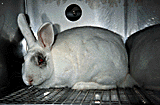 |
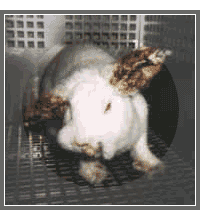
| Rabbit with infected eye. |
 |
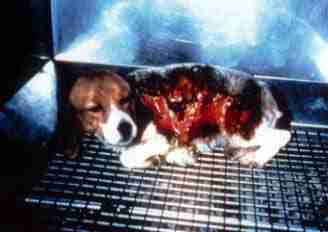 |
| Beagle burned from skin test. |
 |
 |
 |
| Please help me! |
 |
 |
 |
 |
 |

|