
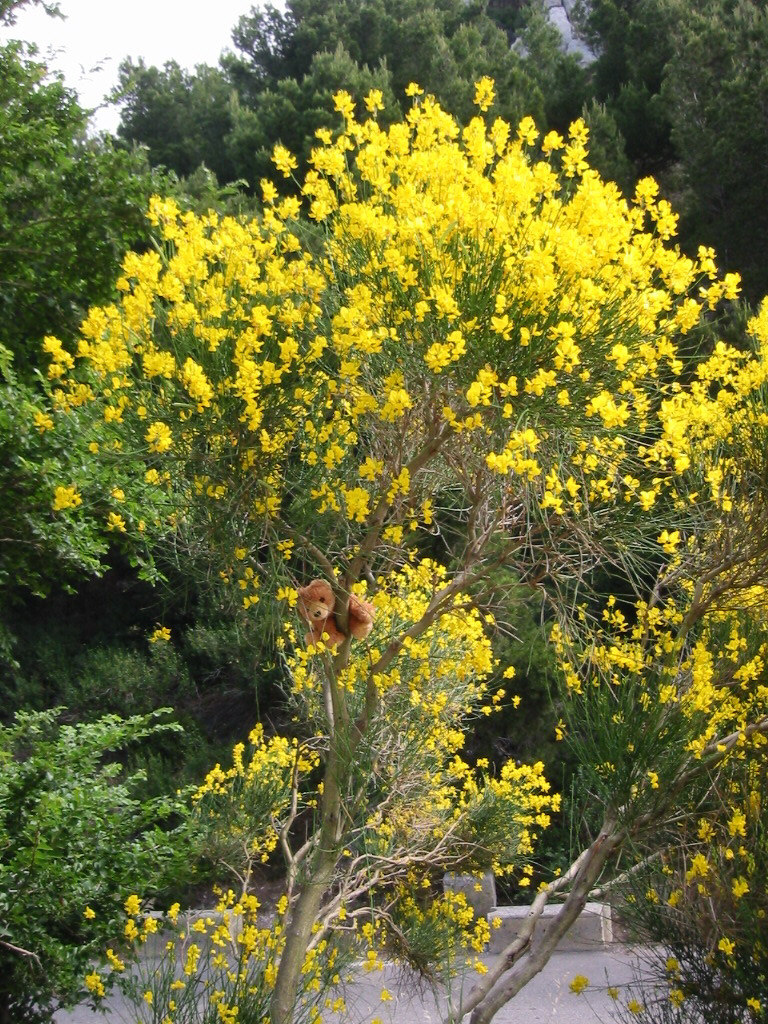
Coming back down from Beaux, Tabitha decided to climb a tree, and was caught in the act.
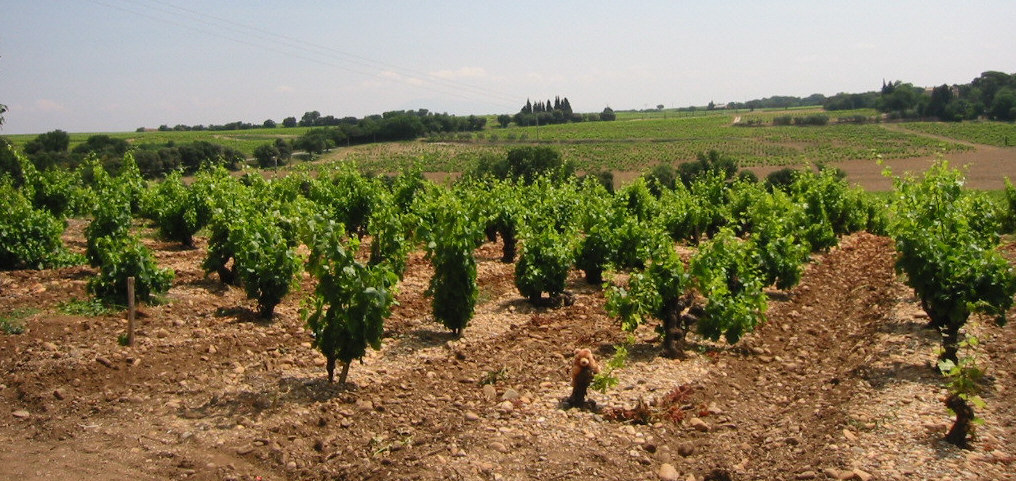
Tabitha was, again, bored during our wine tasting, but spent her time playing in the vines.
|
|
|
|
|
|
|
|
|
|
|
|
|
|
|
|
|
| the last of the honeymoon pictures, I promise! | ||||||||||||||||
|
|
|||||||||||||||
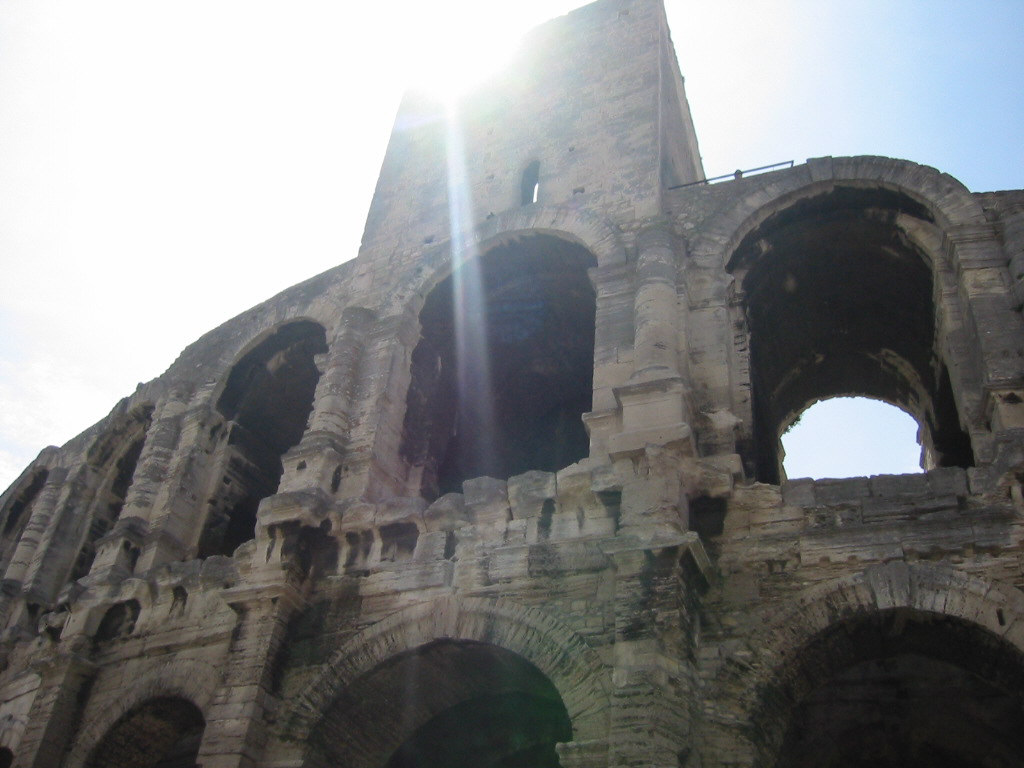
| Arles is the location of one of only two surviving amphitheaters - the other being the Colleseum in Rome. In Mideival times, the people of Arles withdrew from the surrounding areas and built the homes inside the amphitheater, using the stonework as their fortification. Today, bullfights, concerts, and other events are held here. | ||||||||||||||||
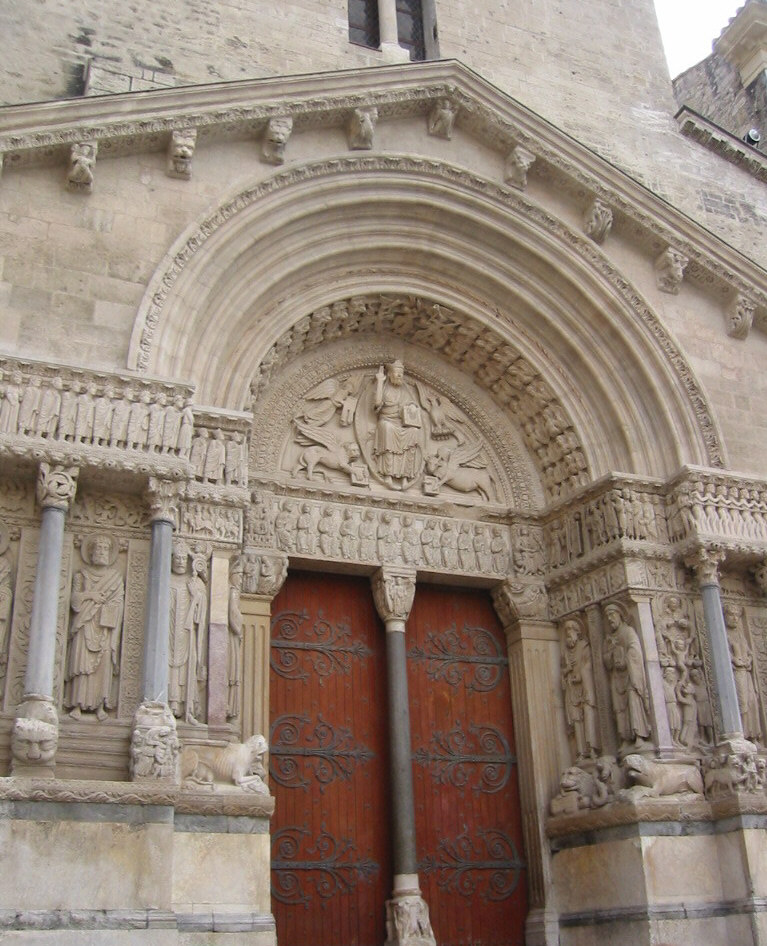
| Arles was the start of one of the pilgramages that ended in Paris. The pilgrims often traveled quite a way just to get here, and regognized their destination by the doors of the church. Though most could not read, the carvings above and to either side of the door showed the pilgrims what they needed to see. | ||||||||||||||||
|
||||||||||||||||
|
||||||||||||||||
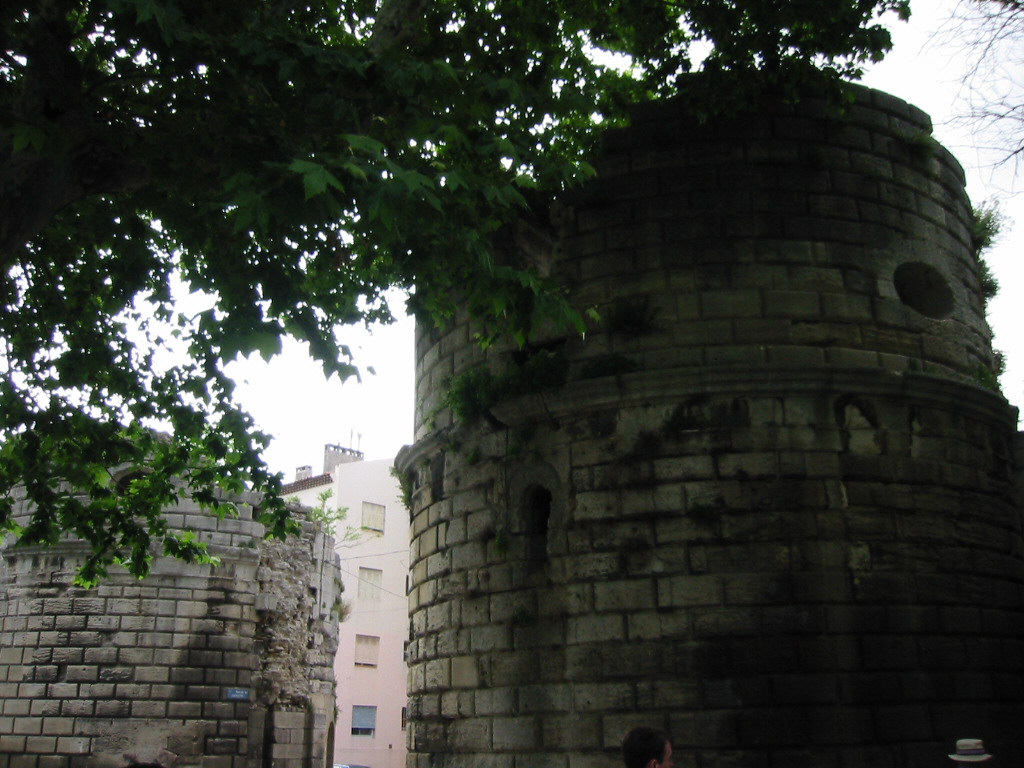
| Arles was also a walled city in the Middle Ages, noted by the gate towers still standing. | ||||||||||||||||
| Above Arles lies the tiny town of Beaux, from which the mineral Bauxite gets its name. It was a Mideival town housing 3,000, but was evacuated and its castle razed in 1632 by order of Louis XIII when Hugenots hid there. The 300 current inhabitants now survive mainly on tourism. | ||||||||||||||||
|
||||||||||||||||
|
||||||||||||||||
| "Where's Tabitha?" Coming back down from Beaux, Tabitha decided to climb a tree, and was caught in the act. |
||||||||||||||||
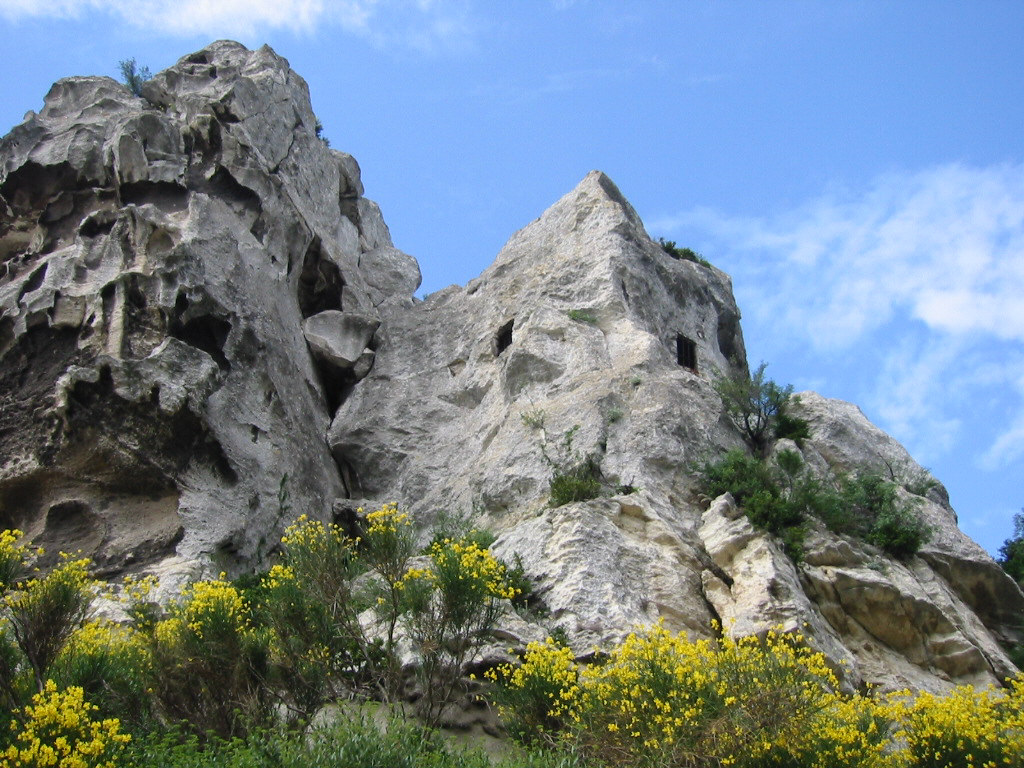
| There were windows in the rock above us. What were they used for, and who carved them? | ||||||||||||||||
|
||||||||||||||||
|
||||||||||||||||
| "Where's Tabitha?" Tabitha was, again, bored during our wine tasting, but spent her time playing in the vines. |
||||||||||||||||
| Chateaunuf-du-Pape is famous for its wines, and we spent a lazy afternoon there tasting and purchasing. | ||||||||||||||||