 |
| Stranraer & Regimental Chaplaincy At the end of May, 1638 he was given the choice of two parishes in Scotland, Stranraer and Straiton in Carrick. He opted for the former in as much it was nearer the port of Portpatrick and so nearer Ireland where his people could travel to meet him more easily. He moved there in July of that year. He was joined there by his family and would remain there for ten years until the harvest of 1648. By November, 1638 the King, Charles l, was at first pleased to yield to some of the demands of the Covenant and allowed the convening of the first free General Assembly in Glasgow, referring all ecclesiastic matters to it, and civil matters would be dealt with by Parliament. The following year, 1639 the King branded the Covenanter rebels and set about to crush them by raising an army of under 12,000 men, horse and foot soldiers, and marching with them to set up camp at York. When news of this development reached Scotland, 30,000 horse and foot soldiers under the leadership of Sir Alexander Leslie advanced soutwards and came to rest at Berwick. Both sides parleyed and reached an amicable agreement with no fighting taking place. The earlier decision to allow ecclesiastic matters to be dealt with by the church and civil matters by Parliament was written into a treaty of disengagement. It was also a condition that both armies be disbanded. On returning to London the King met with the wrath of the Bishops.and was forced to have the articles of the above treaty burned by the hands of the hangman. Immediately the King was promised the support of the clergy if he would break with the treaty and to set about raising another army to invade Scotland and subdue the rebels. This he agreed to do. By August, 1640 Charles had entrenched an army near Newburn on the south side of the River Tyne. He had already fortified Edinburgh Castle with a company of English soldiers under General Ruthven. The Covenanters had been expecting this new venture, and had consequently raised an army in anticipation. This force made its way over the border determined to prevent any incursion onto Scottish soil by the King`s force. John Livingston was appointed to accompany the Earl of Cassilis`s regiment as its chaplain. Following a skirmish between the opposing armies, the Scots took Newcastle. For the third time the King granted a free General Assembly for Scotland. This time the King ratified it by a letter and a personal visit. |
|
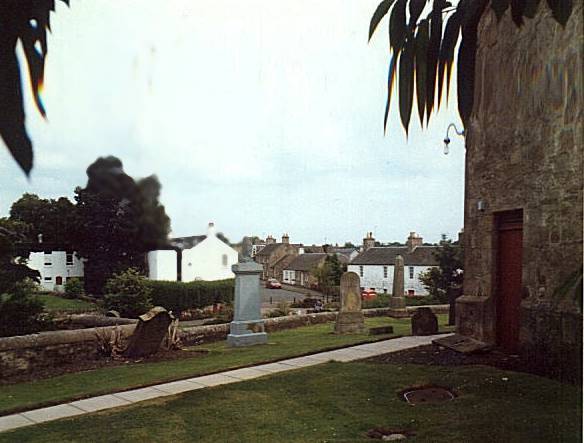
| Livingston Village, West Lothian |
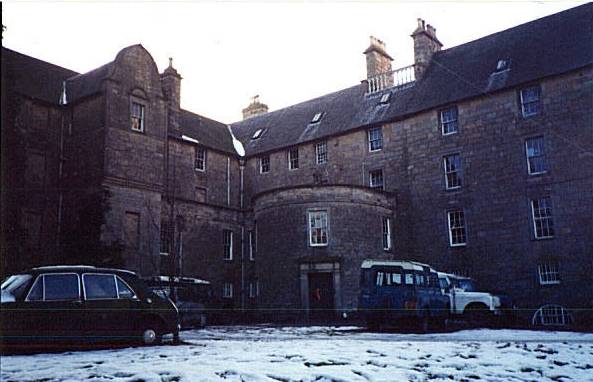 |
| Calder House, Earl of Torphichen`s Home |