Your Critical Mind: Don't Watch This Film Without It!
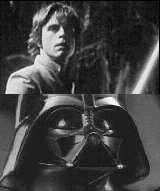 Everyone knows that a film like Star Wars is a work of fiction. The filmmakers create characters -- Luke Skywalker, Princess Leia, Darth Vader -- making some of them heroes, some of them villains, and some of them comic relief. They construct scenes that evoke in the audience responses of fear and wonder while expressing the themes of the film. The rules for creating drama are as old as Aristotle.
It is not generally realized that a documentary filmmaker uses the same techniques to shape hundreds of hours of film footage into a coherent whole. The documentary filmmaker can assign the roles of hero and villain to the real people she has filmed, constructing scenes that advance her themes while evoking emotional response and dramatic catharsis in the viewer. Ellen Cheshire, commenting on the form of the documentary film, writes that "[E]ven documentary films cannot document reality, or depict a true account of events -- a better term would be a non-fiction film. The majority of fact-related films are not unbiased recordings... The mere fact that a certain subject has been chosen involves an interpretation of what should be shot and the manipulation of time and space in the interest of tension and story-telling. In addition, they are usually carefully scripted, structured, cast and located to express a distinct message and point of view."1 A critical analysis of Live Free or Die shows how filmmakers Marion Lipschutz and Rose Rosenblatt have carefully constructed a drama of good and evil, heroes and villains, designed to evoke in the viewer a response of fear and wonder leading to the dramatic catharsis that will advance the filmmakers' political point of view.
Live Free or Die:
"I think it's awesome,"
said Goldner. |
In Live Free or Die, Lipschutz and Rosenblatt have made a hero of Dr. Wayne Goldner and a villain of Elizabeth "Betty" Breuder of New Hampshire Right to Life. The message of the film is clear: abortion activism is good, pro-life activism is bad. Watch for the ways that this message is spelled out over and over again. Notice that the moral legitimacy of abortion as such is never really addressed in the film.
"It's okay to have a viewpoint, but when you distort reality.... that's a different issue,"
said Breuder. |
There were many controversies and complaints about the portrayal of New Hampshire Right to Life members in Live Free or Die both before and after its release.2 It is the hero and the narrator of the film who ascribe the role of villain to the pro-life activists. In response to controversies and complaints, the makers of the film have usually responded that Breuder was given ample opportunity to speak on film,3 which initially sounds quite reasonable. But consider it from another angle. The filmmakers consulted several doctors before Dr. Goldner agreed to appear in the film, and even he declined the offer at first. Breuder did not have the same luxury. Once Dr. Goldner had agreed to appear, Breuder was automatically selected. She could decline interviews, as she chose to do, but she did not have Dr. Goldner's option to decline to be in the film altogether. Her name and face would appear in a nationally released film whether she agreed to an interview or not. How might you react if you were placed in Breuder's position?
The Live Free or Die filmmakers have repeatedly claimed that "The film is not a polemic."4 Shannon McGinley of New Hampshire Right to Life said that before the filming "The producers tried to portray [the film project] as even-handed when they called people to interview them."5 But since the film's release, heated controversy reveals that few people actually consider the documentary unbiased. The Bedford Journal further revealed that "In an interview this summer with the Journal, the [Live Free or Die] producers acknowledged that their money came from pro-choice sources."6 Might the funding source impair a film's neutrality?
Immediately after the opening credits for Live Free or Die, an unnamed narrator states the filmmakers' purpose: "We set out to make a film about the abortion provider crisis, how violence and harassment have driven more and more doctors away from doing abortions." Is the stated goal of the film non-polemical and even-handed? Recall Ellen Cheshire's statement that "The mere fact that a certain subject has been chosen involves an interpretation of what should be shot and the manipulation of time and space in the interest of tension and story-telling." How can the express intention to find violence and harassment affect the later presentation of events recorded?
Endnotes
1. Ellen Cheshire, Leni Riefenstahl: Documentary Film-Maker Or Propagandist?, http://www.kamera.co.uk/features/leniriefenstahl.html.
2. See, for example, the headlining article "Demonized? Breuder says she's unfair target of PBS film" in the Bedford Journal (9/28/00).
3. "[T]he only way for us to be fair is with access. She refused to let us interview her," Rosenblatt told the Bedford Journal (9/28/00). "[W]e, the filmakers [sic] tried hard to get an interview with the protesters.... They only leave themselves open to these kind of criticisms by these kind of choices," Lipschutz & Rosenblatt, "Ask the Filmmakers," http://www.pbs.org/cgi-bin/pov/postbox1999/discuss.cgi?mode=AREA&area=zz1309a (as printed from the site on 2/21/01).
4. "Ask the Filmmakers," http://www.pbs.org/cgi-bin/pov/postbox1999/discuss.cgi?mode=AREA&area=zz1309a (as printed from the site on 2/21/01).
5. Bedford Journal (9/28/00).
6. Bedford Journal (9/28/00).
Caption quotations of Goldner and Breuder were taken from the New Hampshire newspaper Concord Monitor (9/19/00).