DRUGLORE FOLKLORE
IN THE CONTEMPORARY PERIOD OF AMERICA
Druglore culture has existed behind a great intellectual, reflective, and reactive movement as a fact of a cultural revolution in the contemporary period of America. Druglore folklore, as a result, is derived from the life styles and legends of the youth of the period, who were the main participants of this cultural revolution.
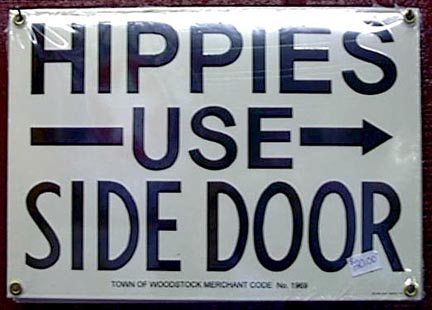
The cultural revolution has begun in 1960's Dorson, in his book, "America In Legend " , accepts Berkeley Free Speech Movement(1964) as a start. A couple of manifestations which had been represented within those years: Woodstock (1969), the open-air rock festival in Upstate New York; Hair (1968), the rock-comedy upon the story of the street culture of the Hippies; Rolling Stone (1967), the biweekly news magazine devoted to rock music and related activities of youth culture, are considered as the institutions and symbols of the counterculture.
The cultural revolution attacks to political and social orders, members of the counterculture rejected to live according to the rules and the traditions of the society. For seeking liberation from laws and morals and for proving themselves to the members of society which they conflict with, most of them got into the druglore.
Opening minds completely to imagination, in other words, to reach to the unknown and uncertain points of mind is called "getting high on drugs" among drug users. By getting high on drugs, drug user tries to break the law and revolt against the former generation. He tries to live in an extra-ordinary way, and open the mind to extra-ordinary perceptions and sensations.
Drug users were interested in nature just as Romantics, to find out the answers of the questions related to life. They were living in rural areas, growing their own food, and living with their own rules. They had aimed to get away from community and its bringings such as money, as much as they can. The moral rules of the society for them were hostile, harmful and against the human nature. They wanted to be free and peaceful in every aspect of life, therefore they used to dress colorful and casual clothes.
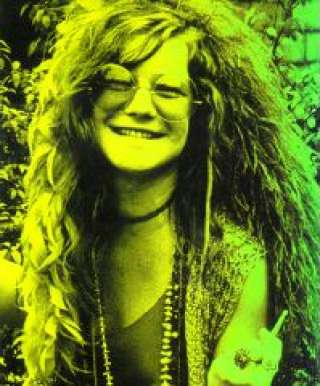
They usually challenged the political and social wrongs with music. They created " the protest music" out of blues, country, and rock'n'roll; and protest music created great cultural heroes. Janice Joplin, Bob Dylan, and Joan Baez were the voices of counterculture movement of the 1960s.
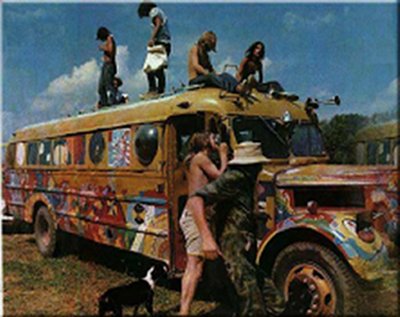
The drug users wanted to go not only mentally far away by using drugs, but also they used to travel physically. " Trip" is the keyword for the desire of the drug user who journeys literally on the road and metaphysically to the games of mind. They did not want to be stable in an ordinary place. They wanted to travel to different areas which caused the idea of mobility in druglore culture.
There are lots of terms in druglore culture which covers most of the parts of druglore folklore. A habitual drug user is called "head". " Narc" stands for narcotics agent who disguises himself as a hippie and associates with hippies on a personal level. The term "hippie" derives from the word "hipster" that means adventure lover. A hippie can be easily identified with his/her colorful dress and his/her long hair, and usually s/he is a drug user. A marijuana user is called "smoker", a heroine user is called " shooker of the drug" . "Swallower" is the user of the drugs in capsule form. There are also terms used for drugs."Pot" means marijuana and it is the lowest of danger for being addicted although still possibly hazardous. LSD.(Lysergic acid diethylamide) is called shortly "acid" . LSD is the best known of the acids. It expands mind, breaks the customary train of association stories of acid trips emphasize the psychedelic effects, the lights, colors and flickering waves that flash one's eyes. "Speed" is the term for amphetamines.
A counter movement has to do with rules and law, and the drug user has to do with cops, the representative of law. In druglore folklore, a head is the defier of the rules of the system, and continually tried to be touched by the hands of law. He is cool, but like any outlawing people, lives with the fear of getting busted. Generally, experiences with cops and in court takes place in the stories druglore folklore. "Paranoia" is a common word stating drug users' distrust to the strict world.
Kinds of folkloric productions are divided different branches.
Oral legendary tales among street people and college students are usually based on king of acid, Owsley. He is an acid dealer famous for his hi-quality acids. He is the patron of the rock band "Grateful Death" , a self made millionaire and a legend among the street people and collegers. Here is an example for tales about him:
That was a particularly nice one. One of high-lights of that one was- their eye say- shall I breathe his name Owsley, pushing a chair along this wooden floor, making his noise, the most horrible scrapping. It went for hours. I am not exaggerating. it just drove everybody completely up the wall. That was really an incredible exhibition of making yourself...uncomfortable...making other people uncomfortable.
Another kind of folkloric productions are tales of horror and thrill experiences. A drug user feels his hazardous social position more than ever when he is high. Sometimes, he can go into bad trip and experience some thrilling hallucinations or illusions. An example for these kind of tales is:
A friend of mine told me the story of some friends of his. A guy took a leaf his roommate had around the apartment, he chewed it about half an hour and began and began to notice he had no concept of space- he kept knocking on the things yet felt no pain. He threw of all his clothes and ran into the bathroom to take a shower. He started screaming and screaming about a barracuda in the toilet.
Different traditions according to different conditions of the cities 'caused for another branch of druglore folklore. Druglore local legends:
Rumor had it when New York heads were suspecting a police raid. they would flush their marijuana down the toilet. Thus, before long the weed was flourishing in the rich organic environment of the sewer system. Since the plants received no light, part of the photosynthetic process was impaired and the plants were virtually white, hence the name "New York White" .
Druglore Latrinellia is made of with graffities scribbled or painted on the walls or on the doors of public toilets. A couple of examples are:
Southern Pacific has fewer larks!
Northern Pacific has fewer narks!
Support your passenger trains. ( Men's room, Wheeler Hall, Univ. of Cal, Berkeley)
Christ was a hippie. ( Women's restroom, Pizza Heaven, Backroft Way, Berkeley)
A couple of examples for Druglore Jokes:
What did one marijuana plant say to the other?
Let's get out of this joint.
What is better than LSD?
SEX, if you have the right pusher!
What is the LSD set known as?
High society.
A hippie was driving the wrong way down a one way street, and the policeman pulled him over and said, " Look it buddy, didn't you see the arrows?"
"No man, I even didn't see the Indians."
Due to its reflections to the social and political problems and reactions to them in a way original to itself, druglore culture has a remarkable place in the contemporary period of America. Druglore Folklore, which was produced by getting high on drugs, therefore colorful and rich, is the best identifier of the counterculture of 1960s.