| The Sage Brush Rebellion | |||||||||||||||||||||||||||||||||
| Home | |||||||||||||||||||||||||||||||||
| A Short Synopsis | |||||||||||||||||||||||||||||||||
| WEB SITES SageBrush Rebellion Collection No. 23 University of Nevada: Special Collections Foundation For Economic Education University Press of Kansas Reno Gazette Journal.com High Country News.org History of Grazing on Public Lands |
|||||||||||||||||||||||||||||||||
| The term Sage Brush rebellion was coined in the late 1970's to describe a rebellion against federal government land policies, by cattle ranchers in the west. One third of all the land in the U.S. is owned and controlled by the federal government. Profit from this land goes to public schools and national parks. Federal environmental laws and regulations apply to this land. Ranchers using it for grazing must pay for a permit and comply with all the regulations. In Nevada, almost 80% of the land in the state is controlled by the federal government. |
|||||||||||||||||||||||||||||||||
![]() |
|||||||||||||||||||||||||||||||||
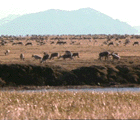
| In Utah 42% of the land in the state is controlled by the federal government. From 1940 to 1996 the amount of operaters on federal land went from 4,380 to 1,572, a substantial decrease that has allowed the land to regrow and recover from over use. | |||||||||||||||||||||||||||||||||
![]() |
|||||||||||||||||||||||||||||||||
| Reagan and the Rebellion | |||||||||||||||||||||||||||||||||
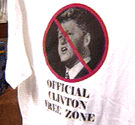
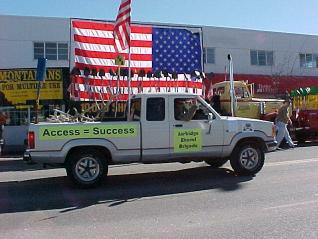
| In the late 1970's the sage brush rebellion grew, in most part due to president Reagans support of it. Reagan proposed to sell 8.7 million acers of BML and National Forest land to private investors. The plan was heavily rejected and opposed by everyone from environmentalists to the ranchers themselves. It would have privatized up to 90% of some national forests. The ranchers, while in support of giving controll of western land to the states or to them, were not in support of big developments. The developments would have hurt ranching more than the government by allowing comercialization to come to the land they use to graze their cattle. | |||||||||||||||||||||||||||||||||
![]() |
|||||||||||||||||||||||||||||||||
| A Comprimise | |||||||||||||||||||||||||||||||||
| The problem of conserving our land while still allowing comerice has been around for a while. Develpment comes and brings with it air and water pollution. Animals and plants die, resources are lost. While this is all true and is a very good reason for keeping the land in the west federal, we must also consider the little guy. The rancherswho wants to make a living the way his father did, and his father before him, and his father before him, since the west was first settled. It is a tough choice, but it is not all or nothing. In my opinion the federal government should not be allowed to control more than 35% of the land in a state. The states should be allowed to decide how to manage their forest land, and how to protect their grasslands. I think that the land the ranchers are allowed to use should be monitered to make sure they are not over grazing it and their should be penalities for those who do over graze. Ranchers should be made to have a plan for where they are going to graze their cattle, making sure to not use the same land space every year. I think that the government needs to give people more credit. It is not in the ranchers best interest to over graze because then there is less for their cattle to eat the next year. If a ranchers does over graze and hurt the land he should be fined and made to repair the damage he has done. The land should be protected, but so should the people. Everyone needs to realize that there is a big difference between a rancher and a developer. While ranching does do damage to the land, it is not nearly as big as the damage we do everyday, by driving our cars, throwing out our trash and heating our houses. The ranchers should be given more responsibility for the land they use, but the land they use should still be protected so that it is there for future generations to enjoy. |
|||||||||||||||||||||||||||||||||
| Click on the pictures to see where the came from. | |||||||||||||||||||||||||||||||||