The
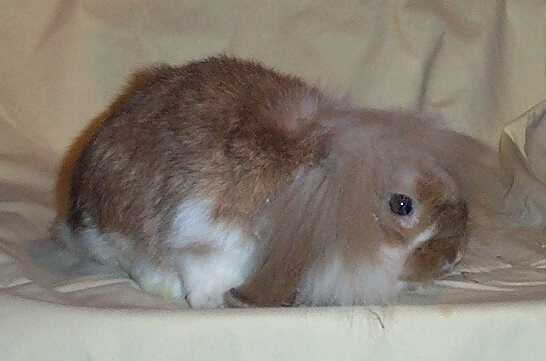
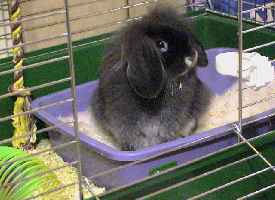
Lionhead Lop.
Of course, along with the Lionhead rabbit, very shortly after
came the Lionhead lops!
These are basically a normal small lop rabbit with the
characteristic main of theLionheads.
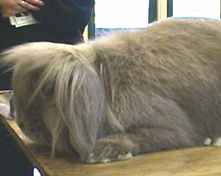
The only down side of the lop version is that the mane does tend
to matt a bit easier than its erect eared cousin. How ever, the
matting need not a problem, as long as the mane is combed out
every couple of days, and this only takes a few minutes.
They still (even in the lop variety) do not need any where near
as much grooming as longer coated rabbits as say the Angora or
Cashmere.
This little rabbit along with the regular Lionhead is still under
review by the British Rabbit Council as to if it will become a
standardised breed and so showable at British rabbit Council
shows.
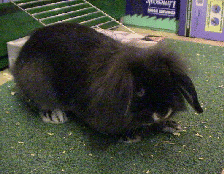
WORKING BREED STANDARD PETITE LION LOP
| 1.TYPE - Bold
thickset and firm. The body should be short, broad and
well muscled with little visible neck. The well muscled
rump is short and well rounded. The chest is broad and deep with curved sides where it meets the shoulders which are broad and strong. The front legs are short and straight. The hind legs are short, strong powerful and carried parallel to the body. The tail is straight and well furred. 2. COAT -The coat is dense and of good length, roll back and even all over the body. 3. MANE -The mane should be between 2-3 inches in length to form a full circle around the head, extending to a 'V' at the back of the neck falling into a fringe over the crown. |
RING SIZE K POINTS 1) Type 25 2) Coat 20 3) Mane 20 2) Head Ears Crown... 20 5) Colour... 10 6) Condition... 5 Total 100 Points.
|
| 4.
HEAD EARS & CROWN -The head is bold, broad and well
developed. The profile of the head is strongly curved
with a good width between the eyes, full cheeks with
longer fur and a broad muzzle. The eyes are bold, bright and large. The basal ridge of the ears should appear prominent across the top of the skull to form the crown. Bars should be broad, thick and well furred, rounded at ends. They should be carried close to the cheeks giving a horseshoe like outline when viewed from the front. The inside of the ears should not be visible from any angle when carried correctly. 5. COLOUR - All colours as long as they conform to a recognised colour and pattern. These must be presented in every case. 6. CONDITION - The exhibit should be in a perfect state of health, bodily condition, free from all soiling, particularly on fret, ears and genital parts. The coat should reflect the overall good health of the exhibit, which should appear alert and vigorous. WEIGHT - Ideal 3.2 lbs, 1.42 kgs. Maximum 3.8 lbs, 1.60 kgs. FAULTS - Long coat on ears or body, excessively short or long cheek furnishing, head too fine, poor colour, long in body, a mane that exceeds length required. DISQUALIFICATIONS Malocclusion, furnishing on ears, wall eyes. Lack of mane, overweight. NB This
standard is a working standard subject to alteration
during |