LION DANCE
The lion dance is one of China’s most distinctive cultural arts.
Often performed by kung fu schools during festive seasons or opening of
restaurants and weddings. It is said that if the dance is well performed, good fortune, prosperity, and longevity will be ushered
in.
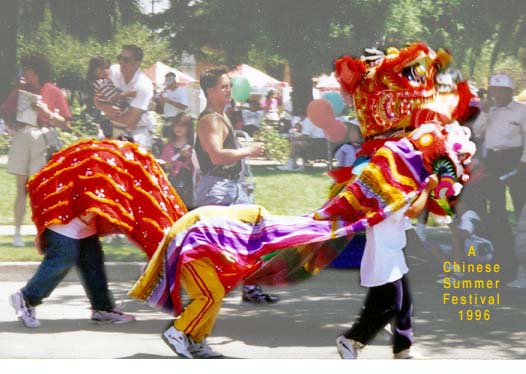
Above: Street performance of lion dance
The lion dance dates back to the Han Dynasty (205 B.C. to
220 A.D in China) and during the Tang Dynasty (716-907 A.D.) it was at its
peak. It was then performed at religious ceremonies only. The lion dance spread
to China’s neighboring countries, Taiwan and Korea. Though the dance differs
geographically, the symbolism remains the same.
Two dancers enact the lion, in the dance. One handles the head, made out of strong but light materials like paper-máche and bamboo; the other plays the body and the tail under a cloth that is attached to the head. The head dancer can move the lion's eyes, mouth and ears for expression of moods.
The dance moves have to be rhythmic with drum, cymbal and gong melody. The music follows the moves of the lion: the drum follows the lion; the cymbals and the gong follow the drum player.
Lion Dance was originally practiced as a martial arts and acrobatics. Since the lion dance has to be kept spirited and continuous, therefore, strength, agility and stamina are demanded from the performers. As the styles of martial arts are divided into two schools, the lion dance is divided into the Northern and Southern Lions. Each school has its unique flair and costume.
North
Lion
South Lion
Green Faced Lion
