
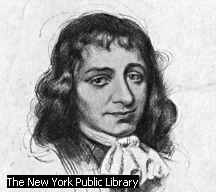
Spinoza denied that the Bible was inspired by God down to the last letter. When we read the Bible we must always remember the period it was written in. This type of reading exposed a number of inconsistencies in the writing.
He also said that God is all, and all is in God. Therefore he was a pantheist. His most important book was Ethics Geometrically Demonstrated. Ethics in philosophy mean the study of moral conduct for living a good life. The idea of ethics as a set of rules respecting one another is a modern usage of the word.
Spinoza rejected Descartes split of two substances. He believed that there was only one reality that everything could be reduced to. He called this Substance. Sometimes he called it God or nature. This means he was a monist, or someone who believes that nature and the condition of all things to one single substance. Although he disagreed with Descartes� dualism, he gave God two attributes, which were identical to Descartes� thought and extension. Everything in nature is either thought or extension. A tree or a poem about a tree are different modes of the attribute of thought or extension. A mode is the particular manner in which Substance, or God assumes.
Spinoza had a determinist view of the material, or natural, world. Being a determinist means that everything happens out of necessity. Therefore he believed that man cannot have free will, since God is the one who is the puppet master. He said that it was our passions, such as ambition and lust, that prevented us from achieving happiness and harmony, but if we realize that everything happens from necessity, we can achieve an understanding of nature. Seeing nature is what Spinoza called �sub specie aeternitatis� which means �To see everything from the perspective of eternity.�
Courtesy of Encarta