
Pantheism also was apparent during this time also. Pantheism is the view that God is present in everything. This angered the church, since during the Middle Ages, people believed that there was an impenetrable barrier between creation and God. Now nature was considered divine also. The fate of Giordano Bruno illustrated the church�s anger. He claimed that not only was God present in nature, but he also believed that the universe is infinite. He burned at the stake in the year 1600.

All of this changed the worldview. Before it was said that the Earth was the center of the universe, until Nicolaus Copernicus published On the Revolutions of the Celestial Spheres. He said that the Earth and all of the other planets revolved around the Sun. he also said that the Sun was the center of the universe, which isn�t correct, but he got the ball rolling.
Galileo then came along and put forth the law of inertia, which is that an object will stay at rest, or in motion, until acted upon by an outside force.
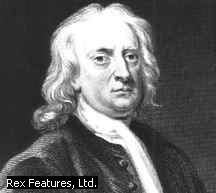
Isaac Newton (1642-1727) came up with the law of universal gravitation, which states that every object attracts every other object with a force that increases in proportion to size and the distance between the objects.
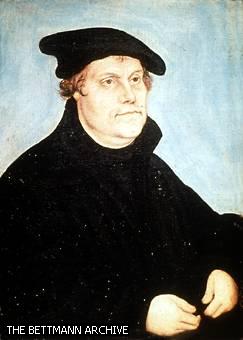
All of these things led to a new viewing of the church. The individual�s relationship to God was more important than his relationship to the church. The Bible was translated to the various languages, so that the people could understand it for themselves. An important reformer was Martin Luther, who believed that man did not need the intercession of the church to receive forgiveness. He also wanted the church to return to return to the New Testament as the basis for the church.
Courtesy of Encarta
Courtesy of Encarta