
The way Augustine described the internal conflict within man was that there are two kingdoms, the �Kingdom of God� and the �Kingdom of the World� which struggle for mastery inside each person.
Courtesy of Encarta
Courtesy of Encarta
|
|
|
|
|
|
|
|
|
|
|
|
|
|
|
| The Middle Ages | ||||||||||||||
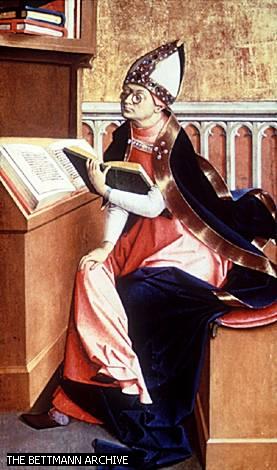
| St Augustine (A.D. 354-430) �Christianized� Plato. He said that God created the world out of nothingness. He then said that Platos �ideas� were in the Divine mind. So he placed Plato�s �ideas� in God. He also believed that evil is the �absence of God�, or as he said it, �The good will is God�s work; the evil will is the falling away from God�s work.� He believed that man has any right to criticize God, and that those who will be saved have been chosen from the beginning, and we are at His mercy. The way Augustine described the internal conflict within man was that there are two kingdoms, the �Kingdom of God� and the �Kingdom of the World� which struggle for mastery inside each person. |
||||||||||||||
|
||||||||||||||
| St. Augustine Courtesy of Encarta |
||||||||||||||
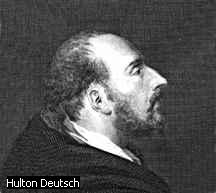
| The greatest philosopher of the Middle Ages was St. Thomas Aquinas (A.D. 1225-1274). He came from the little town of Aquino, between Rome and Naples, but he also worked as an educator at the University of Paris. He was more of a theologian, but at this time there was no big difference between philosopher and theologian at the time. He was one of those that tried to make Aristotle�s philosophy compatible with Christianity. He created the combination of faith and knowledge, which is no easy feat. He believed that there were two paths to God. One goes through faith and the Christian revelation, and the other goes through reason and the senses. Between the two, the path with faith is surer, because it�s easy to lose your way on reason alone. | ||||||||||||||
|
||||||||||||||
| St Thomas Aquinas Courtesy of Encarta |
||||||||||||||