
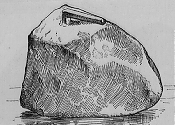
 Each side of a curling stone has a concave area commonly referred to as the cup. The edge of the cup is appropriately namedd the rim, and it is this thin edge that actually contacts the ice surface.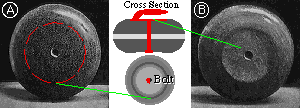
An acceptable curling stone must be able to resist abrasion and be tough, dense, resilient, uniformin colour and non-absorbent. The last quality is highly important because moisture penetrating the stone and then freezing will cause chiping of the stones surface. Granite from the British Isles is the best for these requirements and is used almost exclusively.
The running edge or rim is not polished like the rest of the stone, but is comparatively rough. For curling to be played as we experence it, the running edge must never be allowed to wear smoothor be damaged. A curling stone usually runs on it edge for about two years before the handle is placed on the other side of the stone. This allows even wear over the stones life and allows usage for aproximately 20 years before reconditioning is necessary.


Home