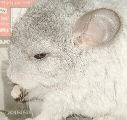
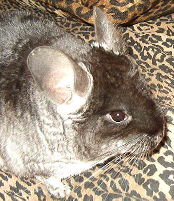
A Chinchilla is a small animal prized for its soft fur and they make excellent pets. They grow up to be half as big as Rabbits and have bushy tails like Squirrels. Chinchillas are native to the snow-capped Andes. The Chinchilla is a clean and odorless rodent that eats roots, grasses, and pellets of oat, alfalfa, and Timothy hay.
Chinchillas begin breeding at about 8-9 months of age, and the females can have 2 litters a year. The average litter consists of 2 kits, but could have as many as 7! The kits weigh approximately 35 grams (1 1/4 ounce) and are born with their eyes open, all 20 of their teeth, and are fully furred. The kits can be weaned from their mother at about 2 months of age.
The Chincha and Inca Indians ate Chinchillas and used their fur for clothing. Spaniards who came to South America in the 1500's named the animal after the Chinchas. They introduced the fur into Europe and the demand became so great that the Chinchilla was almost wiped out. In 1923, an American mining engineer, M.F. Chapman, trapped 11 Chinchillas in Chile and took them to California.
Scientific classification ~ Chinchillas belong to the Chinchilla family, Chinchilladae. Three domesticated kinds are C. Berevicaudata, C. Costina, and C. Langigera.
Chinchillas (or "chins") are extremely quick and adept at jumping. This is good, because having no claws; a Chinchilla's chief means of escaping danger is its agility and speed.
Chinchillas are nocturnal, so they generally become active around dusk and stay up during the night. This is something to think about before you place your pet's cage in your bedroom.
Chinchilla temperments vary greatly; many are very timid and shy, while others are more outgoing and curious. The temperments of Chinchilla parents may determine the personalities of their offspring. As a new chin adjusts to a new home and owner, it may be more withdrawn than usual. Chinchillas prefer to race about your home, ricocheting off walls, jumping over obstacles, and delighting you with their energetic antics.
Before you buy a Chinchilla, you should consider whether you could make the following typical tasks a part of your life: |