Global
Warming: Now and Later
Meghan
Oven
What
Has Happened?
-
The
Earth’s land and ocean temperature has risen by between .6 and 1 degrees
Fahrenheit in the past 100 years and is expected to continue at a faster
rate in the years to come.
-
The
ice sheet in the arctic has been reduced by 30% between 1976 and 1989.
This shows the melting of the glaciers in the Arctic.
-
A 48 by
22 mile chunk of the Larsen Ice Shelf in the Antarctic broke off in March
of 1995 exposing rocks that hadn’t been exposed in over 20,000 years.
this was years before the crack was supposed to happen.
-
There
was a documented decline in the zooplankton population off the coast of
southern California linked to a 1 to 2 degree Celcius rise in water temperature.
-
The sea
level has risen between 10 and 25 centimeters in the past 100 years.
-
El Nino
conditions in the Pacific Ocean have been unusually persistent affecting
the climate and weather of the entire planet.
-
The nine
warmest years this century have all occurred since the year 1980.
-
Climate
patterns have changed bring diseases and infections to places never before
infected. An example is the Aedes aegypti mosquito which has newly
made its way north carrying yellow fever and dengue fever. Anothe
example is the West Nile virus recently discovered by scientists in New
York.
Future
Predictions
-
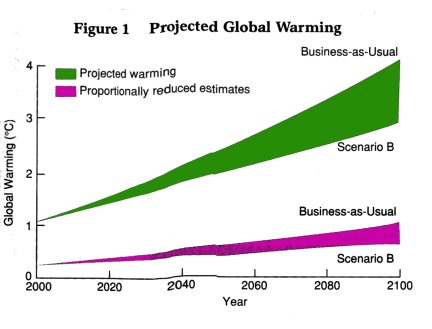
The overall
temperature of the Earth will rise by anywhere form 1 degree Fahrenheit
to 10 degrees Fahrenheit. This could cause any of the following to
happen.
-
There
will be an Arctic thaw. It is predicted that by the year 2025 that
the arctic temperatures will have increased by 18 degrees Fahrenheit.
This will devastate the fragile northern ecosystems and melt the glaciers
and ice caps that are located there.
-
Sea levels
will rise by 3 feet mostly due to the melting of glaciers and the expansion
of water as it heats up. This could submerge large areas of coastal
lands including river deltas and islands displacing millions of people.
-
Winters,
along with every other season will get warmer. This would be detrimental
due to the effects of extreme heat on the young and elderly.
An example of this is the heat wave of 1997 in Chicago which killed 500
people.
-
Rainfall
could increase in some parts of the world and stop all together in others.
This would subject already flood danger areas to almost constant flooding
, drought areas to desert land and keep deserts from getting any rain at
all.
-
The weather
and rainfall patterns could become unpredictable. Though extra rain
would benefit farmers in many areas, it would have devastating effects
on natural ecosystems. Forests could be turned into desert and desert
into wetlands. Large storms such as hurricanes drawing more energy
from the heated oceans, could become more severe and unpredictable.
-
Return
to Main Menu