Technological
Advances
Automobile
Radio
movies
Electricity
Automobile
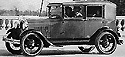 Henry Ford, the auto manufacturer
of the century, introduced his new Model A in December 1927, he caught
the attention of the world. Ford had revolutionized the automobile industry
by introducing the assembly line, which allowed for the mass production
of cars. Before the introduction of the assembly line, each car had taken
about fourteen hours to build. By the use of the assembly line, a new car
could be produced in ninety minutes. Soon, the numbers of cars had skyrocketed.
The number of cars produced annually flew from four thousand in 1900 to
4.8 million in 1929 (Davidson 558).
Henry Ford, the auto manufacturer
of the century, introduced his new Model A in December 1927, he caught
the attention of the world. Ford had revolutionized the automobile industry
by introducing the assembly line, which allowed for the mass production
of cars. Before the introduction of the assembly line, each car had taken
about fourteen hours to build. By the use of the assembly line, a new car
could be produced in ninety minutes. Soon, the numbers of cars had skyrocketed.
The number of cars produced annually flew from four thousand in 1900 to
4.8 million in 1929 (Davidson 558).
Whereas at the beginning of the 20’s, only nine million automobiles
were registered in the U.S., by 1930, the numbers had more than tripled.
The use of the automobile provided an efficient method of mobility. Between
1921 and 1929, surfaced road mileage in the U.S. almost doubled.
People went camping and began to explore the nation (Davidson 558-9).
As car owners no longer had to live close to their jobs, many
people moved to suburbs. As suburbs grew, homes, schools, churches, libraries
and post office were built to meet the needs of residents. This resulted
in job opportunities for carpenters, masons, bricklayers, and other
skilled laborers.
The booming of the automobile industry also fueled economic
growth in the steel, glass, coal, and gasoline industries, which were all
necessities to the “modern car.”
Return to Top
Radio
At first, radios were operated for public relations
purposes by manufacturers, department stores, and newspapers. Some
of the earliest stations included WWJ in Detroit, KDKA in Pittsburgh, and
WGY in Schenectady, NY. There were few regulations of frequencies
or of broadcasting power. Restrictions were not placed upon radio's
until 1927 when the federal government assigned frequencies to competing
radio stations. Radio sales became a big deal in the twenties.
Sales increased from only three million people owning radios in 1922 with
sales of around $60 million, to $852 million in 1929. The radio was
listened to in ten million homes, five million businesses, and two million
cars had radio sets (Pietrusza 48-9).
In the beginning, few people thought that the
radio could be used as a publicity tool. Then, on New York's WEAF,
an ad was placed about a local real estate firm. After that ad, advertising
and radio became inseparable. Soap opera's and Radio Theater groups
were sponsored by advertisers. By the mid 1920's, $1.25 billion per
year was being spent on advertising.
Radio's also broadcast sports games. The
first game ever broadcast was in April 1921, a lightweight boxing match
aired by KDKA. Court cases were also broadcast, such as the Scopes
Monkey Trial. Radios were all run independently at first, and not
until 1926 did networks like the National Broadcasting Company (NBC), begin
taking over (Pietrusza 48-9).
Return to Top
Movies
The motion picture was a popular pastime during the 1920’s.
Movie theaters began to appear as early as 1903, and by 1920, Hollywood,
California, was the movie capital of the world. Early motion pictures did
not identify the actors (Davidson 560), were silent, black-and-white, and
were often accompanied by piano music. Until 1927, movies remained silent.
Audiences could read subtitles to follow the plot.
Audiences of the twenties loved comedies. Three popular comedians
of the day were Charlie Chaplin, Buster, Keaton, and Harold Lloyd (Pietrusza
50). Charlie Chaplin enchanted viewers by playing his role as a lovable
tramp in such movies as The Kid and The Gold Rush (Roberts 389).
Buster Keaton got laughs my employing a serious, deadpan expression. People
laughed at his when he was serious about them. His two greatest films were
Sherlock, Jr., in which he played an amateur detective, and The General,
which included a high speed train chase. Where Keaton and Chaplin played
unrealistic characters, Harold Lloyd often portrayed the average businessman
who often found himself stuck in a common situation of everyday life.
The greatest star of the time was, by far, Rudolph Valentino,
who was considered a heartthrob of the day. “With his sideburns and passionate
hair,” said Frederick Lewis Allen, “the Sheik had set the standard for
masculine sex appeal” (qtd. Pietrusza 51). His 1921 film, The Four
Horsemen of the Apocalypse led him to stardom, and his next film, The Sheik,
cemented his fame. (Pietrusza 51).
The first movie with sound, The Jazz Singer, was released
by Warner brothers on October 6, 1927. The film created quickly became
a sensation, and silent movies became “a thing of the past” (Pietrusza
53). When sound became a part of the movies, audiences were delighted.
In 1927 sixty million people a week attended the movies, but in 1929,
the numbers had skyrocketed to a record one hundred ten million (Davidson
562)!
Return to Top
Electricity
There were not many industries
that grew as rapidly as the electric light and power industry. About as
much hydroelectric power was developed over the decade as in all of the
years before the decade had begun (Leuchtenburg 190). Before World War
I, only twenty percent of all American homes had electricity. By the end
of the 20's, however, seventy percent of all households were equipped with
electric power (Davidson 557).
Electricity made home life more pleasant and
made industrial production more efficient. The abundance of electric power
in the 20's allowed American households to use new products, such as electric
refrigerators, vacuum cleaners, and electric stoves. In industries, new
electric powered machinery could be used. Electric power enabled a worker
to do more work using less time. Between 1920 and 1929, output per working
our went up 35 percent, increasing twice as much as it had in the previous
decade (Davidson 557).
Return to Top