
|
|
Note: This is a document in progress.
"Wood" is what my partner, Kevin, and I call the food we eat (except for the food that we eat that we know isn't good for us). The basis of the diet starts with a whole foods diet: unrefined and unprocessed fruits, vegetables, and whole grains, whole-fat dairy products, free-range eggs, and pasture-raised meat.
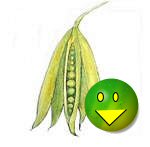
The "whole" part means that our goal is to eat as much of the edible portion of our food sources as possible. For meat, that means eating from all the cuts of meat, including the organs, and making stock from the bones. For vegetables, it means eating edible skins and pods, and eating vegetables that are leafy greens, and fruits and pods, and roots: all the parts of plants. For grains, whole foods are the whole grains themselves, or flour made from the whole grain.
The thinking behind eating the "whole" of the food is that our ancestors lived for most of human history on the whole edible portions of their food. In the case of animal foods, the food value was too high to waste any edible portion. (Organ meat is highly nutritious!)
The same principle applies to all kinds of foods. Through ingenuity, people have come up with edible, nutritious, sustaining food in all kinds of climates, conditions of deprivation, and poverty. The "soul foods" of any culture I can think of are the foods of the poor people, and poor people historically ate the most undesirable (by rich people) cuts of meat, rounded out with grains and vegetables. You might want to cut back on the bacon grease (although Sally Fallon would disagree), but mom's soul food cooking, if you're lucky enough to have such a mother, is basically a healthy whole foods diet. Or would be, if you took out the "improvements" of refined white flour and white rice.
Originally, white flour and white rice were luxury items, desirable for their pure white prettiness and extended shelf lives. Most of the protein is preserved in white flour and rice, but the fiber and vitamins are stripped away in the bran and germ.
As well as seeking out foods in their whole, natural state, we have other concerns that affect what we eat: whether the food was grown organically and produced locally, the nutritional profile, and the glycemic load. What I eat reflects my beliefs about responsible world citizenship, my understanding of human health, and my personal tastes.
My partner Kevin is allergic to most dairy products, and I avoid pork and shellfish as a matter of Jewish identity. Other people in our lives avoid gluten, or have other restrictions for health, beliefs, or cultural reasons. Although omnivorous, ourselves, we love and feed vegetarians. I started this document with some advice I wrote to a wannabe-vegan on where to begin crafting a sound diet:
People who eat a whole foods diet know at a more elemental level what they eat.
Educate yourself on what a vegan balanced diet looks like: know a number of common foods in each of the food groups you need to eat from every day, so you can scan your environment for what is available to put together that will satisfy a third (if you eat three meals/day) of your nutritional needs. Start with macronutrients: know how much protein, carbohydrate, fat, water, and fiber you want to consume in a day. This is good advice to anyone, whatever you eat, and maybe it sounds very simple, but most people don't know this stuff. They have no idea how many cups of rice they eat in a week, or how many grams of fat they usually eat in a day. But these are the starting point for planning your meals; being able to shop for groceries depends on knowing these things. Most people in rich nations just sail blithely along, eating whatever strikes them. But people who are highly conscious of their food, because they are poor or food is scarce, out of gastronomic pleasure, health concerns, ethics, or religious laws, must necessarily plan how and what they will eat.
When I realized how far I'd gotten, I just cut and pasted it in here, because it explains what follows.
A typical menu for us looks like this:
| Thursday | Friday | Saturday | |
|---|---|---|---|
| Breakfast | (1/2 cup dry) Scottish oats cooked with 1/2 an apple, 1/8 cup
raisins, and cinnamon Two eggs scrambled with 1 oz chicken sausage 6 oz Coffee |
Scottish oats cooked with apples, raisins, and cinnamon 1/2 cup Fresh and frozen fruit with 1/2 cup yogurt or 1 cup soy milk as a smoothie Coffee |
4 Whole-grain fruit pancakes 1 oz Chicken sausage Coffee and OJ |
| Lunch | 6 oz Tuna steaks 1 cup Whole wheat pasta with pesto 1 cup Mixed green salad 6 oz. Lemonade or apple juice |
Leftover dal, collards, and rice (similar proportions) | 6 oz Fried salmon patties 1 1/2 cups Butternut carrot bisque 2 cups Mixed greens salad |
| Dinner | 3/4 cup Red lentil dal 1 cup Collards 1 cup Brown rice |
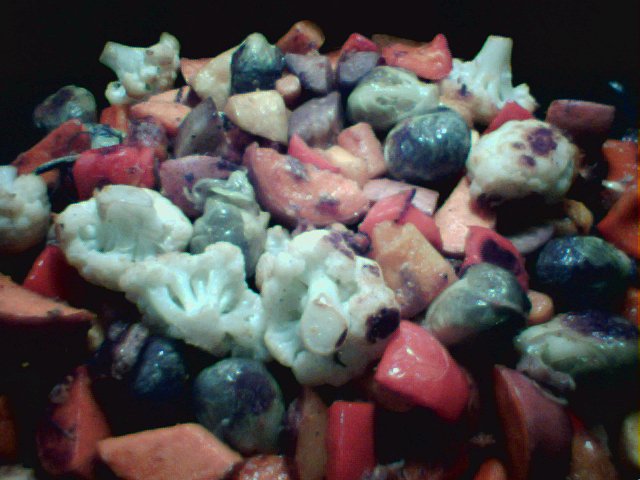
Half a roasted chicken 1 cup roasted mixed vegetables (sweet potatoes, parsnips, garlic, red potatoes, mushrooms, and brussels sprouts) 6 oz. Ginger beer |
1 1/2 cups Thai curry of chicken thighs, sweet potatoes, and
green beans 3/4 cup Brown rice |
| Snack | 2 Whole grain crackers with 1/4 cup peanut butter A pear 1 cup Soy milk |
3/4 cup Chicken salad on a small whole wheat pita | 2 cups Popcorn 1/2 cup Pistachios 1/2 bar Dark chocolate |
I've been influenced by a number of dietary philosophies, both through direct reading and through my partner and what he has absorbed through his reading and experience.
But not all meat, just range-fed. Range-fed animals turn grass, which will grow where crops won't, into food people can eat. The nutritional profiles of meat, eggs, and dairy products all reflect the health and diets of the animals that produced them. The meat of grain-fed animals and eggs of grain-fed chickens have unhealthy essential fatty acid ratios compared with their free-range counterparts.
An entertaining introduction to the animal cruelty implications of industrial animal farming as it's practiced today is available at The Meatrix. A book that gets more deeply into the health concerns of the industry is Fast Food Nation, a book I would describe as a hybrid of Nickled and Dimed and The Jungle.
Bread didn't used to be an enemy. It used to be the staff of life. How did it go from being one of four food groups (the others were beer, cheese, and meat!) that sustained our European ancestors to the lifeless Wonder Bread now available?
We used to eat whole grain bread, and drink whole grain beer, and eat meat and cheese from range-fed animals. These foods are nutritious enough, when they're not processed and refined, to keep you fairly well alive and healthy. People living in hunting and herding societies have lived entirely from animal products. Grain, a lower-density food, can sustain life because of the amount of fiber in it. It passes through the guts slowly, allowing the body to absorb as much as possible of its nutrients.
According to Sugar Blues, white sugar, rice, and flour were once all prized for being refined. But refined of what? Fiber, micronutrients, and oils are all removed from grains and sugars in this process. With the fiber gone, the rest—starch, sugar, and protein—speeds through your guts, giving you a quick surge of carbs and sugar. Because the food moves through you more quickly, you absorb fewer of the micronutrients (of which there are fewer).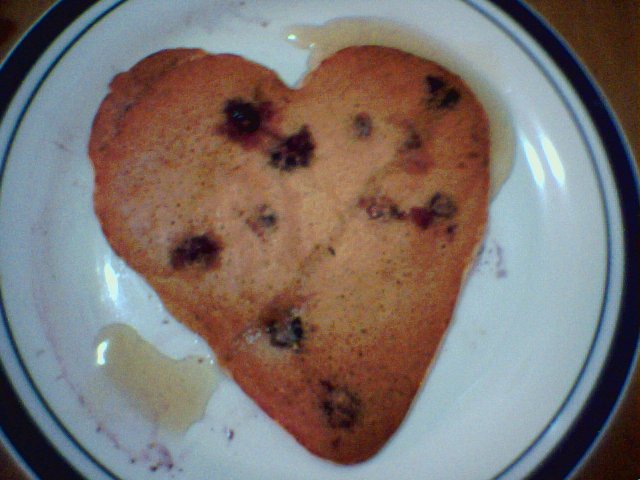
Refined grain products will store for longer periods because the oil, which will go rancid after a few months, has been stripped away in the bran. This is especially true of flour, because the grain has been ground up and the oil permeates the flour. Refined sugar will last virtually forever; bacteria and mold will not grow in it; ants and rats won't eat it.
When you eat refined foods, the sugars (both those you ate and those converted from carbohydrates) hit the blood stream very quickly and require a strong insulin response, which the pancreas provides. The insulin quickly converts all the glucose, but the cells can't use it all at once, so it's stored in the liver, which converts it into fat.
Meanwhile the blood stream is depleted of glucose and you "crash." You crave another round of cheap carbs, you eat or drink them, and the pancreas cranks up again. A lifetime of this exhausts the pancreas' ability to produce insulin and/or of cells to accept glucose, a condition called insulin resistance. I talk about the relationship between insulin resistance and refined foods in this article I wrote for Trans-Health, an online health and fitness 'zine for trans people that I used to webmaster, write for, and edit.
To avoid dumping a lot of sugar into the blood stream at once, diabetics may note the glycemic load of the foods they eat. Glycemic load (GL) is a rating of how quickly and how much a food elevates blood sugar levels. Sugar, white bread, and potatoes have glycemic index (GI) numbers close to 100, while bean sprouts, popcorn, and carrots all have numbers in the teens or lower. The rules of thumb governing GL are that fiber, fat, and protein all work to slow absorption of food. Multiplying a food's glycemic index by the number of grams of carbohydrates gives an indication of how much of an effect on blood sugar a food is likely to have.
David Mendosa's site has a lot of practical information about glycemic index and diet that is geared toward diabetics. He's especially a fan of foods like chana dal and barley, which provide plenty of satiety (read: calories from fat and protein) while having low GIs.
Slow food is a movement that presents an antithesis to fast food. Slow food is not pre-processed. It is made at home, from scratch, and enjoyed in a leisurely manner, the way people used to eat when they were civilized and knew where the forks go beside a dinner plate.
Slow food philosophy is not just about how the food is made or what it's made of, it's about hospitality and the culture of food, its preparation, and its enjoyment.
To that end, here are several recipes that we really enjoy. I hope to significantly expand this part of my site over time. If you like the recipes, give me feedback. If you're scared of a vegetable or don't know what kind of fish you like, let's talk. There are lots of people in the world who still love food and want to talk about it and share it. Kevin and I are two of those people.
 Lentil
and mushroom
tagine A tagine is a Moroccan stew that's traditionally made in a
conical, clay pot called a tagine. You can make it in a heavy pot.
Lentil
and mushroom
tagine A tagine is a Moroccan stew that's traditionally made in a
conical, clay pot called a tagine. You can make it in a heavy pot.
 Roman
hash An Italian-style collards dish with potatoes and garlic. May
be prepared vegan style, or with a grating of sharp cheese.
Roman
hash An Italian-style collards dish with potatoes and garlic. May
be prepared vegan style, or with a grating of sharp cheese.
Peanut
sauce A rich, African-inspired sauce that is delicious over steamed
vegetables. Warning: The
peanuts may make you fart ferociously.
Shmancakes
As pictured above. We use a whole-grain mix, but check out this
link anyway for the pan-roasted fruit topping recipe.
Updated 5/26/2007