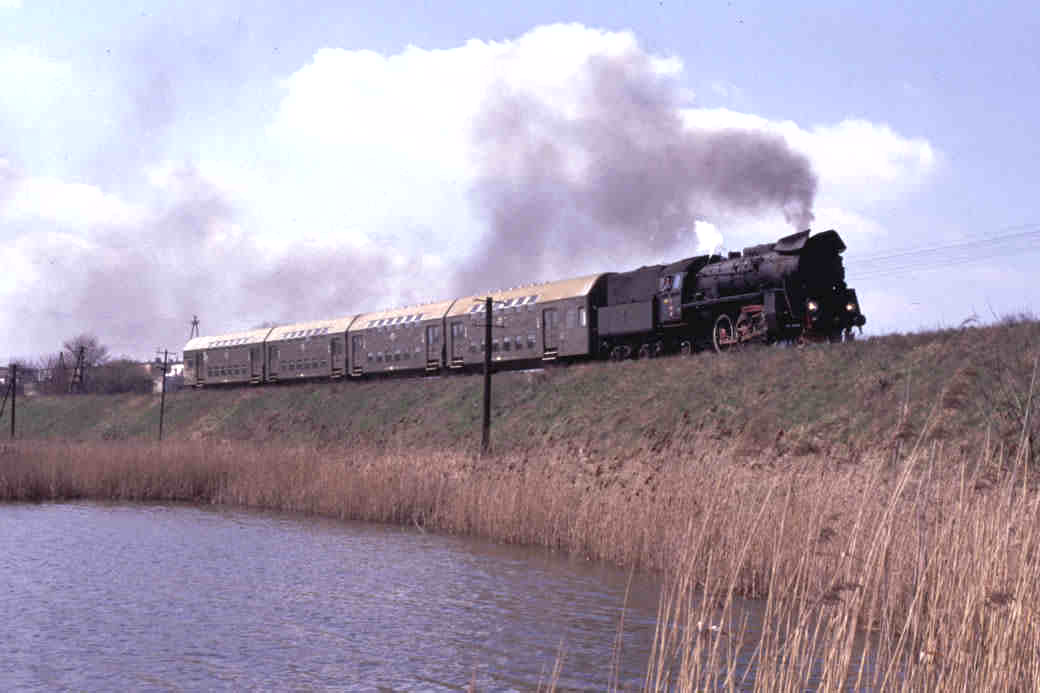
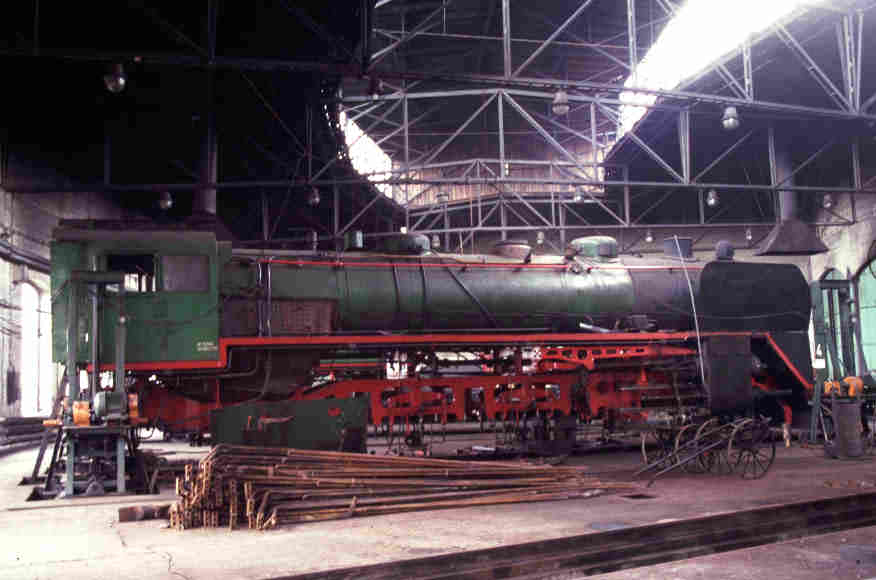
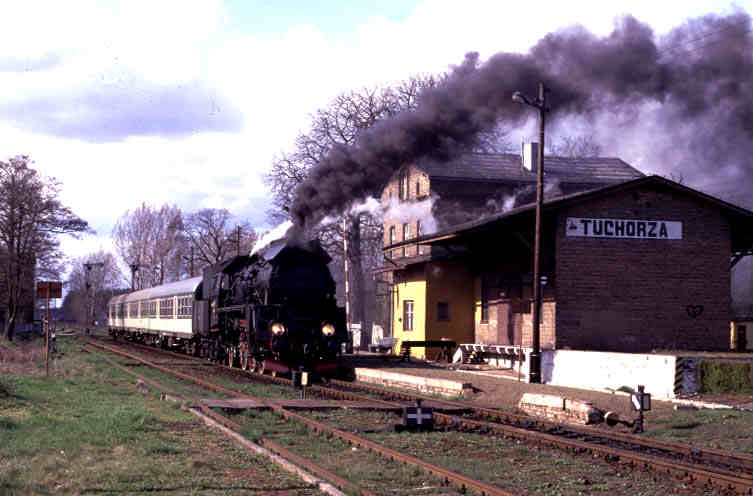
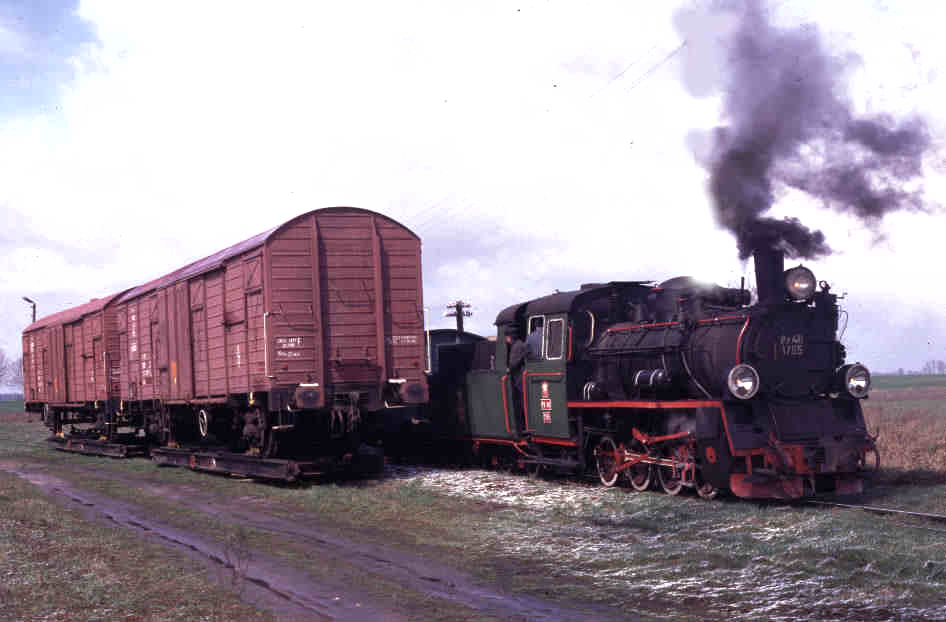
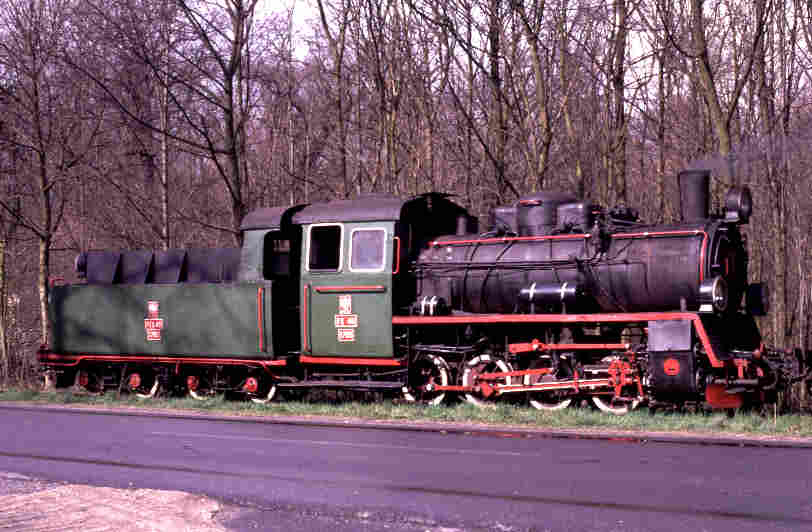
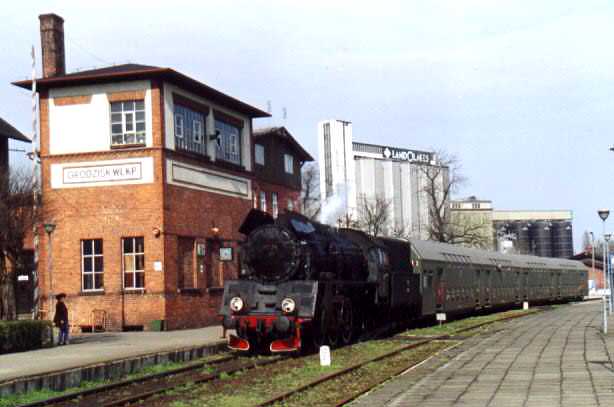
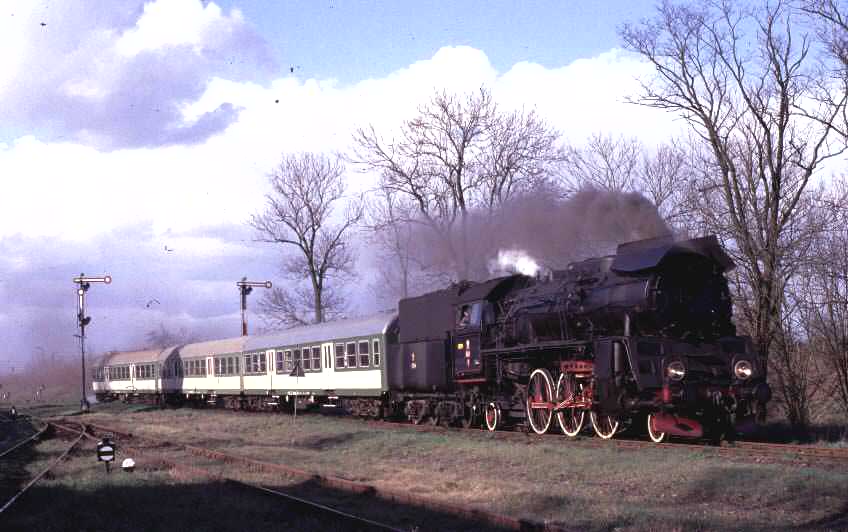
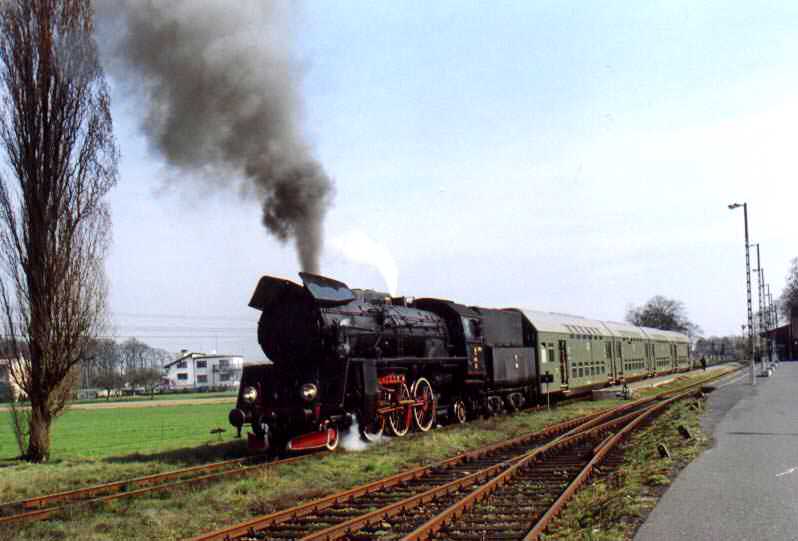
| Since 1926 all Polish steam locomotives have been classified according to their type and wheel arrangement. These classifications are P = Pospieszny (Express Passenger); O = Osbowy (Mixed Traffic) and T = Towarowy (Freight). For tank locomotives this classification is followed by a capital K (Kusy = Tank). The next letter designates the wheel arrangement with the most common being - i = 2-6-0, k = 4-6-0, l = 2-6-2, m = 4-6-2, t = 2-8-2 and y = 2-10-0. The following class number is the year of introduction (except 1 - 10 which are ex-German locomotives) and finally comes the number within the class. Confused? Try these examples - Ol49-23 is the 23rd member of a class of mixed traffic 2-6-2 locomotives introduced in 1949. TKt48-123 is the 123rd member of a class of 2-8-2 freight tank locomotives introduced in 1948. Ty3-2 is the second member of a class of 2-10-0 freight locomotives which were formerly German . On the narrow gauge the classification is different with P indicating a tender locomotive and T a tank engine. Wheel arrangements and gauge are indicated by small letters and the first number of the 4 figure locomotive number. |