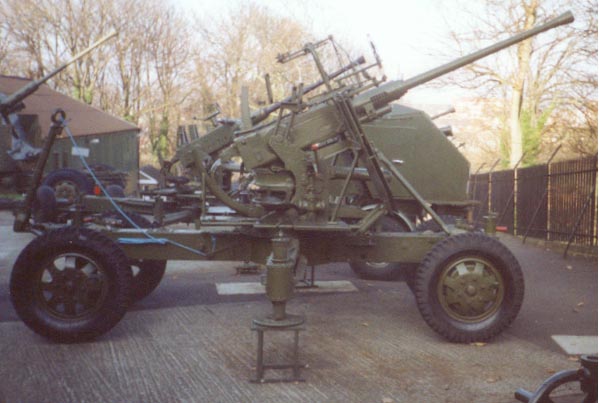
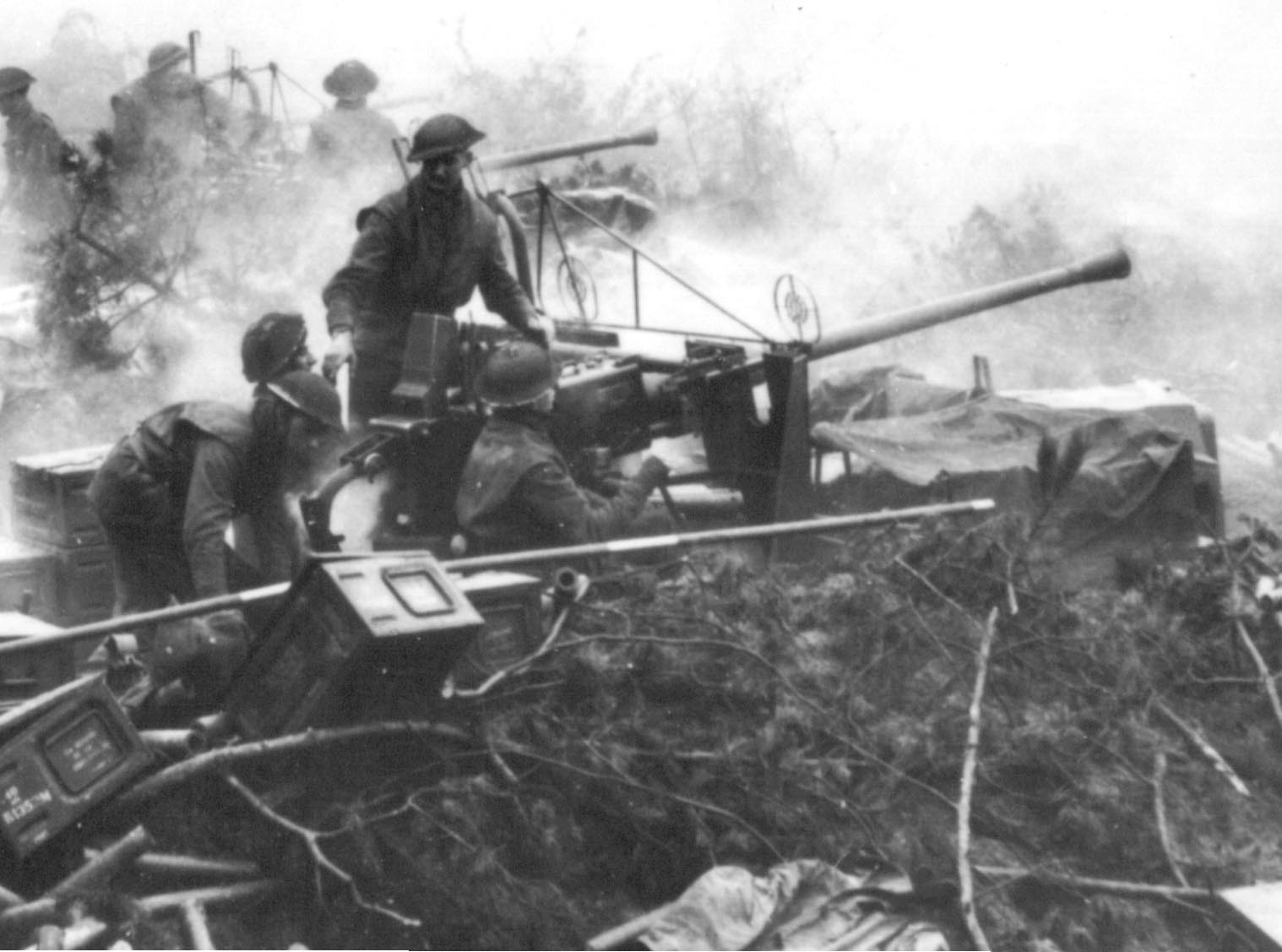
This example is in the Royal Artillery Museum of the Rotunda in Woolwich - the town in South East London, England, that is the home of the Royal Artillery. On
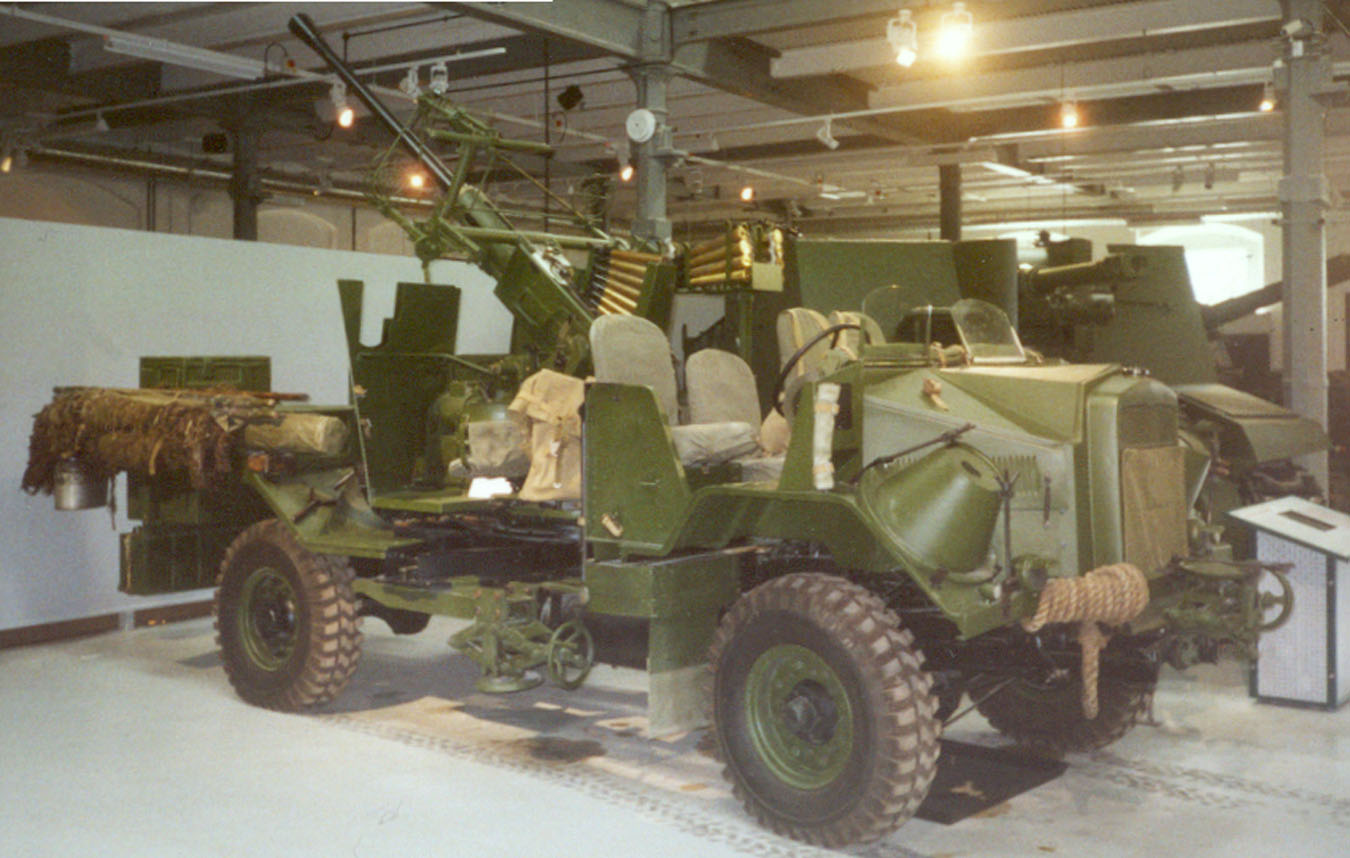
As the war progressed, the gun - built under licence from the Swedish armaments firm of Bofors - was improved and adapted into various versions for different roles. As well as the towed model, LAA regiments used self-propelled versions, with the gun mounted on the chassis of Morris C9B four-wheel drive lorries - as in the example seen below.
This is an absolutely magnificent example of the now-rare SP Bofors, painstakingly restored to its wartime condition. It can be seen at Firepower, the new museum of the Royal Artillery at the old Royal Arsenal in Woolwich, which has replaced the Rotunda museum. This gun is one of hundreds on display at this world-class exhibition centre, which is a must for all those interested in military affairs. See Links section of this site for connection to Firepower website.