 |
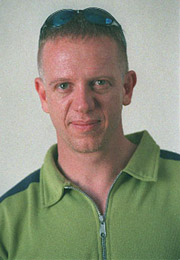
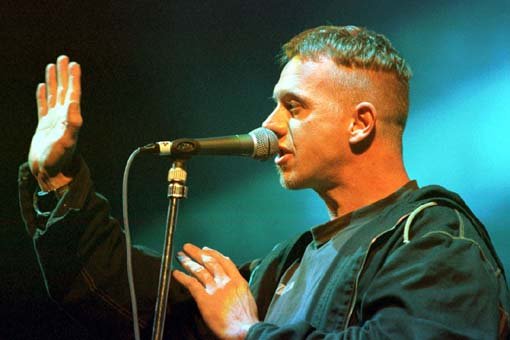
| Ralph Rabie worked for a number of Afrikaans newspapers in the grim eighties. A couple of satirical cabarets at the Green Room in Cape Town and the Black Sun in Johannesburg piloted him to political prominence and the disfavour of PW, so that he was fired from Rapport. This opened up the way for him to throw himself into his music and cabaret career full-time. Along came Piekniek by Dingaan and Kerkorrel�s first album, Eet Kreef, which was (almost entirely) banned by the SABC. Next was the event that played such a big role in my life � the Vo�lvry tour, with the Gereformeerde Blues Band and Andr� Letoit and Bernoldus Niemand all on the bandwagon. More from Roekeloos: In 1990, nadat Vo�lvry op Afrikaanse kampusse landswyd en die liedjies op radio verbied is, het Johannes Kerkorrel Europa toe gegaan waar Eet kreef pas uitgereik is. Hy is na die vooraanstaande Dranouter-fees genooi. Donovan het net voor hom opgetree en groot was Kerkorrel se verbasing toe die gehoor van sowat 15 000 met sy liedjies saamgesing het. By di� fees het hy die verhoog met mense soos Rory Block, Luka Bloom en Thomas Mapfumo gedeel. In September 1990 het hy na Suid-Afrika teruggekeer en sy tweede album Bloudruk opgeneem. Sy landswye "Blou Aarde-toer" is afgesluit met �n grootse viering by die Houtstokfees. Mandela is toe so pas vrygelaat. In 1992 het hy as die Suid-Afrikaanse korrespondent vir die Belgiese Radio 1-program Het einde van de w�reld begin werk, en sedertdien bied hy �n weeklikse rubriek oor Suid-Afrika op die radio aan. A memorial service is to be held at 11Am on thursday morning at mega music in johannesburg. END liela home Kerkorrel links: |
| Tribute to Johannes Kerkorrel - liela Johannes Kerkorrel was one of a handful of people who made life under apartheid slightly more bearable for �Free Afrikaans Kids� who opposed the nationalist regime during the last dragging years before the release of Mandela and the onset of the transition. After Vo�lvry, suddenly, Afrikaans could be used at struggle student meetings in the Western Cape. In broken English had been voiced the frustration with and hatred of the nationalists. All of a sudden it could be said out loud, and so much more potently in mother tongue afrikaans. The language of the opressor was reclaimed by its rightful owners. The regime had salt rubbed into some serious wounds. Here were smart, creative and loud afrikaans youngsters who had been expected to grow up to 'stem vir die party', hurting them with hard-hitting lyrics and kick-ass guitars. The times were desperate, yet Kerkorrel and friends brought more than a political message to the stage. They also brought incredible licks and rock beats that got the crowd dancing and laughing. |
 |
|
|
|