

(Vietnam Veteran, Professor at Colorado State University)
Charles Youngs
William Youngs
(Vietnam Veteran)
Tom Charpenter
(USAF, current USAF Reserve)
Don Schwartz
(Vietnam Veteran, 313th Security Police, 7th Air Force, USAF)
Sage (Josh) Figler
(Current United States Marines Reserves, Corporal)


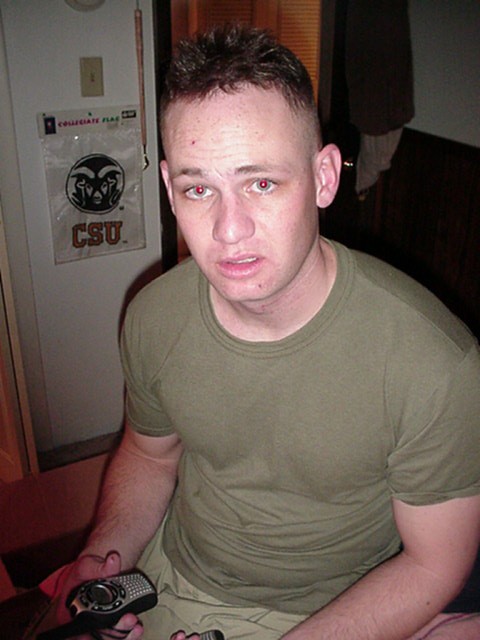

He was in Vietnam 11 months. At the time he left for war he was 21 years old and returned at the age of 22. Before going to war, he attended special forces training school. In war he was nicknamed L.T. Before going into the field he was an accounting maitence officer. In the field, he was a tank serguant. His biggest fear was not dieing but getting caputured. He was wounded twice but survived both times. Once went over one hundred days with enemy contact. This led him to have to use alcohol to be able to sleep at night during the war. The war taught him to be non-racial because he depented on everyone in his platoon weather they were white, black, hispanic, or other race. Other emotions were also enhanced by being in war. He respected his platoon so much that he always came out with what he went in with even if the person was dead and it meant risking another life. Outside the U.S. military he couldn't trust anyone. The locals would farm by day and try to kill him at night so, he always had to watch his back.
Over thirty years afterwords the impacts of war are still evident. When he walks across campus he may get an panic attack and always stays on the sidewalks. The panic attacks are caused by not being able to see everyone around him. Walking on the concrete sidewalks assures him that he will not hit a booby trap. Also, he feels a little uneasy when ever he is around vietnamese people.
When he was about 18 years old the United states was in the midst of the Vietnam War. He was drafted right after he graduated from college in 1968 and entered the U.S. Army in August of that year. He attended basic training at Fort Benning, GA, and then went to clerk typist school at Fort Leonard Wood, MO. The best students from the clerk typist school were sent on to the U.S. Army Finance School at Fort Ben Harrison, IN. After that he was sent to Fort Riley, KS, for what they called "Republic of Vietnam" training in the dead of winter. From there he was sent to California where he shed his heavy cotten fatiques and was outfitted with lighter weight jungle fatigues and boots. He was then sent to Bien Hua, South Vietnam. For the fisrt few months, he took a military bus each day to the Army finance center at Long Bihn where he handled pay records for Army personnel. He was a Private First Class when he arrived and recieved promotions to Specialist IV, Specialist V, and Staff Sergeant during his tour of duty. About once a month he pulled guard duty along the perimeter on Long Binh. Long Binh was a headquarters area with lots of Army Brass, a large medivac hospital, and a jail for both U.S. and Vietnamese prisoners.
In September of 1969, he took a 5-day R&R (rest and recuperation) to Oahu, HI, where he married a college sweetheart, Carol Noss. He was in Vietnam for 15 months and since he had less than 5 months left in his two year tour of duty, he was granted an early discharge (19 months service rather than 24 months) when he returned to the United States in April 1970. He worked at temporary jobs over the summer and then returned to school in the fall.