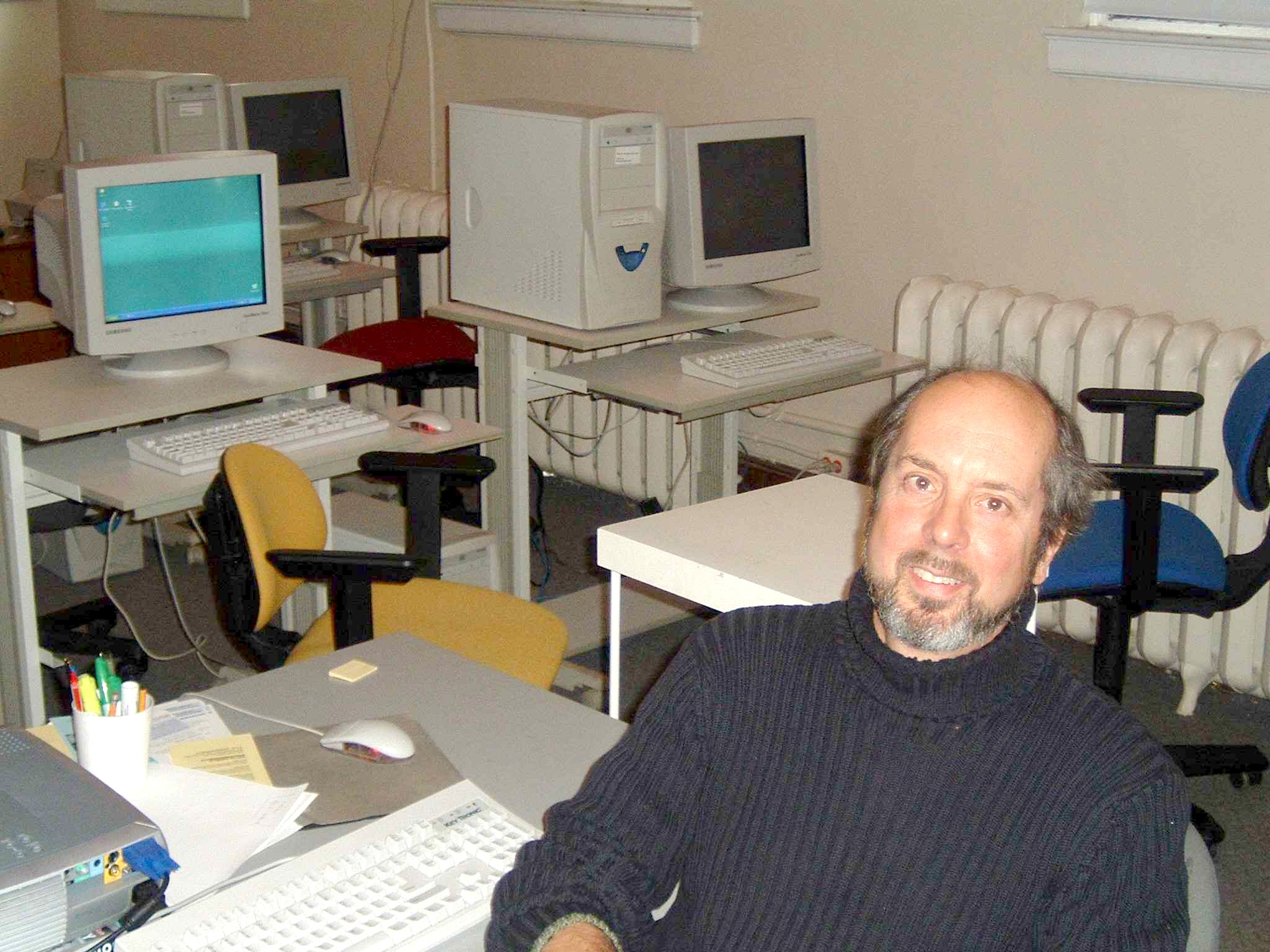
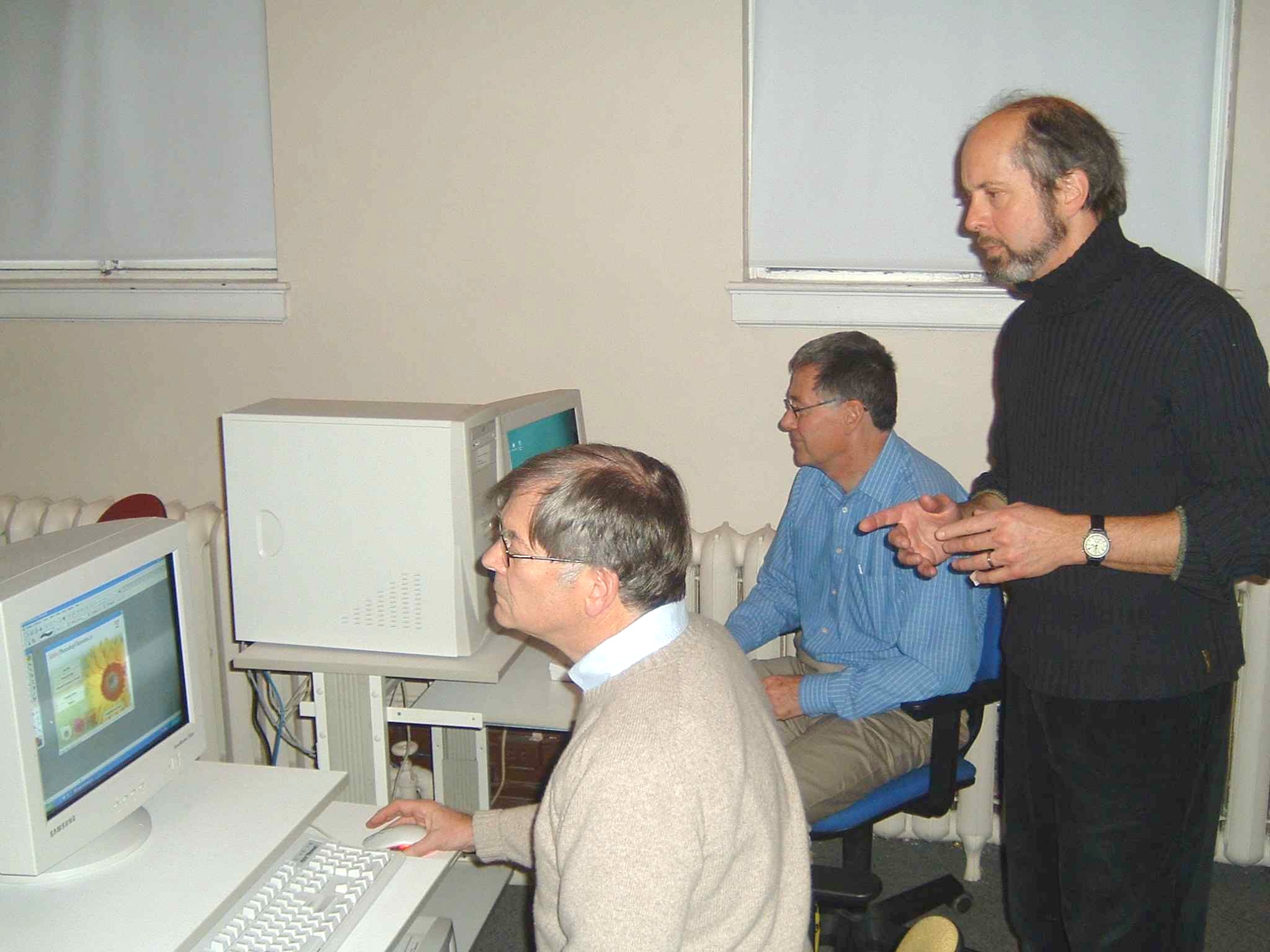
| Interview with Brian Merrett, photographer This interview took place on November 10, 2004. The interviewer is Bruce Peterson, the editor of the newsletter of the Atwater Library and Computer Centre: http://www.AtwaterLibrary.ca/. For examples of Brian Merrett�s work and information about him go to http://www.merrettimages.ca/ BRUCE: You started off as a regular photographer; then you added digital photography, right? BRIAN: Yea, there was a transitional stage. A year ago I would have said there is conventional photography and then there�s digital. Now I�m saying there�s photography and film-based photography. These days, in the amateur world, digital is moving up quickly to becoming the norm. It�s the same transition that took place between Hi-8 and the video camera. Digital is now very much the standard in the amateur market. BRUCE: Is there a quality difference between the two? BRIAN: Again, in the amateur market, which I�m not putting down because the amateur market drives the professional market, the digital camera is producing better quality snap-shot quality prints than film, and with huge versatility. I tell my students in the film days you had choose the kind and the speed of the film, slide, print black and white, ASA 100, 200, 400, 800, or daylight and tungsten in color, and now we just change the settings on our cameras every time we want to take a picture. Then we take that chip to the camera store and they make a print that far exceeds the quality of film-based camera, if the camera is of a certain quality. BRUCE: I�ve spent far more for other cameras than I spent for this one and this one gives me absolutely a quality I can easily live with. Are you enthusiastic about a particular type of computer, say Macintosh as opposed to PC? BRIAN: The graphics industry does like Macintosh, but I think Windows has closed a lot of gaps, but having said that I should say that Photoshop Elements and Photoshop generally is pretty identical on both platforms. There are slight changes in keyboard patterns, but they�re virtually identical. The results are identical. I teach in both platforms. I have two Mac users in the class out of six, so I write my notes for both Mac and PC, and in only a couple of cases do I have to say, �Mac users, do this�. I bring my Mac laptop in to show off the differences at the beginning of the course, and that�s it. The Mac is maybe more user friendly, but when it comes to Photoshop there�s virtually no difference. BRUCE: Do you have a brand of camera that you prefer? BRIAN: I hate to get into that in an interview, only because it puts somebody else down. If a student doesn�t have the camera I name they�re going to feel put down. There are good names on the market. BRUCE: Could you characterize the camera that you think best for your course? BRIAN: I suggest that students have a camera where manual adjustments are possible, and they should look at their budget first and decide how much they want to spend, and then go shopping at various places to find a camera that meets their needs, gives some flexibility in use, so that the camera doesn�t set everything by itself. You can use different colour balances, different settings for manual adjustment. And at the same time if you�re going to ask about megapixels or that kind of thing, but we want to make sure that we have enough image quality, which means mega pixels, to allow a fair amount of playing around with the image. Megapixel size runs from two to about five currently. 3.2 is low to average, but I don�t make any difference. People come with the camera they have. If you have 5 megapixels, you�re taking up more memory with each picture. With 2.5 megapixels you have more space to store images. Let me re-phrase that: the images take up less space on the hard drive of your computer. With a larger megapixel capacity you can make larger prints. A 5 megapixel will make an 11 by 14 inch print nicely. I�m trying to make this course available to people who already have their digital cameras. Basically they�ve gotten their cameras and they�re not too sure how to operate it, they don�t know quite what all the controls are and want to get more flexibility. I try to encourage my students to do two things: turn off the automatic and move in on the subject. Once we�ve overcome those hurdles we�re into the races. BRUCE: How important is it to set the camera before since you can do so much with the computer and the program afterwards? BRIAN: The more you crop, the more you lose. What you control when you take the picture controls dictates what you have when you make the final picture. As I used to say to my dad when I took fuzzy black and white photos, �Can�t they fix that at the camera store?� And he very succinctly said, �If it�s not there, they can�t put it there.� You can�t adjust, crop. You can improve but you can�t add quality. I should go back over that and point out that the whole point of this course is to improve. I do stress, however, that people should do the best they can with their camera before they bring it to Photoshop. BRUCE: What percentage of your course would be on the use of the camera and what percentage on the use of the computer? BRIAN: I try to split each class down the middle. But in fact I�m using Photoshop throughout the class, and so the students are learning the operations of Photoshop without really realizing that they�re using Photoshop. In other words, I�m showing them samples of things I�ve prepared using Photoshop, the camera, but to get at them they have to look at them with Photoshop. So before they know it, they�re really using Photoshop to look at the pictures. It�s a basic course, an introductory course. Many of the rules in photography apply to digital as well as to film. The course goes into the mechanics of digital at the introductory level, and from there we create images. No, the course is not for the experienced photographer. BRUCE: Does it require a high degree of camera positioning? BRIAN: I teach camera positioning and composition. The course is not designed to teach you how to do successful tabletop photography or still lives or a complete course in architectural photography. Those are incidentals to the course. If people are interested in specifics, I will address them. It�s tuned to the average of the class. BRUCE: How many students? BRIAN: There are six computers and so six students. It�s a lovely size to work with. BRUCE: Are there lots of students trying to get into the course? BRIAN: I get lots of students registering through me. I get students registering closer to the time the course is about to begin. They�re often disappointed because the course is filled. So I encourage people, if they�re interested, to put their names in early. BRUCE: Do you do a little profile of the students? I mean do you know what they do with their digital pictures? Are most of them photographers? BRIAN: It�s a cross section. In this course I happen to have a film maker, a retired surgeon, and a couple of other professions. The first class I simply go through the class and I ask them to talk about themselves and what they want to get out of it. The comments are, �Well, I got this camera as a present and which way do I hold it?� No, I won�t go quite that far. To comments like �I�d like to be able to photograph my paintings�. They have goals, but they�re not professionals. They�re attitude will be, �This is really fun.� Then they�ll go to a high-end college to get more material to work with. Of the six classes in a session, it�s the right length to get a lot covered without stretching it out too much. They can move ahead. In the second or third class I can see the light bulbs going on. I can see people saying, �Ah, I understand that now.� So in the first class I jump in rather heavily to the mechanics of the camera so that we can get into that quickly so we can start working with other things and onto Photoshop. BRUCE: How many hours are the classes? BRIAN: There are two hours in each class. The sessions last six weeks. Each session is twelve hours. BRUCE: Is that enough? BRIAN: I try to schedule one session for the fall and two for the spring. Six weeks is adequate to get the interest up and to get the momentum going. BRUCE: What do your students do with their digital creations? Could there be an exhibit in a space like this library? BRIAN: I haven�t considered that, but it would be very interesting to do that. Not all prints are expensive. If the library could provide some quick frames, it might be an interesting project. It�s something to explore. After a couple more courses, I could see how the students might come back and present something as alumni. BRUCE: You exhibit some of your photos on the net. Aren�t you afraid that people might rip them off? BRIAN: I put my little copyright notice on. The photos on the net are not of that high a quality. I might consider it a complement. I don�t put big high-resolution files on the net. I don�t think it�s really a concern. I have exhibited my work a great deal, my non-digital photography. I haven�t produced a body of digital work as of yet. BRUCE: In your opinion does digital photography change people�s photo habits? BRIAN: Yes, definitely, immensely. Well, first of all, you�re not wasting film when you go messing around with your camera. And because the cameras are small and unobtrusive, even the cell phone cameras where the quality is low, people use them the way they use their eyeballs. It�s really amazing. One of my fantasies in photography has always been � bear with me � to have a piece of film, now a digital chip, behind my eye-ball because to me to be able to grab exactly what I see instantaneously and store it is photography. And digital is getting close to that fantasy. But you see the way people use digital. I�ve been to weddings where the professional photographer is snowed by the guys with their cell phone cameras getting instantaneous grab shots, which is an art form in itself, so digital photography has revolutionized photography. BRUCE: How has digital photography changed people�s photo habits on trips? BRIAN: The only downside for travel with digital is storing your files. If you�re doing anything of high quality, you�re going to run out of memory. You have to have more chips. BRUCE: Can�t you download them onto the internet. BRIAN: Now that would be scary to me. Downloading my full size, camera quality files onto the Internet to me is ripe for theft. But I don�t know that. I haven�t explored it. BRUCE: Are there magazines or periodicals that one can look at to get a better understanding of digital photography. BRIAN: I won�t mention any names, but there are lots of them. Browse the magazine racks. The old standby for professional photographers was the New York-based magazine called Shutterbug, which was a sort of tabloid size magazine. Now it�s pretty much given over to digital photography. There are lots of them. The industry is self-supporting. BRUCE: How old is digital photography? BRIAN: It�s been in the market place for 8 or 10 years. My first digital photography workshop was 1985. That was in the Smithsonian Institute in Washington, D. C. It was actually an audio-visuals-in-museums workshop because of my work at the Montreal Museum. And in there they addressed upcoming technology. At that time they had in there something called �image grab�. They took a video tape and they could grab frames off it, digitally. That was the beginning of the process. BRUCE: I think that�s about most of what I wanted to ask. But there is a project that I have been thinking about here at the library. There is an architect who comes to the computer centre to do her computer work. She�s been doing research on the Garden City movement that took place around the turn of the century. When she and I began to think about her delivering a lecture here on that subject, she began to talk about a series, that her lecture could be one in a series. She thinks it would be interesting to have a lecture series. Then I mentioned it to a woman who herself organizes traveling museum exhibitions. She also has produced a catalog of art collections that are held by corporations in Montreal. She said that the missing link in her project is the organization of tours to see the art works. I have suggested that she might want to participate in a lecture series. Do you think that might interest you? BRIAN: Yes, an introductory lecture in digital photography would be interesting. The public would be able to come just once and see what can be done with a digital camera. It would be eye opening. One could set up a small portrait studio outside the lecture hall and photograph a couple of people, put the photographs immediately up on the screen, mess with the most popular features of Photoshop, to show what can be done. I think an exhibition of digital photography hand in hand with that would be wonderful attention grabber. This room we�re sitting in, for example, would be a wonderful gallery. Put some translucent covers on the windows so you don�t have too much direct light coming in. Put up some screens and track lighting. A wonderful gallery, but it�s not going to pay the rent. BRUCE: When I�m sitting in the Computer Centre downstairs, I look up at the huge blank walls and I can just see them showing off digital art works created by the very same computers we�re using. BRIAN: I�d like to announce that there are two classes starting in January. Starting January 12, the Wednesday course will continue from 10 to noon. And beginning on January 17, there will be a Monday evening class from 5:30 to 7:30. The fee is 195$. Registration can be done through me, or through the centre here, which would be easier for people. The information is on my web site: www.merrettimages.com/atwater. BRUCE: Where are these classes advertised except in our own newsletter? BRIAN: They�re not. I�m hoping that word of mouth would be enough. It would be good to advertise more. I�m trying to fill 12 seats in January. E-mail lists would be important if you have a circulation mailing list. Posters would be helpful. Tell your friends. There�s the Westmount Examiner. There are usually more students than can be put in one class, so early registration is important. |
 |
 |