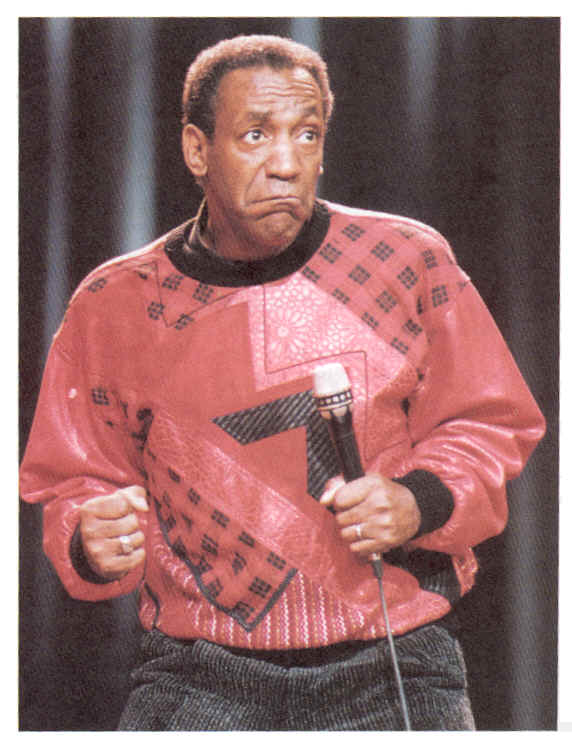
Voice & Body
Checklist:
1. Pitch: too high? too low?
2. Rate: too fast? too slow?
3. Pauses v. Vocalized Pauses:
avoid "mmhhs" and "ummms".
4. Volume: Timid as a mouse or
louder than a herd of rhinoceros?
5. Enunciation: two
aspects--pronunciation and articulation
6: Fluency: is your delivery
smooth or rougher than a country road?
7. Vocal Variety: A summary of
the above qualities, results in better audience retention of your speech.
8. Gestures: loose as a goose
or stiffer than a robot? Try to strike a happy medium.
9. Facial expressions: helps
convey emotions and passion.
10. Eye Contact: Don't get
lost in your note card. Good eye contact increases speaker credibility.
11. Movement: Don't pace but
don't lock your knees either. Move during transition from one major point to the
next.
12. Appearance: When is the
last time you heard the president speak in his pajamas? Enough said.
13, Posture: resting weight on
one leg? Shifting your weight back and forth?
|
|
On paper, your speech may appear to be the finest arrangement of
thoughts every written. But until you give voice to those words, your work is not
done. You should spend as much time practicing your speech as you did preparing
it. After considering the structure of your speech and the words you will use, turn
your attention to your Voice and Body.
Your
Body:_________________________________________________________
Facial Expressions---conveys your message. Consider
F.D.R., crippled by Polio and restricted to a wheelchair. "His broad, friendly
smile and his highly expressive countenance were important assets to Franklin Roosevelt as
a speaker. His mobile face could reflect a wide variety of reactions...It was amused,
solemn, sarcastic, interested, indignant. It was always strong and confident and it was
never dull (Braden, 1955).
Eye Contact---Use your audience to gage their reaction to
your message. This can only be achieved through eye contact. If they look
bored, accommodate. If they look confused, accommodate. If they look
interested and involved, you are doing your job.
Posture---Did you mom ever tell you "Stand up
straight?" Well, DO IT! Try to not shift your weight back and forth, back and
forth. Don't lean on the nearest inanimate object. Stand straight without
locking your knees. This will let your audience know you are alert.
Appearance---From the college classroom to the executive
board meeting, your appearance will make an impact on the message. Be neat and
well-groomed. Don't overdo it with the jewelry or other distractions. Like it
or not, audiences rate more conservatively dressed speakers higher than flashy,
over-the-top speakers. Don't wear your pajamas for a speech. Don't wear a
baseball cap. Don't wear cut-offs and t-shirt. Take the occasion seriously and
your audience will too!
Gestures---You have arms for a reason. Use
them. Gestures that are appropriate and help to compliment the verbal aspect of a
speech will increase the power of your message. Do you gesture too much? Not
enough? Videotape yourself and see. Gestures are best used when emphasizing an
important point, moving from one main point to the next, or to visually describe
something.
Body movement---speakers tend too fall into two
categories when it comes to body movement. 1. "I am a tree planted firmly in
the ground." 2. "Must not stop moving or will pass out...must not stop moving or
will pass out." Body movement is essential in a speech for several reasons.
First, it helps to energize the speaker. Second, body movement includes the entire
audience by addressing everyone in the room through pre-determined movements. For
best results. Take three steps during transition. Stand still until the next
transition. Repeat. This will help keep you from pacing. WARNING: You
must actually practice this for it to work. Many speakers are uncomfortable
with the idea of staged movements. Become comfortable by practicing in
advance. I dare you.
Your
Voice_________________________________________________________
Pitch: Not the card game. What in the world is pitch?
Essentially, pitch describes the highness or lowness of your voice. Do you sound
squeaky or like the bass baritone of the Dallas symphony? Avoid sounding monotone
but don't be too "sing-song" in your delivery either. The goal is to
occasionally change your pitch. Upward inflections, downward inflections, shifts in
pitch all help to emphasize your point. Not sure how you sound? Tape record or
video tape yourself. Or ask a friend.
Volume: Ever known a two-year old whose every word is uttered loud
enough for the entire city to hear? Or someone who is so quiet you have to
practically sit in their lap to hear what they are saying? As a public speaker,
projection is the name of the game. Consider the audience size and where you are
giving the speech. Changes in volume are helpful for conveying emotion as well.
Enunciation: considers the pronunciation and articulation of
words. This includes pronouncing words correctly but also takes into consideration
the words you use. For a public speech, avoid words that are meant for casual
conversation. Avoid slang as well as cuss words. Use good grammar!
Fluency: delivers that are smooth and have no vocalized pauses
(ummm....) are fluent. Without proper practice, fluency is difficult to
achieve. Fluency is not synonymous with memorized. In fact, audiences tend to
rate speakers poorly who seem too rehearsed.
Vocal Variety: Incorporates many of the above qualities.
Pearson & Nelson's Suggestions for Gesturing: 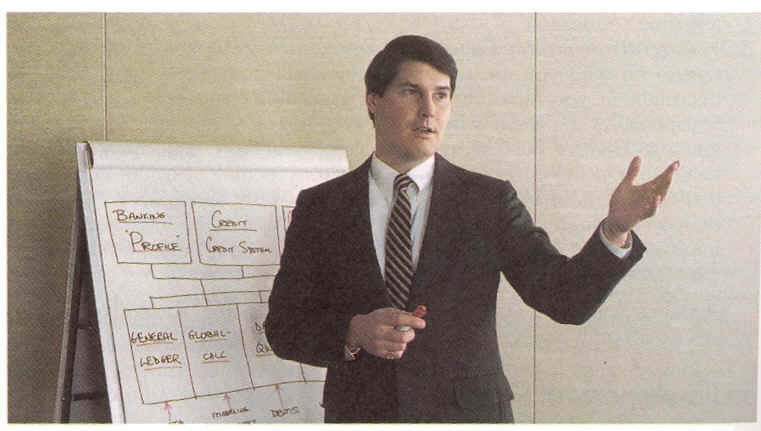
1. Keep your hands out of your pockets and at your sides when gesturing
2. Do not lean on the lectern.
3. Gesture with the hand not holding your notes.
4. Make your gestures deliberate--big and broad enough so that they do not
look accidental or timid.
5. Keep your gestures meaningful by using them sparingly and only when
they reinforce something you are saying.
6. Practice your gestures just as you do the rest of your speech so you
become comfortable with the words and the gestures.
7. Make your gestures appear natural, spontaneous, and unrehearsed.
Reading about aspects of delivery does
little or nothing to improve your performance as a public speaker. Delivery is not
something you read about; it is something you DO! (Pearson & Nelson, 1994).
Libby Eddleman Spears
Revised: 28 Feb 2002 12:25:38 Central Standard Time |
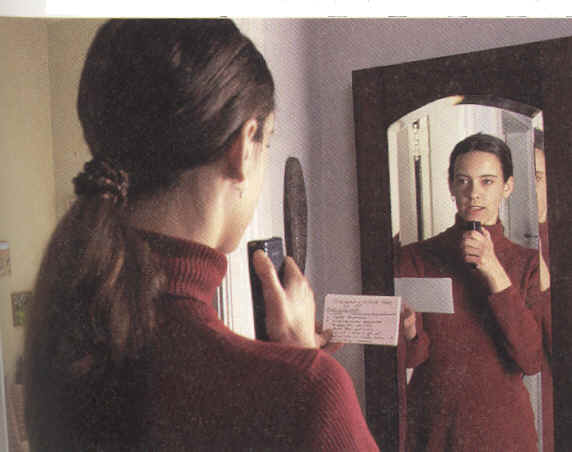 The Final Touches: