|
Oral Delivery v.
The Written Word
- "A speech is oral communication, not a
spoken essay. A common mistake of speakers...is to use written style,
rather than oral style" (Wood, 2000).
- In a study of 20,000 sentences of famous
speakers, Gladys Borchers found that oral style contains fewer
declarative sentences and more imperative, interrogative and
exclamatory sentences (Logue, et al., 1992).
- Three qualities of effective oral
communication include: more informal than written communication, more
personal than written style, and more immeidate and active than
written style (Wilson & Arnold, 1974).
- Oral communication uses more personal
pronouns, more simple sentences, more repition, more figurative
language, and more familiar words.
|
|
Once you have researched your topic and
gathered evidence, it is time to give your ideas and information a
body. There are a variety of speech patterns to choose from.
Whichever one you use, your speech will have these components: introduction,
preview statement, main points, transitions, and a conclusion.
Each is as important as the other and should be given careful
consideration and time.
I. Step One: Main Points
-
Don't start with the
introduction. Instead focus on your main points. For a 5-7
minute speech limit your main points to two well developed points, or
three general points. This determination may be guided by your
topic selection.
-
In order to support your main points,
you will need evidence. Evidence can take many forms including
personal stories, statistics (startling statistics!), testimony,
interviews, magazine and newspaper articles, quotations, and visual
aids. When using a newspaper or magazine article, don't try to
remember all the details such as page number, date, or author.
Instead try saying "In a recent article of the Dallas Morning
News" or "According to Joe Blow of the New York
Times,..." This will help you to keep your focus and decrease
anxiety in reporting information. At the same time, don't omit
important details that will change the essense of the
information.
-
Use Transitions between your main
points to allow the audience to follow the speech as you move along.
-
Use varied forms of support in the
speech. Don't rely solely on personal stories or statistics or
quotations. Variety will enhance the message.
II. Step Two: Crafting the
Introduction and Preview Statement
-
Now that you have a feel for the
message you want to deliver, you must decide how to invite your
audience to listen. Audiences will determine in the first minute
of your speech if they want to listen or not! If you are the
last speaker of the day, this is especially important. A tired
room of people need to be energized.
-
For a 5-7 minute speech, spend no more
than 1 to 1 1/2 minutes long on the introduction.
-
Get their attention! How
can you effectively gain the interest of your audience? If you
have done your homework and properly analyzed the audience in advance,
this should be a simple step. Create a verbal picture with your
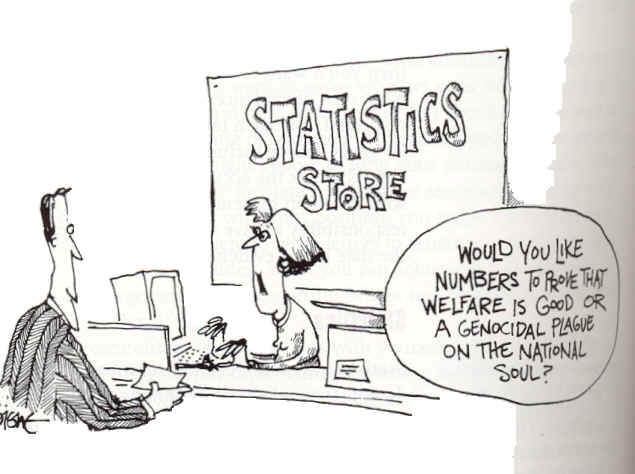
words. Personal stories are highly effective. A statistic
is boring but a startling statistic is fabulous (Did you know
that over 50% of the people in this room have a criminal record?)
Humor (that is in good taste) will gain the interest of a tired or
disinterested audience.
-
Be creative--avoid the tired ol'
rhetorical question. "How many of you have driven home
drunk before?" Yawn, Yawn, Yawn!!! Flex those
creativity muscles and come up with something more original.
-
Speeches DO NOT BEGIN WITH "My
name is Joe and I am going to talk about baseball bats today".
-
Next, reveal the purpose of your
speech. This is your thesis statement. For example:
"In light of the events that took place on September 11th, I
believe the government is obligated to provide U.S. citizens with all
information available that pertains to our personal security."
-
Establish your credibility as a
speaker. If you have personal experience with the topic,
this is easy to do. In the case of the above example one might
say "After thoroughly researching this issue, I would like to
share with you what I found". This indicates to your
audience that you are not simply talking off the top of your head, but
instead are well read and versed on the subject.
-
Finally, provide a Preview
Statement. Many speakers overlook this important aspect of
their introduction and jump straight to the first main point.
Instead, take 15 seconds to tell the audience what you are going to
tell them. Three effective ways of doing this
include: 1. "In order to fully grasp the significance of the this
problem I will discuss..." 2. "Today I would like to share
with you..." or 3. "At the end of this speech you will
better understand..."
III. Step Three: Crafting
the Conclusion
-
The Golden Rule of Public Speaking:
"Tell them what you are going to tell them, then tell them what
you've told them". You did the first part in your preview
statement. The conclusion is the place where you tell them (your
audience) what you've told them.
-
Like your introduction, the conclusion
should be about a minute long.
-
Review your main points.
"Today I have told you about..."
-
If you are trying to persuade your
audience, this is the time to present a call for action.
"I hope that after hearing more about the problem of underage
drinking on college campuses you will act by...." Offer
your audience a realistic opportunity to act. Don't use the old
standby "Write your congressperson". HOw many people
actually know who their congressperson is? Instead, offer
a website where the audience can get more information on the
topic. Distribute a handout (after you have completed your
speech) with important information about your topic. Direct the
audience toward a realistic action that they may actually be able to
complete.
-
Finally, leave the audience
thinking. When you utter your final word, and walk back to your
seat, the audience should still be thinking about what you just
said. A VERY effective way to achieve this is to refer back to
your attention getter. A good example is of a student who gave a
speech on drunk driving. In the attention getter he told the
story of a 10 year old boy killed by a drunk driver while out on his
bike one Satuday evening. In the conclusion he said:
"Remember the ten year old boy I told you about earlier.
Well, he wasn't just some kid I read about in the newspaper. He
was my brother. Think about that the next time you start to get
behind the wheel drunk". This is certainly powerful!!!
-
The DO NOTS of a conclusion (Adler
& Rodman, 2000): Don't end abruptly. Use a transition
word such as finally to indicate that you are at the end of the
speech. Don't Ramble "Well it looks like I am out of
time" or "That's all I've got to say" is not the
mark of a good speech. Don't Introduce new points. "Oh
that reminds me" won't score points with your audience. Don't
apologize! "I'm sorry" at any point in your speech just
won't do.
IV. Step Four: Don't forget
your transitions!
-
Transitions are "words and
gestures that allow you to move smoothly from one idea to the
next" (Bebee & Bebee).
-
Verbal transitions are necessary for
your audience to keep track of where you are going. "This brings
me to my first point", "Now that we understand what clinical
depression is, let's turn our attention to some of the signs to look
for". Phrases such as "In addition", "Not
only", "Furthermore", "Therefore", are also
helpful.
-
Avoid using "Firstly",
"Secondly", and "Thirdly" as transitions in your
speech.
-
Nonverbal transitions are also
important as well. Changes in your facial expression, tone or
rate, a pause or moving all helps to indicate that you are moving to
another point.
-
Where should I use a transition?
Essential transition statements in a speech occur from the
introduction to the first main point, first main point to second main
point, second main point to third main point, and third main point to
conclusion.
Libby Eddleman Spears.
Revised: 28 Feb 2002 12:06:48 -0600 |