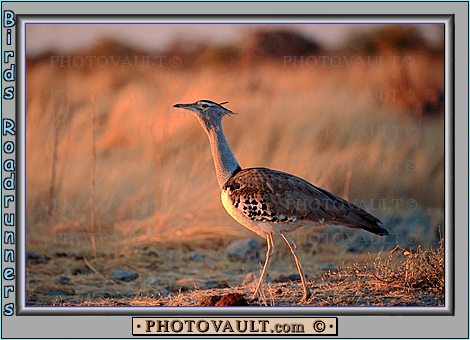
Chackor
Patridge
Patridges/Phasants:
Chackor
Patridge
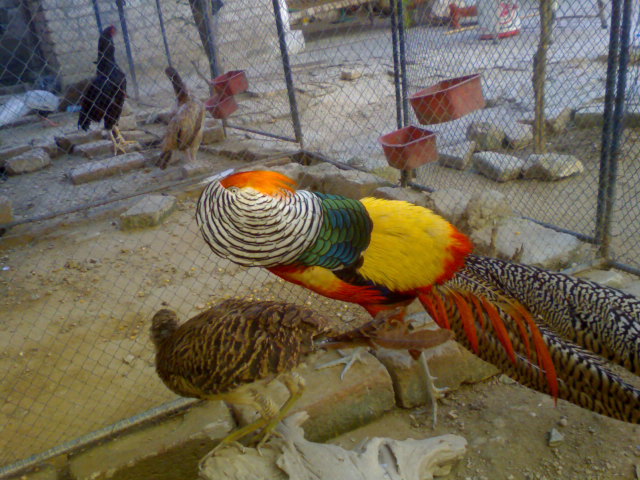
Phasent
BLACK PATRIDGE

(Francolinus francalinus)


Incubation Time                      about 18-21 days


Clutch Size                              6-8


Body Length                            Male:   30-33 cm

                                                Female: 30 cm


Body Weight                            500-650 gms


Wing span                               50-55 cm
Male predominantly black, barred or spotted with white and rufous. Cheeks and ear conrerts white, a broad chestnut coller encircling the neck. Breast black and tail short. Legs brownish to dull orange red; spurs blunt. Females paler and duller with place buff check patch, back brown and spurs absent or rudimentary. It occupies grasslands, open, grassy brushlands and cultivation from semi desert riverine valleys to opening adjacent to forested areas where precipitation exceeds 300 mm a year. Soils vary from desert sandy clay in drier habitats to alluvial loam in river valley and to mountain forest soil in hilly regions, the ph extends from 5.6 to 8.00. It is found in Dapher (Gujrat) Balloki (Lahore) Muzaffargarh, D.G.Khan, Riverain and Kacha area of River Indus in Sindh. It is omnivore non-migratory and rather sedentary except when faced by fire or flood when they many more considerable distances only to return with the improvement of favourable habitat. Birds do not covey and are usually well scattered through the cover. Roost on the ground. Nest a small depression under grass lefts or in weedy thickest, occasionally in cultivation.
GREY PARTRIDGE

(Francolinus pordiceranus)


Incubation Time                      about 8-21 days


Clutch Size                              6-9


Body Length                            25-30 cm


Body Weight                            500-600 gm


Wing span                               48-52 cm
Grey Partridge is slightly smaller and more active than the Black Partridge. The Grey Partridge is a true semi-desert inhabitant that also is at home in better watered areas mainly. Trim, stub tailed, rather dull coloured birds greyish brown mixed chestnut and marked by wavy buff and black crossbars above. Breast and flanks ochraceous rufous broken by transverse crossbars. Outer tail feathers light chestnut. Throat pale buff with a distinct transverse black crescent. Sexes alike for long, sharp spurs on the males. It occupies the widest range of dry habitats of any Indian game bird. Absent in bare, treeless, shrubless deserts, swampy ground, dense forests, steep, terrain and humid tracts. Common from sea level up to 600 m. it is found in Attock, Sargodha, D.I.Khan, Lahore, Gujranwala, Multan, Muzaffargarh, D.G.Khan, Bahawalpur, Bahawalnagar, Rahimyar Khan and entire Sindh province. They are omnivorous with 33 species of plants and numerous insects.
HOUBARA BUSTARD

(Chlamydotis undulate macqueeni)


Incubation Time                      about


Clutch Size                              3-4


Body Length                            84 inch


Body Weight                            Male: 1.5-2.5 kg

                                                Female: 1-1.5 kg


Wing span                               Male: 363 to 411 mm

                                                Female: 342 to 380 mm
The males are sandy ruff, penciled, vermiculated and splodged with black. A short black and white crest, a ruff of black and white feathers on each side of neck and a tuft of greyish plumes from lower throat over hanging the breast. Females are some what smaller with ruff and neck-plums less developed. Immatures differ from females in having numerous sandy coloured arrowhead marking on upper plumage, smaller crest and ruff.
It is common winter visitor to the Pakistan (Sindh and Punjab) straggling east to Delhi southward through Rajasthan and Gujarat. They affect semi desert country with dunes and flat salt encrusted plains or pats sparsely datted with xerophytic bushes. Interspersed with mustard fields and other winter cultivation around the far flung desert canal colonies.
The bird passes through Balochistan in spring migration from end of March and in April. Then in large numbers on the plains between Pishin and Khawaja Amran. Then passes through again in autumn and fairly plentiful on spring migration in March in Kohat and Kurram valley, NWFP Pakistan. In Sirsa area of Punjab few birds begin arriving in September but not plentiful till December. Houbara are omnivorous but largely vegetarian. They are very silent and their voice has not recorded yet. Breeding is chiefly extra-limital but in small numbers in Balochistan. Nests are formed in a bare depression in sand or amongst stones in desert or under shelter of a small bush or grass tussock. Female lays brownish, stone coloured tinged with olive and blotched and spotted with brown and pale secondary markings.