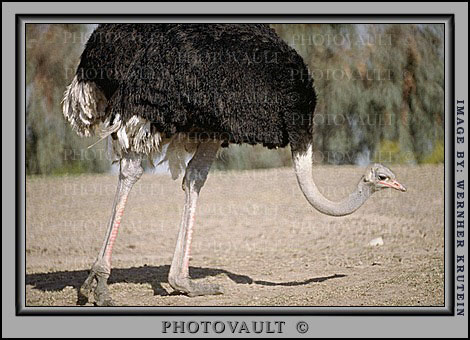
Ostriches:
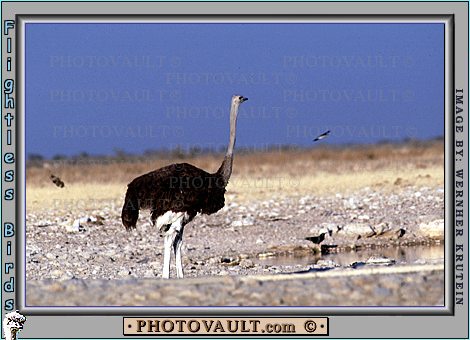
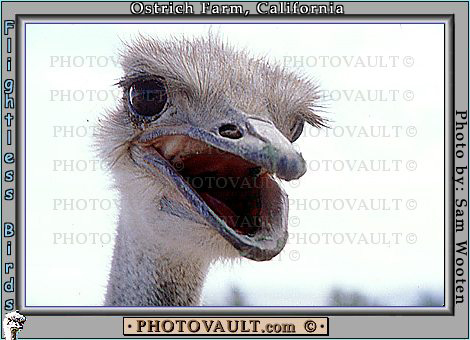
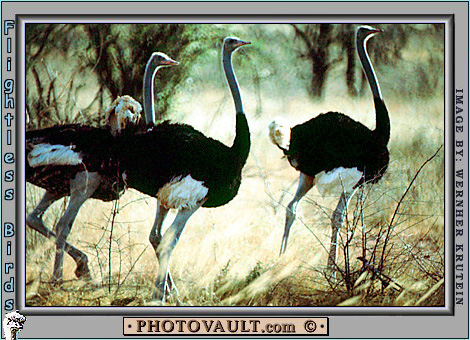
(Struthio camelus)

Incubation Time                      about 42-28 days

Clutch Size                              10

Body Length                            2.5 meters

Body Weight                            150 kg
The Ostrich is world largest flightless living birds. Their weight small wing area and madequate wing feathers and flight muscles combine to make them flightless. They can run at speeds of 20-27 miles an hour. Only one species of ostrich survives and this is found in Africa and Arabia. Its great stature, its gait and the fact live desert, explain why it was compared with camel. It was in fact from the camel that it took its specific name struthio camelus. The Ostrich has its Northern and Southern races. Northern race found in Algeria, Tunisia it is larger one with bare patch on the top of its head and have bright yellow skin. Southern found in Transvaal, Natal and Cape Province it is smaller one and have grey and dark blue skin. The Ostrich’s wings are very small and the feathers soft, with pendant barbs and short barbules that have no inter locking mechanism. There are no rectrices, their place being taken by elongated tail coverts. The legs are long, strong and almost with out feathers. There are only two toes ends in nails. The Ostrich has a long bare neck and a small, flat head terminating in a rounded beak with a huge gape. The eyes are large, upper lid has lashes. The ostrich in habits desert and savanna, though never straying very far from water, of which it needs about a gallon and a half a day. It is omnivore and gregarious and lives in large flocks, often in company with antelopes and zebras. Ostriches breed in the spring and are polygamous. Mating takes place after a brief courtship display. The male prepares a shallow scrape in the ground. The hens lay their eggs in the shared next and both cock and hens sit in turn until the eggs hatch. The baby ostrich is precocial and at birth is about the size of a domestic hen. The cock bird takes charge of the chicks and protects them. |