| OVERALL ASSESSMENT: Myanmar is one of the more interesting countries in Southeast Asia to visit: British colonial hill stations, tribal villages, colorful markets, ancient stupas and pagodas, and incredibly friendly people. And, oh yes, it's one of the most photogenic countries I've seen. Whether you feel it is politically corect to visit Myanmar is up to you. All I can say is that all the locals I talked to felt very positive about westeners/travelers amongst their midst. This report is based on travel during December 2003-January 2004. Rating: a very strong thumbs up.
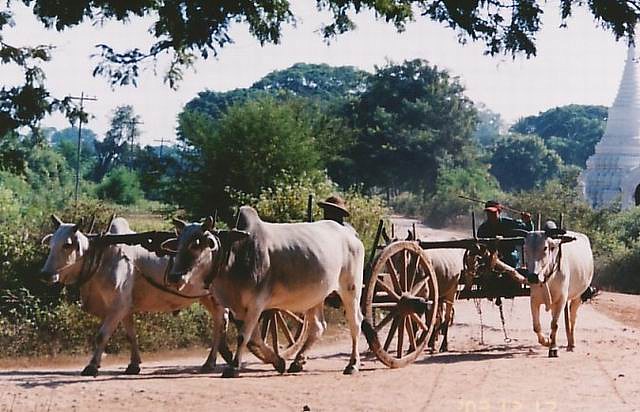
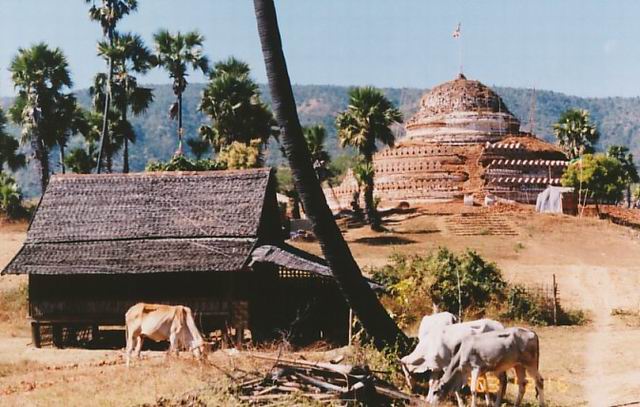
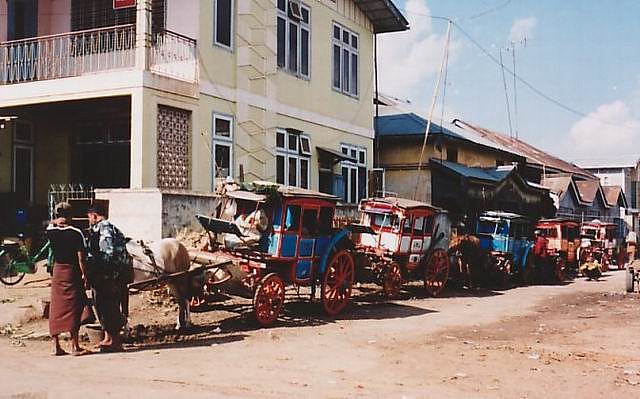
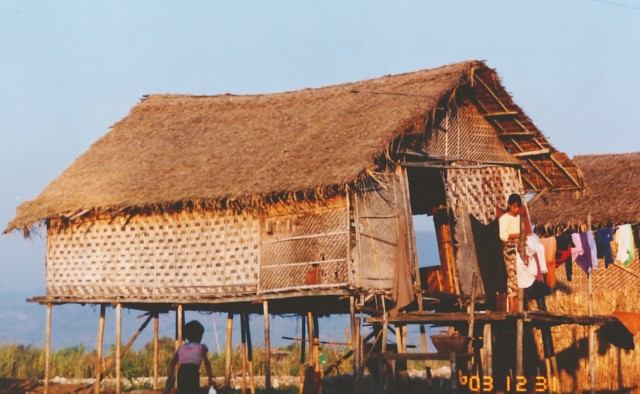
NOTE: I traveled through what has become quite well established tourist spots and I witnessed no armed conflict or violence of any sort. Myanmar is a 3rd World country with all the attenuating problems; most notably an incredibly poor infrastructure, i.e. the roads suck! Like Laos, outside the main cities Myanmar is dominated by small agrarian villages with people working the land in traditional ways and living in bamboo thatched huts . Local transportation is often by foot, bicycles, and horse or ox-drawn carts. Men and women alike wear "longgis" i.e. tube like sarongs, and some tribal women still dress in traditional fashion. Most men chew betel nut and spit red juice everywhere! Electricity if spotty, with most rural areas having just a couple of hours in the evening, if at all. On the official unofficial black market there's about 850 Kyat to the the U$ dollar, while at the government banks you'll only get 1/2 as much. Money changers will usually find you, though jewelry stores are always a good bet. All guest houses request that you pay in U$, so don't change too much money into local currency. Food and transportation is quite inexpensive, and you can probably get by on about U$5-7 per day. The largest note is 1,000K so you'll get a huge wad when you exchange money. For all practial purposes YOU CANNOT EXCHANGE U$ TRAVELERS CHEQUES! In other words, bring cash! (You actually can exchange travelers cheques in Mandalay and Yangon, but you'll be getting an absolutely terrible exchange rate.) To my knowledge there are no ATMs to use your debit card with. Average backpacker accomodations range from U$3 to U$10, and all inlcude an eggs/bread/coffee breakfast. An average meal is between U$1-2, though beer is relatively pricey. Internet cafes were just beginning to happen the last few weeks I was there, and I heard that Hotmail was still being blocked! In Yangon check out the Aroma Cafe, and in Mandalay there's a small 'net place near the ET guest house. Otherwise it costs about U$1 to send and receive an email. . Local transportation is often by foot, bicycles, and horse or ox-drawn carts. Men and women alike wear "longgis" i.e. tube like sarongs, and some tribal women still dress in traditional fashion. Most men chew betel nut and spit red juice everywhere! Electricity if spotty, with most rural areas having just a couple of hours in the evening, if at all. On the official unofficial black market there's about 850 Kyat to the the U$ dollar, while at the government banks you'll only get 1/2 as much. Money changers will usually find you, though jewelry stores are always a good bet. All guest houses request that you pay in U$, so don't change too much money into local currency. Food and transportation is quite inexpensive, and you can probably get by on about U$5-7 per day. The largest note is 1,000K so you'll get a huge wad when you exchange money. For all practial purposes YOU CANNOT EXCHANGE U$ TRAVELERS CHEQUES! In other words, bring cash! (You actually can exchange travelers cheques in Mandalay and Yangon, but you'll be getting an absolutely terrible exchange rate.) To my knowledge there are no ATMs to use your debit card with. Average backpacker accomodations range from U$3 to U$10, and all inlcude an eggs/bread/coffee breakfast. An average meal is between U$1-2, though beer is relatively pricey. Internet cafes were just beginning to happen the last few weeks I was there, and I heard that Hotmail was still being blocked! In Yangon check out the Aroma Cafe, and in Mandalay there's a small 'net place near the ET guest house. Otherwise it costs about U$1 to send and receive an email.
BORDER CROSSING: I want to confirm that you can indeed exist Myanmar overland via Tachilek into Thailand (Mai Sai). The trick is getting to Tachilek. Basically, you have to fly from Heho (near Inle Lake) or Mandalay, and the flight costs about U$75-80. However, it does leave one the option of flying from Chiang Mai direct to Mandalay, seeing the northern part of Myanmar, and then exiting overland back into Thailand without ever having to visit Yangon and the south.
BUSSES TO AVOID: From Yangon to Mandalay DO NOT take the Thei Di Shin Express. My bus left 2 1/4 hours late because they were repairing the brakes in a nearby field! Also, from Mandalay to Hsipaw DO NOT take the Yoma Express, which for some reason is the company that the ET Guest House uses. It's primarily a transport cargo company and the entire floor of our bus was covered with thick sacks of potatoes. About 3/4 of the way to Hsipaw the bus stopped for 2 1/2 hours to unload while we sat around doing nothing! Do yourself a favor and find another bus company!
- Yangon. The capital of Myanmar is the city that has probably changed the most since I visited the country in the mid-80's. Quite a few fancy western hotels and lots of white Toyota taxis. There's American fast food clones if you need a fix of burgers, pizza, or donuts - all surprisingly packed with locals, by the way. Seemingly every sidewalk is filled with street vendors and it's interesting just walking around and looking at all the crazy stuff for sale. Lots of small tea and Indian food stalls, too. In other words, it's a crowded place, though relatively quiet all things considered as honking your car horn apparently can incur a rather stiff fine! There are a lot of Indians and Chinese in the city, and everybody's chewing betel nut and spitting red juice all over the place. If you can figure out the local busses they're quick, not that crowded and cost a few pennies. I don't think there's that much of interest to see in Yangon though the Shwedagon Paya (pagoda) shouldn't be missed even though they now charge U$6 entrance fee. To change money the jewelry booths in the Bogyoke Aung San Market are a good bet. Guys will also approach you around the Sule Paya, though I sort of like changing money where I know the place will be there if I need to go back the next day. If you're heading back to Thailand pick up a 60-day tourist visa at the Thai embassy for U$25. Takes 1 day. For a bit of night life check out the Asian Plaza Hotel basement disco after 9:30 pm: a rather bizarre bar/rock concert/fashion show all rolled into one.
ALERT! Don't change money at the Yangon Airport bank as you'll get only 1/2 as much as on the black market. Taxis will charge U$5 per carload or about U$1 each for the trip into town. For the budget conscious take the #51 bus into town for 20 or 40 Kyat providing, 1) you've been able to get some Kyat before entering and 2) can read Myanmar numbers!
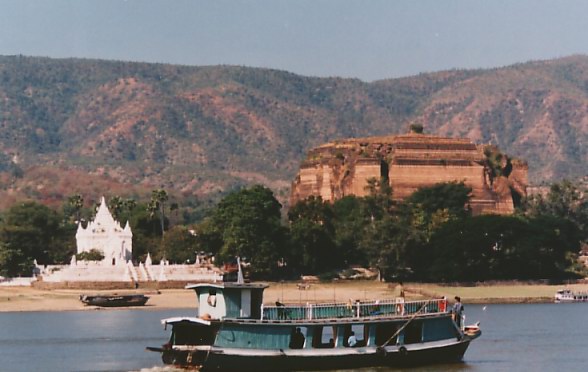
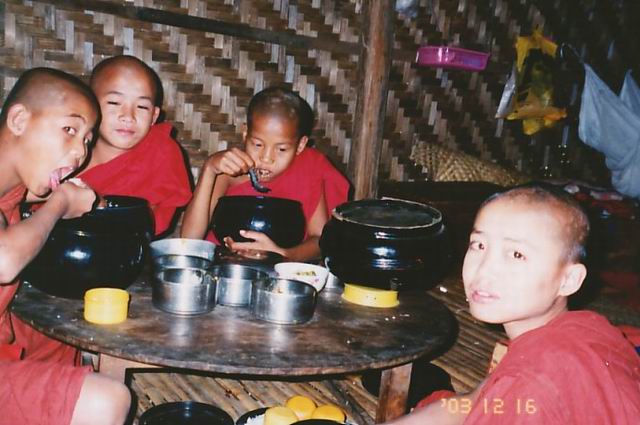
- Mandalay. I stayed at the Royal Guest House and felt it was good value; clean and in a good location. The Mann Chinese Restaurant around the corner has good food and top it off with some ice cream right across the street at the Nylon Cafe. There'll be a few beggars around, but nothing too bad. There's also an excellent Indian sidewalk restaurant a few blocks to the east and south of the Royal Guest House (forgot the exact location) with tiny low wood tables and little plastic stools like you use to sit on in kindergarden. Killer chapati, curries, and dahl. There's not that much to see or do in the city itself, but I do recommend going to some of the nearby 'ancient cities'. Take the
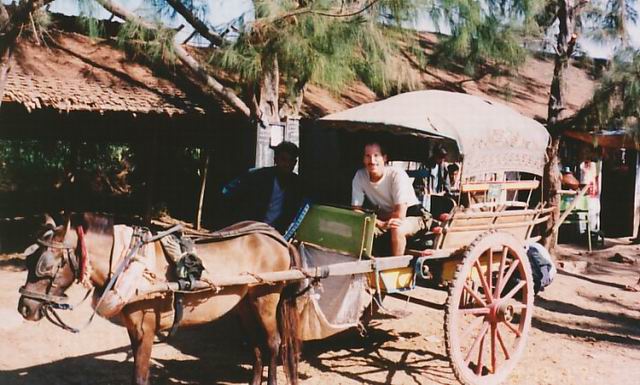
boat to Mingun where you can wander around for about 3 hours or so. Get lost and you might find some young monks eating lunch or ancient untouristed stupas. The souvenir sellers can be incredibly persistant but it's a good place to get those coveted t-shirts if you're prepared to bargain hard. At Inwa, another ancient city, the best part was being driven around in a horse drawn cart, and don't miss the longest teak wood bridge in the world at Amarapura!
- Pyin U Lwin. Once known as Maymyo, I was rather disappointed in this British hill station city. It's now where the military and politicians build their expensive mansions while the rest of the country lives in bamboo huts - yuck. It's best known for it's horse drawn carriages which look like something out of the American old west, but you can see these in other cities as well. Though there's some nice old British colonial buildings still standing, unless you have some special reason to stop here, you can skip Pyin U Lwin and not miss much.
- Hsipaw. As explained aboved don't use the Yoma Express bus company from Mandalay to Hsipaw, though I don't know of another company to recommend. Hsipaw is a quaint little Shan town that's fun to walk around in, with the usual cave and waterfall day trips, but really there's not that much to do here. What's special is the cast of unusual characters that makes this town a cut above the others. Be sure and join Mr. Charles (owner of the Mr. Charles Guest House, which is quite nice and very social) for his morning walk from 9 am - 1 pm through the surrounding countryside. Beautiful rice fields and views along with quiet Shan villages. For the political side of Myanmar track down Mr. Book who is an open member of the opposition NLD party. Yes, he owns a book store, and he facilitates distributing food and school supplies if you are interesting in making a donation. And then of course there's Mr. Donald, the nephew or something of the last Shan prince. He will yack non-stop from 4 pm to about 10 pm about the history of the Shan people and their situation in relation to the Myanmar government. I'm told it's quite interesting, but after an hour I had had enough. An Australian woman just opened up a small computer cafe where you can download/burn your digital photos to CD. If you go during the cool season I suggest bringing a sweater as it can get quite cold at night! Hsipaw is not exactly a culinary delight, but you can find some decent Chinese and Shan restaurants along the main drag.
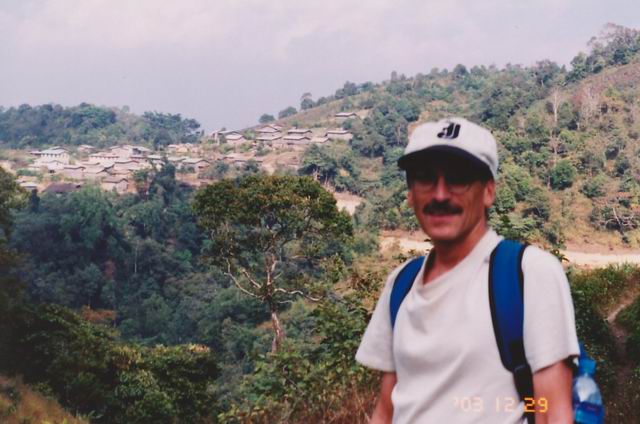
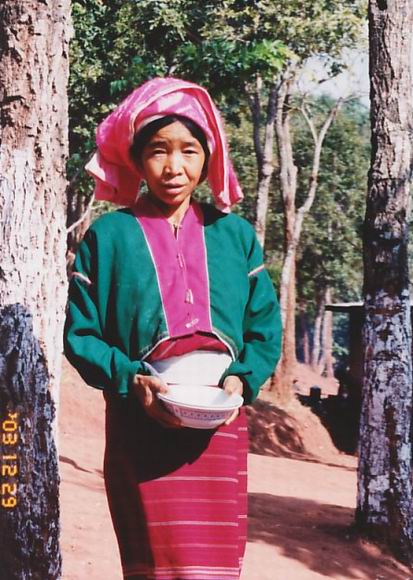
- Kalaw. Kalaw is a small British Hill station with a nice morning market and some nice old colonial buildings. Without doubt though the primary attraction is trekking to visit nearby tribal villages. I did a 2-day trek and there's no question that walking is one of the best ways to really get a feel for a country. It is best to go with a guide not just because that way you won't get lost, but a good guide will break the ice with the local villagers and give you a chance to have a 2-way dialog with them and probably get some photos you wouldn't have otherwise been allowed to take. My first stop was at the Tah Tong Meditation Center. The Palung villagers cook for the meditating monks and
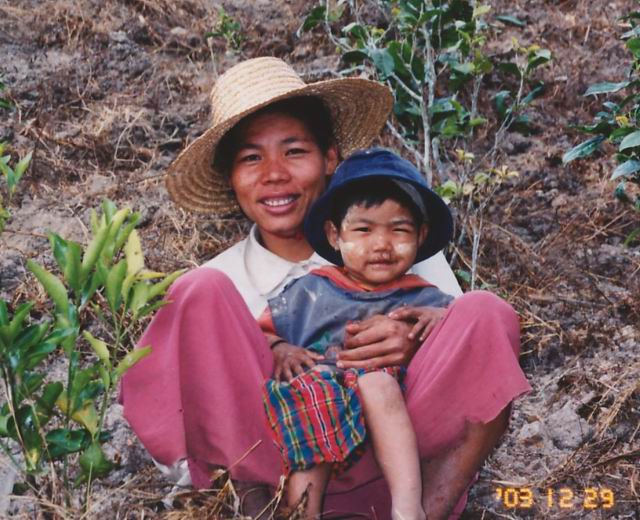
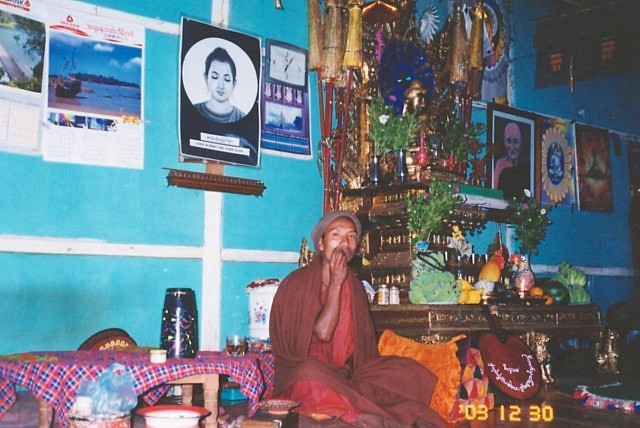
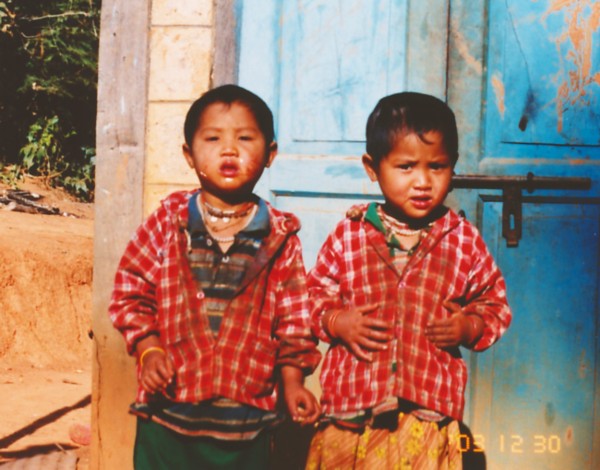
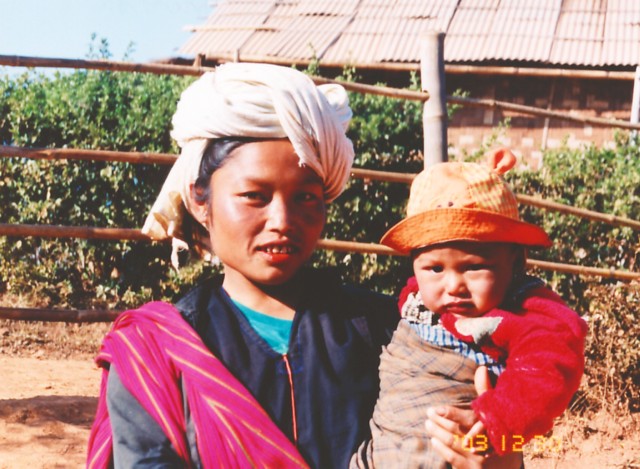
take them food. The monastery also attracts the elderly Paluang who seem to use it as a social gathering place. The area northeast of Kalaw is heavily cultivated with, among other crops, rice, garlic, sesame, oranges, and tea plantations. We spent a rather chilly night at the Na Wah Tong Monastery, and enjoyed the hospitality of it's cheroot smoking head monk. The next day we visited a Pa-O village where it was clear by the reaction of these twins that they don't receive many western trekkers yet. Mom was obviously quite justly proud of her baby, though.
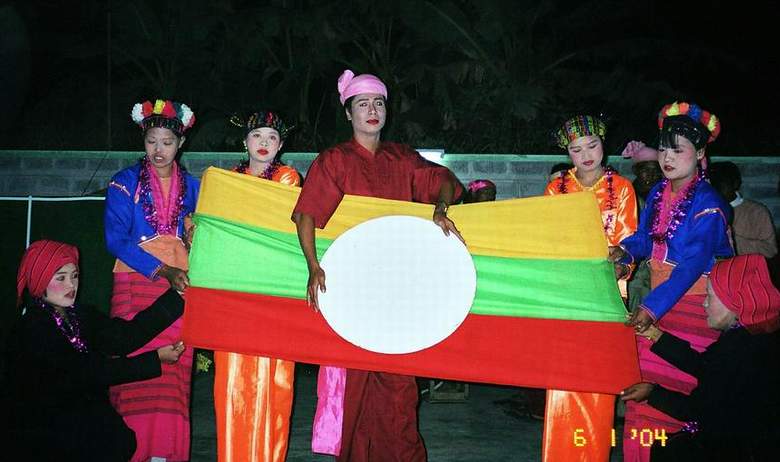
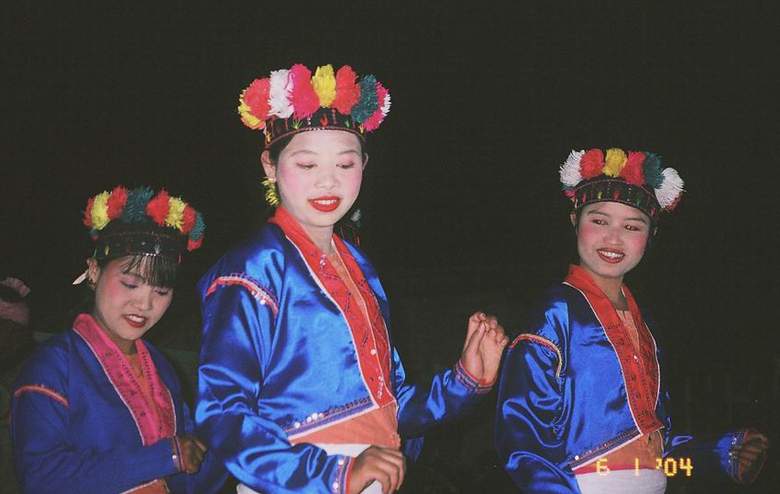
- Inle Lake. Beautiful, peaceful Inle Lake was one of my favorite places in Myanmar, and like most travelers I stayed in the nearby town of Nyaungshwe. The town is a wonderfully quiet and laid back place. There are few cars, motobikes, or taxis, and even those obnoxious Chinese tractors are rare. Nobody seems in much of a hurry and most peoploe get around on foot or on bicycle giving the town a very "chill" atmostphere. A short walk from town will reveal overgrown temples that make one feel like a true adventurer. Well, sort of! I liked the Aquarius Inn as the owner is trying hard to develop good word of mouth and goes out of his way to make everybody feel at home. It's not in the Lonely Planet guide book, but you can easily find it right across from the Post Office and the Little Inn Guest House. The owner helped us arrange a performance of local Burmese Folk Dancing. Little did we know we had hired an entire troupe that performed delightfully colorful and entertaining dances for over an hour!
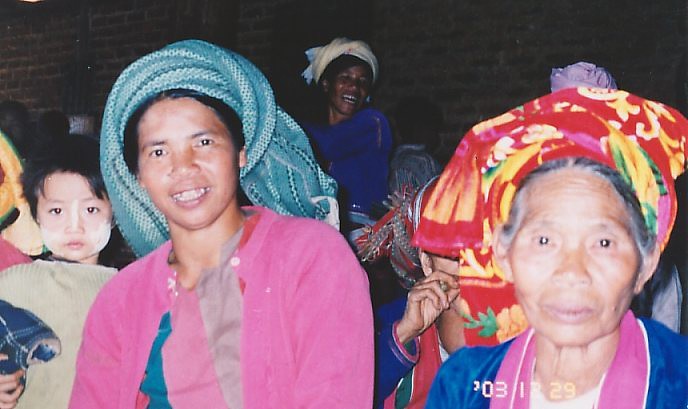
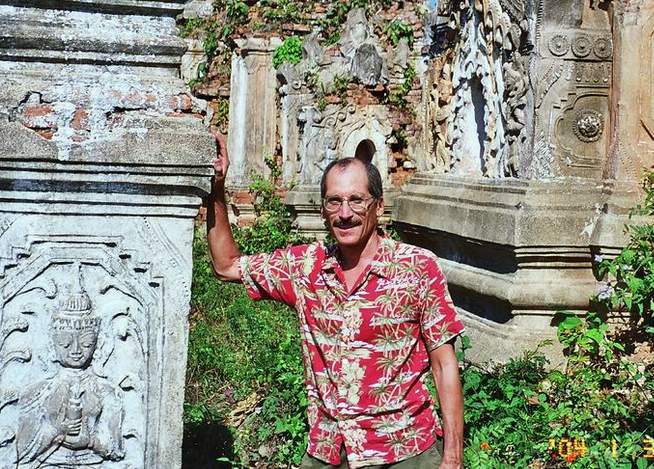
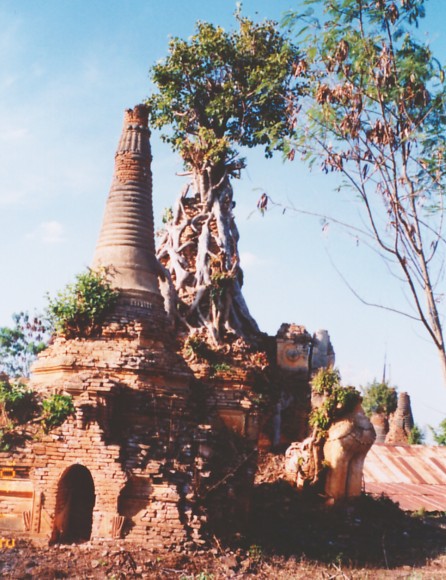
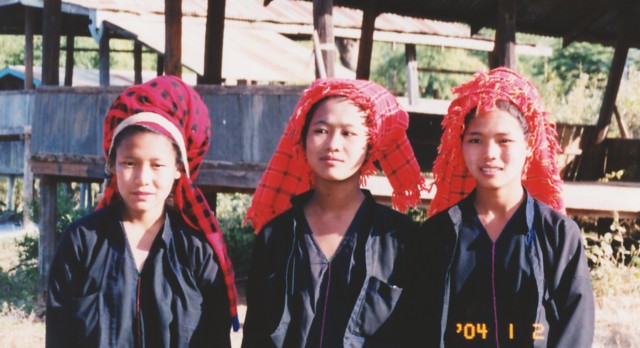
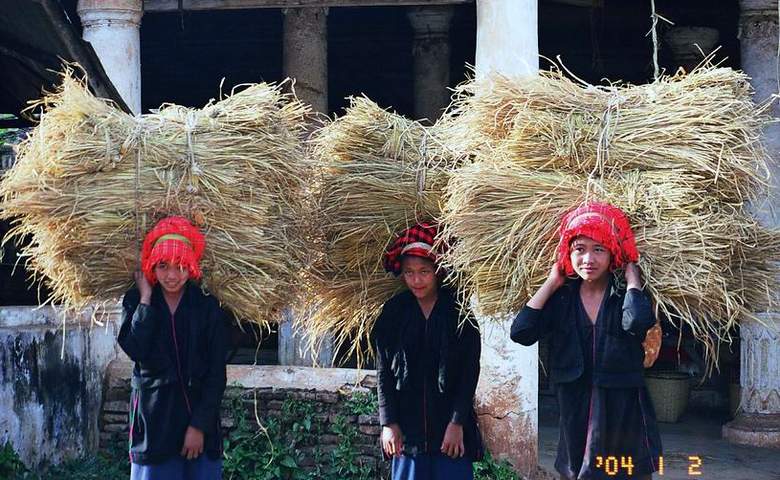
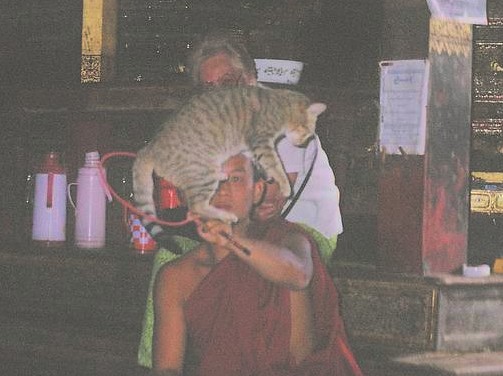
A 2-hour canoe trip through the local canals is incredibly peaceful once you leave the main canal with it's noisy long tailed boats. The Inle Lake boat tour is also good, and be sure and visit Indein with it's ancient stupas and local market which attracts local villagers like these three Pa-O lovelies. Don't be fooled by this picture, life is not all that easy for them. The Jumping Cat Monastery is also a popular tourist site, though in my opinion a bit silly. The lake is clogged with weeds, probably a conbination of natural factors and fertilizer runoff from the nearby fields, but is still the major transportation route for the entire valley. You'll see boats so filled with people and cargo that they're barely above the water line. Nyaungshwe has plenty of restaurants catering to the western palate, and pasta and pancakes seem to be on every menu. At Mee Mee's they use locally grown wheat and make the pasta right in front of your eyes. Believe me you can taste the difference. It's delicious!
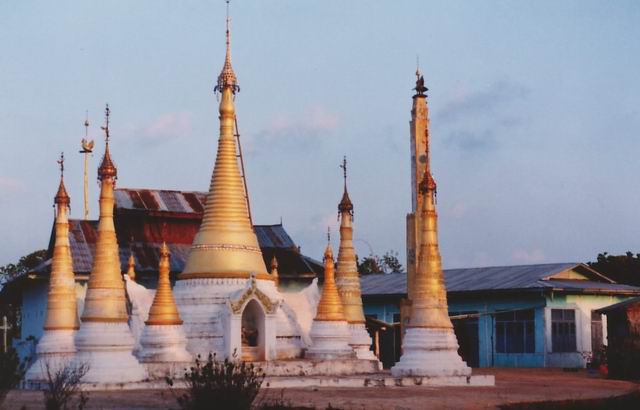
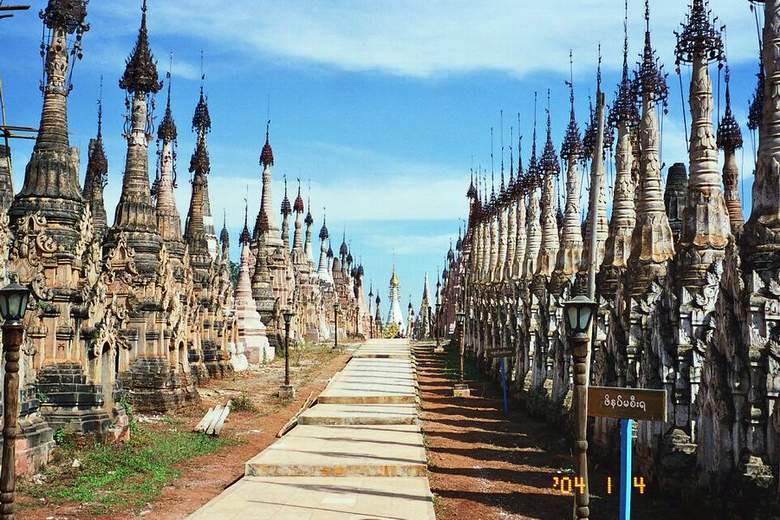
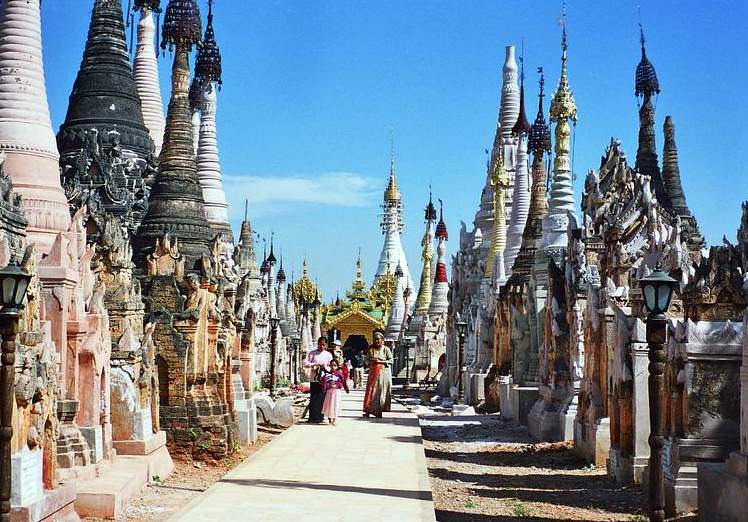
An interesting day trip from Nyaungshwe brings you to the Kakku temple complex, which has over 2,000 stupas. I was truly stupified!
Comments? E-mail me at [email protected]
Return to
Travel Reports |