|
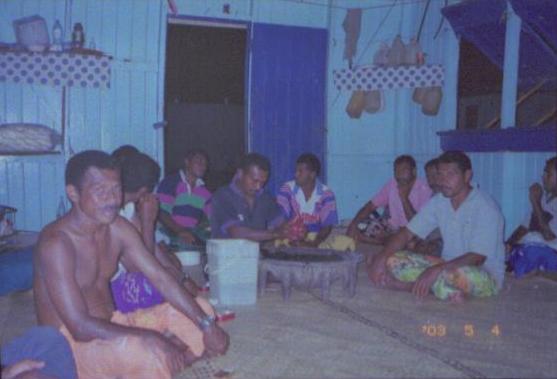
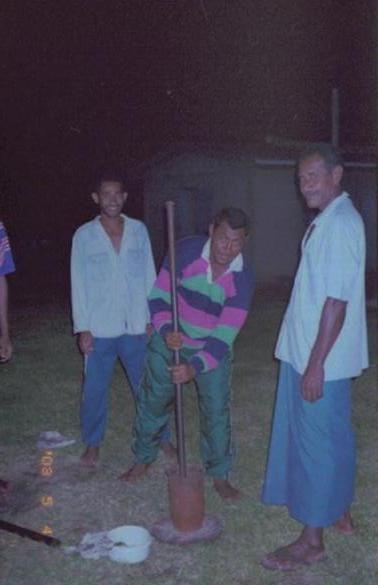
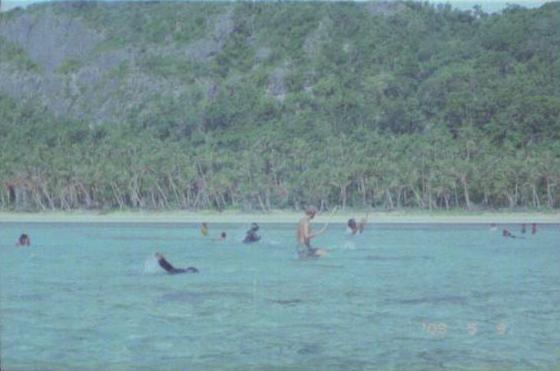
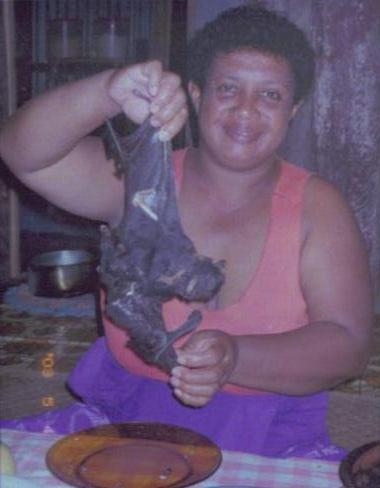
INTRODUCTION: Through the Fiji Environmental Action Group (FEAG) volunteer oranization, I arranged a 2 week stay in a traditional Fijian village on the island of Cicia (pronounced thithia). I was joined by another volunteer who'll remain anonymous, but that's who the "we" are in the following narrative.
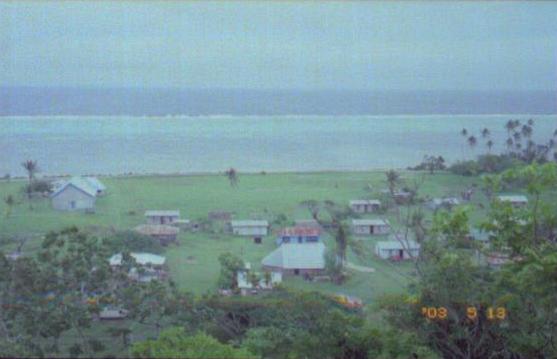
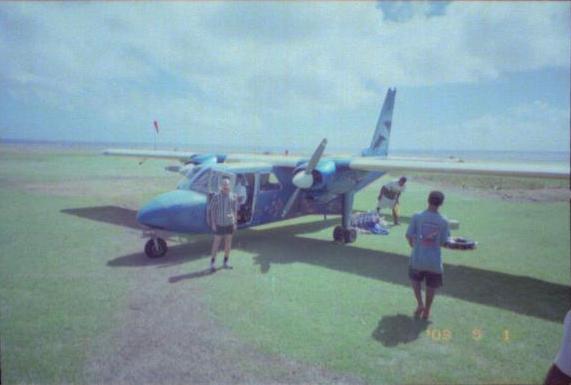
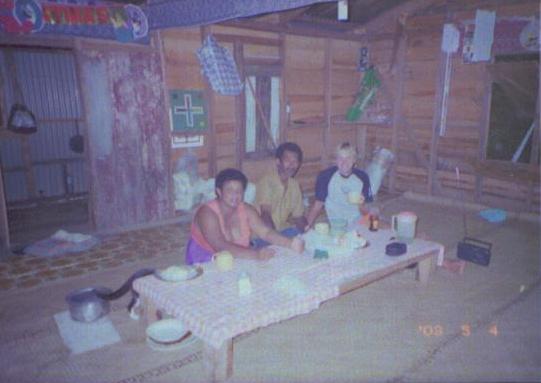
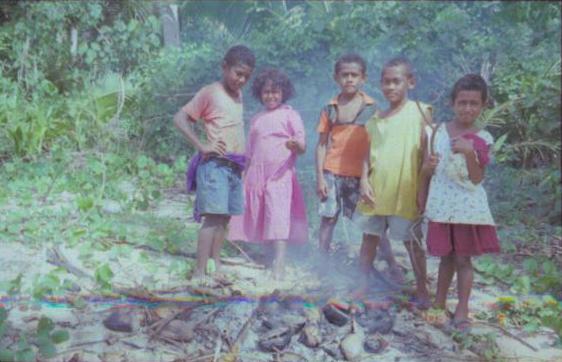
The six-seater Air Fiji plane was the smallest I've ever flown in, and other than extremely noisy, and a bit confining, the flight was remarkable smooth. The one hour flight from Suva to Cicia took us about 150 miles east of the main island. We landed on the east side of Cicia, where the largest village and post office is. The post office, which is an 1 3/4 hours walk from the village I stayed in, has the only phone on the island. It also has the largest store, which means it has more than the 10 items that the village stores do. As we approached we could see the entire island, about 5 miles wide and 7 miles long. Cicia is a typical, beautiful, lush Fijian island surrounded by a coral reef with a hilly interior. Preparing to land our plane banked steeply and I could see a small cow pasture, which, as it turned out, was the runway. Yeow! Cicia has 5 villages (I think) and a total population of around 600-750. It has no Fijian Indians or Chinese, (the two main non-Fijian ethnic groups), and no tourist or resident westeners; we were the only 2 "palangi" (foreigners) on the island. There are 2 rutted dirt roads and 2 trucks on the island. One road goes across the middle of the island and the other along the southern coast. From the airstrip to the village it was a bumpy 30 minute ride in the back of a pickup truck filled with villagers, their supplies, spare tires, various roots, and bags filled with some substance as hard as rocks. We stayed with a family of three: husband, wife, and daughter. Natokolau has about 25-30 houses - some larger and better off than others. The average house had traditional palm tree thatched sides, and aluminum slat roofs. There is a central tap-water system providing delicious spring water and no one had any stomach problems whatsoever. A Day In the Life: Here, roughly, is what a typical day was like. Around 6 a.m. the minah birds, roosters, dogs, pigs, and cows would start up an incredible racket. And if that weren't enough, our host family would arise, crank up the local Fiji music station on the portable radio, and proceed to talk at each other at what seemed at the top of their lungs! Welcome to another day! I quickly learned that the only way to get a good night's sleep was to wear ear plugs, which allowed me to sleep until about 7 am when the host family mother, or daughter, would rouse us with cries of "Kana Time." Kana being Fijian for food. Our breakfast and all other meals were eaten in the cooking/eating building, which was separate from the living sleeping "Bure" (main house). There was no table and chairs, just a low table, and the family would gather around and sit on the hand woven thatched mats. Every meal was preceeded by Grace, as the village is deeply religous (more on this later). In the beginning breakfast consisted of deep fried bread, which was referred to as "pancakes" or "donuts", and tea (sometimes coffee). Later we had only thick crackers with margarine. Around 8 a.m. or so you could often hear the deep blast of a large conch shell calling the men to work. After washing up the other volunteer and I would wander through the village on our way to the nursery to water and weed pine tree seedlings. Walking through the village was a bit like walking through a living zoo; pigs, chickens, and dogs proliferated in abundance, along with the occasional horse or cow. Along the way we would be greeted by all the villagers, especially the children, saying "andra" (good morning) or "bula" (hello). We would always be asked in for tea, but had to refuse or we'd never make it to the nursury! Much of the island was destroyed during a cyclone earlier in the year, and they are in the process of reforesting. The timber will be used locally to build houses and also as an export product to generate much needed revenue. After dealing with the nursery we would go down to the "plantation." A huge fence was being constructed just outside of the village to keep the animals out, most notably the pigs, of which there is a great abundance, and allow the villagers to grow more crops, especially vegetables, which were almost all destroyed during the cyclone. Presently, most of the 'gardens' are way up on the hillsides, often some 30-45 minutes walk through dense bush. All the posts were made from local material. That is, with machetes and sheer man-power they cut down trees and made posts of various sizes and shapes from which they then strung barbed wire. They buried large posts about every 30 feet or so, and in between they put in tall, thin, fig branches, most of which will root and create a 'living fence', if you will. The manual labor involved was enormous, especially considered that it was being done in the intense Fijian heat and humidity. Think Florida (USA) in August, and you'll get an idea of what the weather is like. We would be given tasks such as digging the post holes, tamping down dirt, and bringing the fig branches from the bush to the fence. Exhausting work, and that's why I started teaching instead of laboring! Other times instead of working on the fence we clearing off small plots of land and planted new banana suckers and taro plants. Most of the village men would be out working on the fence, and there was always a lot of good natured banter going about, much of it the usual male sex oriented talk that one would hear anywhere in the world. I found working in the Fijian heat and humidity a bit much (I'm something of an old fogey), and fortunatley another project the volunteers could participate in was teaching English. I contacted the school headmaster and was soon teaching English to 8th and 9th graders from 9 - 10:30 am (they use the British system of 'Forms' rather than 'grades'). The school room had a black board and chalk, and the kids all had school books. The open door and windows kept the heat bareable. The kids were a lot of fun: motivated and very responsive. They can read and write quite well, but have trouble hearing, and of course, speaking English. I realized I had to have some sort of lesson plan, and would spend the afternoon brainstorming for the next days lesson. Games like Hangman and Simon Says seemed to be their favorites! Often in the afternoon we would be too tired from the mornings work down at "The Fence" to do anything else, so we'd head down to the beach. The village was right at the water, and a 15-20 minute walk along the beach led to some volcanic rock outcroppings which provided much needed shade. It also provided protection from the afternoon showers which would build up from all the humidity. It was bliss to just sit there and read a book with the ocean in front and the island's coral and volcanic hills behind. The tranquility of being on an island with virtually no vehicles, roads, cities, advertisement billboards, or any of the other trappings of modern society is absolutely wonderful. Evening Kana would usually be fish with taro/cassava/yam, or sometimes rice. Our main vegetable was from a leafy green plant similar to spinach picked fresh each day. Sometimes we had dahl. As Fijians tend to be rather large (especially the women!) they can really pack away a meal, eating enormous amounts of starchy taro or cassava. There was rarely much leftovers after our 'Mama' had gotten through with cleaning off plates. The main family Bure was a large room with no chairs, sofas or tables, though we had western style beds. The only talbe proudly displayed the Boombox/DVD/VRC and TV. We had electricity from about 6pm-9pm when our host family turned on their generator. After dinner I would read for a bit, and usually went to bed early. Sometimes the generator would run later, like when they showed pirated Rambo DVDs. All the village kids would sit totally rapt, virtually hypnotized with the images. The fact that people from all the developing countries seem to love these violent videos is quite a phenomenon, and I'll let each person make up their own minds about it. Once again my trusty ear plugs came in handy, and I would simply go to bed and block out the shooting and killing as much as possible. About 4-5 nights a week the men would gather to drink Kava, usually referred to as grog, in a separate Bure, which we of course called the 'Grog House'. This, as much as anything, was the evening entertainment for the men of the village. Kava is supposedly a mild narcotic that makes one sleepy, but I never could directly feel the effect of drinking grog. I would often become very tired toward the end of the night, but who wouldn't after surviving another day in the blistering heat and humidity? Anyway, the dried Kava root is pounded in a special mortar and pestle into a fairly fine powder. It is then put in a sack made from sari material, and infused into the Kava bowl filled with water. A guy kneads the Kava and the water turns a murky brown color. The first time I drank Kava it tasted a bit like drinking sawdust, but I quickly acquired a taste for it. The men all sit around the Kava bowl, with the village chiefs/elders at the top (and us palangi/volunteers next to them as a seat of honor). Someone would say "taki", which meant it was time to drink the grog, and everyone would have to sit cross legged (naturally we were on the floor). One of the younger guys would then fill a coconut shell with the Kava, and starting with the chief, would slowly go around the room dispensing the grog to everybody. You could request the coconut shell to be "high tide" or "low tide" depending on how much you wanted to slurp down. It was all very informal, yet produced a very strong bonding experience. The village men would discuss the days events, in this case the fence and keeping out the pigs, and maybe plan for tomorrows work, along with a lot of joking and horsing around. I enjoyed the grog sessions as much as anything else. It also makes a lot of sense from a biological sense to have a nightly ritual where you ingest a huge amount of liquid after you've been sweating like mad all day in the heat and humidity. Other Comments and Observations: My host family consisted of a man and wife and their 12 year old daughter. They were all very nice, and the husband had the best command of English. The wife spoke some, but you couldn't really hold a conversation with her or the daughter. We all lived and slept together in the Bure, and ate together in the kitchen, so it felt we were with them constantly, and after a while this became a bit much for us westerners who are use to their independence and freedom. Often myself and the other volunteer would retreat to the beach simply to have some privacy and be away from the village. It did product a great feeling of family and belonging, and I know they were doing their best to take care of us strangers, and treat us as if we were family. In the Fijian culure, family is everything. If you are not a part of a family, you have no status whatsoever, and in essence aren't even a person. Though most of the families are very poor, no one goes hungry, and a family can literally subsist on food from the land. The root crops taro, cassava, and yams (not our yams, but sorta like yams) grow abundantly. A couple of times a week the women (and sometimes kids and us volunteers) go net fishing, in the shallow reef water. I would estimate that the villagers received at least 50% of their protein from fish. There's nothing like eating the fish that you just caught a few hours earlier! And bat, apparently, is considered a delicacy. On special events, such as Mother's Day (which happened to fall when we were there) a pig is slaughtered and shared among many families. I had some delicious BBQ pig! Their diet is supplemented with cooked lentils (which they call dahl due to the Indian influence), rice, thick breakfast crackers, fried bread (which they call donuts or pancakes), ramen noodles, sugar, tea, coffee, and of all things, canned tuna! When I was there the food was quite repetitive, though good, and that's why the new fence will be such a great help to the villagers. They sorely need more vegetables in their diet! Most people seem/are related in the village. People come and go from each other's Bure's at will. Food also was often shared, and it was obvious that the better off families were giving to the poorer ones. Everyone is extremely friendly, and we couldn't pass by anybody without saying hello (bula) or good morning (ahndra). The village is totally safe and one feels totally secure. Kids run around freely for there is always somebody to look after them. This all produces an incredible strong sense of community, belonging, identity and security. This is further enforced by the fact that there is ONE church in the village, and everybody goes to this same Methodist church. The villagers are extremely religious, with church services held 3-4 days a week, and 3 times on Sunday. Indeed, I would say they were a bit fanatical about the whole thing, but it seems all the south pacific islanders are extremely religious. These same attributes that make village life so seductive was also, for me anyway, it's limitation. Anybody from outside the island is considered a stanger, and people are suspicious of them. Things are done the traditional way because there is so little input from the outside world. If you don't belong to their church, than you would no doubt not be welcome in their village. Though western volunteers had been visiting the island for 2 years, the kids still yelled "palangi" (foreigner) everytime they saw us. The island and village mentality still very much prevailed. Final Thoughts: Though at times difficult and emotionally trying, staying with a Fijian family on a small island in a small village was truly an outstanding experience. The island itself is a beautiful gem, and how many people in this day and age get to stay in a village where life goes on much as it has for the last couple of hundred years. To witness people living virtually a subsistance existence here in the 21st century was nothing short of amazing. It was truly a 'travelers classic', and it's an experience I won't soon forget. Comments? E-mail me at [email protected]. |