
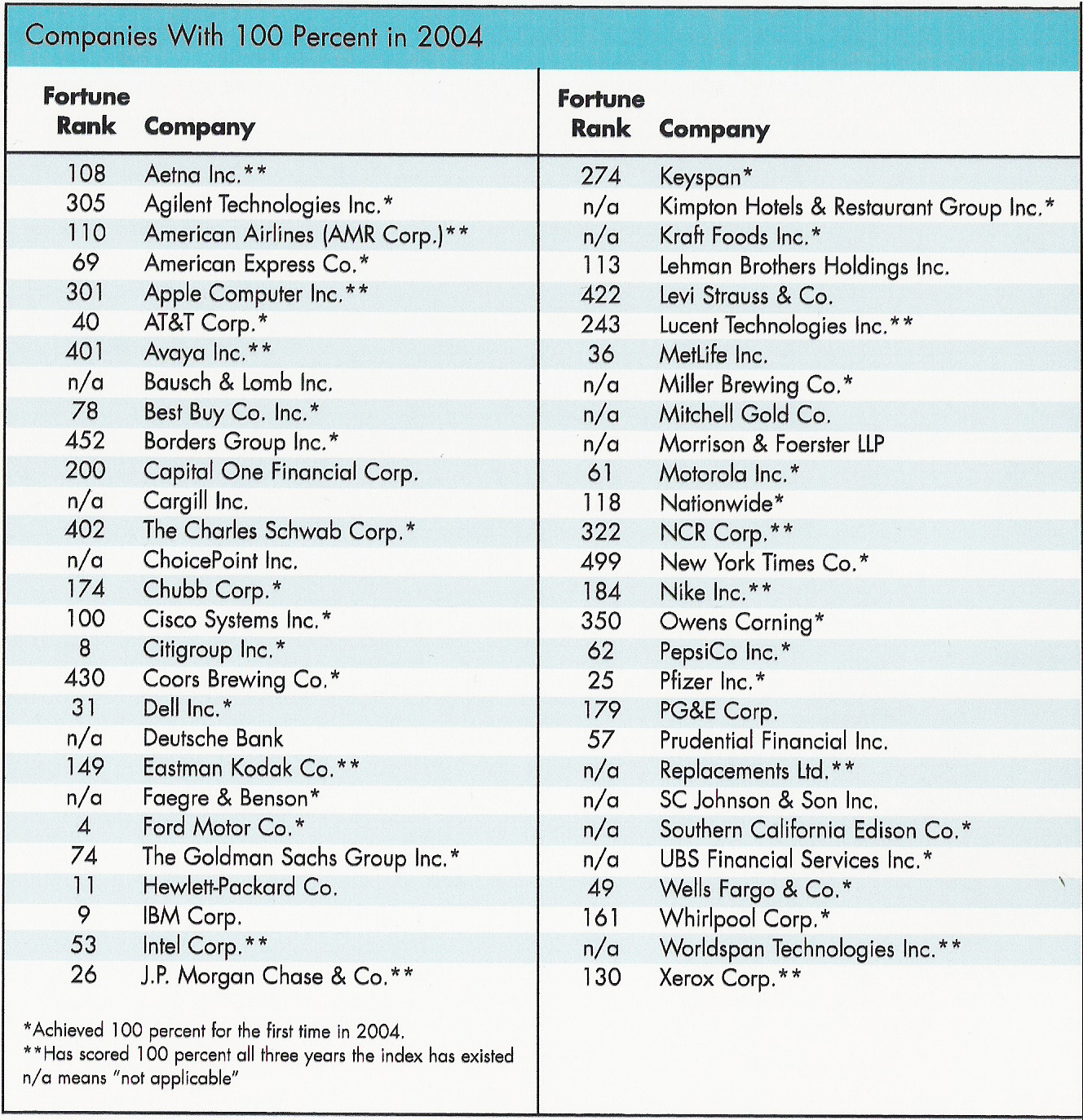
Although it may seem like the HRC is the only factor influencing equality for GLBT groups, it is not the case. Recently, there have been multiple tactics created by union activists and smaller groups. One example consists of the tactics of smaller businesses against larger corporations. Many competitors of large corporations are advancing quickly towards equality in GLBT groups. This causes consumers to be more trustworthy in the smaller company because they see that the company cares for employees and doesn�t show discrimination. If the company shows equality for employees, customers assume that the company feels the same way for them (Gelinas 1-2). In addition to this, organizations are also placing pressure on the anti-policy corporations. Within the last few years Nycers, the New York City Employees� Retirement System, and its companion fund Nyctrs, the New York City Teachers� Retirement System, have convinced twenty Fortune 500 companies to adopt the same-sex discrimination policy (1). The policy was created and proposed by Thompson, Gotbaum, and other union activists that sit on the Nycers and Nyctrs board (1).
There is also a lot of discrimination going on that is unseen. Legal cases where people are teased, beat, and fired are covered up by large corporations. No evidence is available, and the person is not powerful enough to beat such a powerful entity in court. The corporation will find other reasons to fire the employees to avoid the case as well. Such a typical story took place at a law firm in Chicago with two women, J.A. and K.B. They both performed their jobs well, and they never had any warnings. Coworkers eventually noticed both women were lesbian, and the firm�s senior partner didn�t like the idea of GLBT people working in his office. The two women were quickly fired because the firm was �cutting back� because of �financial reasons�. The two women filed a complaint. The company decided to keep their final paychecks and proclaimed they were fired because they showed poor performance. They were also denied unemployment compensation (Documenting Discrimination 2002, 14). This story is the typical corporation cover-up, and this can be happening at any time, no matter what the same-sex discrimination policy states.