
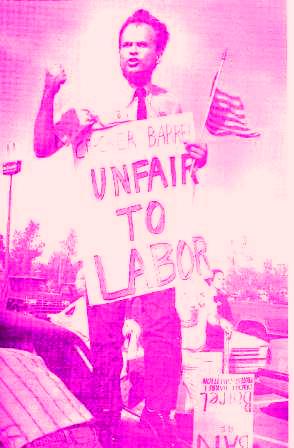
The subject was abruptly brought out into the open when Cracker Barrel, a corporate run restaurant line, displayed the purest form of same-sex discrimination. In 1992, the restaurant chain fired eleven employees simply due to the fact they were gay, lesbian, bisexual, or transgender (McCreery and Krupat 43). The company told the media the following statement as the reason for firing the innocent employees: �We terminated the employees whose sexual preferences fail to demonstrate normal heterosexual values which have been the foundation of families in our society� (www.hrc.org). This, in turn, caused a wave of boycotts and protests across the United States. Being the first national example of discrimination against GLBT groups, the new form of inequity was instantly commercialized into the homes of all Americans.
Shortly thereafter, an all-seeing eye kept watch on big business and their ways of illegal intolerance. One of the companies noticed in 1993 for their anti-queer tactics was the Exxon Corporation. The leading oil company in the United States at the time announced a new chairman, Lee R. Raymond. Advisors stressed Chairman Raymond to develop a policy that protected GLBT employees. Exxon�s competitor, Mobil, was ahead of the game, already having such a policy. Even with advisors explaining this to the newly elected chairman, he strictly refused to create such a document. The two companies merged in 1999 and there was hope that Mobil�s previous policy would remain intact within the new union. However, Chairman Raymond stayed in charge of the giant oil merger, and the policy was hastily executed.
Wal-Mart
In the past fifteen years, there have been numerous accounts of GLBT discrimination in the corporate arena. One of the longest running stories has been with the highly conservative, but very well-known company, Wal-mart, Inc. While the company was one of the top ten largest employers in the United States, they did not see the need for a policy (Kershaw 1). The company rejected, on many accounts, the suggestions to change from its major investors. In 2003, almost ten years later, major investors took power into their own hands. According to the Securities Exchange Commission, �any stockholder with $2,000 or more in shares can introduce a �shareholder resolution� on an array of company policy issues, including antidiscrimination rules� (1). Multiple pro-queer organizations, especially the Seattle-based gay group The Pride Foundation, took advantage of this rule. The shareholders were able to use this authority and the group was able to persuade, through others, to amend the policy to be GLBT-friendly. The company tried to avoid the whole situation by explaining they would do training sessions for all employees on homosexuality, but plans were unclear and shareholders didn�t believe it would follow through.