
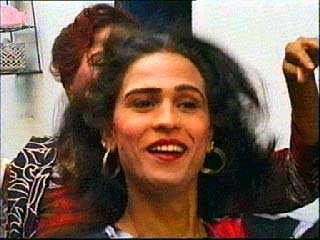
Similar ideas connected to transgenders and intersexuals are found in many muslim societies (see also my article about the "bissu" in Indonesian Bugis society)!
Even Pakistanis and Indians who in other circumstances would make fun of the mukhannathun believe in these special powers and may at their performances at family festivals give a lot of money to them to turn away their curse. These performances of blessing songs belonged to the traditional occupation of the hijras and it is still the main occupation for many of them.
The connection between music and spirituality in hijra culture and the idea that hijras may perform a blessing "du`a" for others place them, from a muslim point of view, near to the sufi and dervish orders of muslim mysticism who likewise are consulted to perform "du`a" for ordinary believers and who connect themselves to God through music and dance. In fact, there are many connections between hijra culture and Sufism. In India and Pakistan the muslim shrines at the graves of Sufi saints are usually the places where hijras use to frequent and to hijras the "urs" festivals, celebrating the "returning home" of prominent muslim saints, are also an occasion to hold meetings between mukhannathun from different parts of India. Especially the "urs" of Khwaja Chishti in Ajmer is known to be a festival which is attended by hundreds of hijras from India an Pakistan.
Indian history also knows several persons revered under a male name as sufi saints (court mukhannathun obviously had to carry an official male name and title, although hijras usually refer to each other with female names) but who were at the same time members of the hijra community. Among them was a sufi and poet called Yatim Shah, a saint called Khalij Khan and a dervish called Musa Shah-i Suhag.
Musa Shah-i Suhag is especially revered by a special order of muslim mystics, the Suhrawardiyya-Suhagiyya, whose "male born" members all live the lifes of hijras and see themselves as "brides of God".
There have also been reported several members of the Malangiyya dervish order in Pakistan who were mukhannathun. Sometimes Pakistani hijras in general relate themselves to the dervish orders, claiming a shared view on life and sexuality (though this is surely not true for all hijras).
Transgenders and Intersexuals on the Indian Subcontinent have a deep and inner connection to the sufi orders and the muslim saints. Certain medieval muslim missionaries in India are claimed to have been "especially kind towards hijras" and the hijras reply to this with affectionate love up to this day. This is one of the many reasons why the khusras can be found easily at muslim shrines!
Older and experienced hijras are usually expected to be earnest followers of Islam (at least in Pakistan). Many hijras from both India and Pakistan perform the Hajj, the obligatory pilgrimage to Makkah - having saved a lot of money only for this occasion - and those who did so are treated with a special respect in the community. In medieval times mukhannathun were sometimes employed to teach the recitation of the Holy Qur`an to young princes and princesses and even today some hijras are found who teach "Qira`at" (as it is called in Arabic).
Tensions between hijra culture and Islam only arose during colonial times and in the beginning of the 20th century, when prominent muslim leaders had started to incorporate British - Western ideas of morality and gender and the Wahhabi-Salafi version of a "modernized Islam" (strongly anti-sufi, of course) was accepted by a large part of the educated muslims.