Rock and Roll Minor Planets - online or research activity Rock and Roll Minor Planets - online or research activity
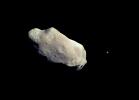
When asteroids were first discovered they were given names from Roman and Greek mythology.� Now, however, with over 7000 known asteroids, this supply of names fell short.� Describe how asteroids or minor planets are named.� Record the description of an asteroid with an interesting name.
Impact Craters - laboratory activity
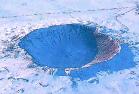
Design and conduct an experiment to determine what factors affect the size and shape of craters.� Things that can be measured are the average length of ejecta rays, the depth of the crater and the diameter of the crater.��� Include numerical data and sketches.� Write a formal lab report including a purpose, hypothesis, procedure, data and observations, data analysis (graphs and calculations), and conclusion.� A surface for this activity can be prepared from flour, a 1:1 ratio of baking soda and salt or a 1:1 ratio of sand and cornstarch.� A thin layer of coffee grounds or powdered drink mix over the surface helps make the features of the craters more visible.
 -online or research activity -online or research activity
Research the following questions about comets.� Record your findings.� What causes a comets tail?�� How are comets observed?� What is the association between comets and meteor showers?� What is a comet made of?� Make a comet and describe the results and play the game on this website.� Choose a famous comet to write about.
Asteroid and Comet Impact Hazards - online or reasearch activity
Describe the Torino Impact Hazard Scale.� Summarize the purpose of the NASA NEAR Mission.� Play the National Geographic impact game.� Take notes on the information given about each impact site and describe how you knew which object was the culprit. EXTENSION:
Many many more activities may be found in Exploring Meteorite Mysteries, a downloadable guide from NASA. |



 �
�